We're building the future of agentic promotions. Sign up for early access!
Sign up
We're building the future of agentic promotions. Sign up for early access!
Sign up Table of Contents:
Most businesses treat loyalty as a consumer game: coffee stamps, airline miles, retail points. But in B2B, a single client can represent $200,000 or more in annual revenue. The stakes are different. The opportunity is, too.
According to Bain and Company, a 5% increase in customer retention can drive profits up by as much as 95%. Yet most B2B companies have no structured loyalty program at all. They rely on account managers, ad-hoc discounts, and relationship inertia to hold clients together. That is the gap this guide helps you close.
Here you will find everything you need: the six program types and how to choose between them, real teardowns of what Lenovo, IBM, and Salesforce have built, a step-by-step framework, and the specific metrics that prove whether your program is working.
A B2B loyalty program is a structured system that rewards businesses, distributors, resellers, or partners for continued purchasing, engagement, or advocacy. Unlike consumer programs built for individual shoppers, B2B programs are designed around account relationships, longer buying cycles, and multiple decision-makers within a single client organization.
The mechanics vary across points, tiers, rebates, training incentives, and exclusive access, but the goal is always the same: make it financially and relationally more valuable for your clients to stay than to switch.
Done well, a B2B loyalty program does not just retain clients. It increases how much they spend with you, turns them into referral sources, and generates behavioral data that sharpens your entire commercial operation.
B2B and B2C loyalty programs share the same name but operate very differently. Understanding the gap shapes everything about how you design and run your program.
| Factor | B2B | B2C |
|---|---|---|
| Client base | Fewer, higher-value accounts | Large, broad consumer base |
| Transaction size | High-value, less frequent | Lower-value, frequent |
| Decision-making | Multiple stakeholders | Individual consumer |
| Relationship focus | Long-term partnership | Primarily transactional |
| Reward type | Business value (rebates, services, training) | Personal perks (discounts, free products) |
| Primary metric | Revenue, CLV, NPS | Points redeemed, visit frequency |
The core difference: B2B loyalty is about deepening business relationships, not just repeating transactions. Rewards need to deliver value that feeds directly into your client’s own business goals.
There is no single template for a B2B loyalty program. The right type depends on your industry, your client base, and what actually drives purchasing decisions. Here are the six formats that consistently deliver results.
Clients earn points for purchases, contract renewals, or specific actions, then redeem them for rewards. Points programs work best when purchase frequency is high enough to make accumulation feel achievable.
Rewards can include product credits, gift cards, service upgrades, or branded merchandise. Points are easy to understand and keep enrollment friction low. The risk is that they feel transactional if the rewards are not meaningful, so they work best as one layer of a broader program, not the whole strategy.
Tiered programs group clients into levels (typically Silver, Gold, Platinum) based on spend, engagement, or tenure. As clients move up, they unlock better pricing, priority support, dedicated account management, or exclusive offers.
Tiers create visible progression. A client sitting at 85% of the way to Gold behaves very differently from one with no clear goal ahead. For a full breakdown on how to structure tiers effectively, see our guide to tiered loyalty programs.
Rebate programs return a percentage of spend to the client as cash, credit, or account balance. They are common in wholesale, manufacturing, and distribution, where price competitiveness is a constant pressure.
The appeal is direct financial benefit. Clients can calculate exactly what they earn by consolidating their spend with you instead of splitting it across multiple vendors. Rebates are one of the most effective tools for growing share of wallet in commodity markets.
Channel loyalty programs reward distributors, resellers, and channel partners for selling your product or service to end customers. Instead of rewarding the end buyer, you reward the intermediary who influences purchasing at scale.
Common incentives include sales performance bonuses (SPIFFs), deal registration benefits, co-operative marketing funds, and tiered discounts tied to revenue targets. This is one of the highest-ROI formats for manufacturers and SaaS companies with partner networks. Our channel loyalty program guide covers implementation in detail.
Referral programs reward existing clients for introducing new business. In B2B, a referral from a trusted partner carries more weight than any marketing campaign, because trust is the primary buying factor.
Rewards can be account credits, cash, upgraded service tiers, or early feature access. The key is making the referral process simple and the reward meaningful enough to motivate action. See our referral program guide for structure and templates.
Learn-to-earn programs reward clients or partners for completing training, certifications, or educational milestones. They are especially effective for technology companies and SaaS businesses where product knowledge directly drives adoption and retention.
A partner who understands your product sells it better and stays around longer. Certifications also create a natural switching cost, because trained partners have invested time and credentials in your ecosystem, which raises the bar for any competitor trying to pull them away.

The business case is backed by consistent data across industries. Here is what each benefit looks like in practice, and what the numbers say.
Harvard Business Review reports that acquiring a new customer costs 5-25x more than retaining an existing one. A loyalty program gives clients a financial and relational reason to renew, reorder, and consolidate their spend with you rather than exploring alternatives.
That Bain and Company stat is worth sitting with: a 5% lift in retention can push profits up by as much as 95%. In B2B, where individual clients represent significant annual revenue, small improvements in retention compound quickly across your book of business. For retention strategies beyond loyalty programs, see our customer retention guide.
Loyal clients do not just stay. They spend more. Loyalty programs drive share of wallet: the percentage of a client’s total category spend that flows to you instead of a competitor.
A rebate or points structure that rewards consolidated purchasing gives clients a direct financial incentive to reduce their vendor list and increase orders with you. That shift often represents more revenue per account than any price discount could generate.
A loyalty program formalizes the value exchange in a business relationship. It signals to clients that you are invested in the partnership long-term, not just in the next purchase order.
Programs with dedicated support, account management access, and exclusive benefits deepen relationships beyond price alone. This matters most in industries where product differentiation is limited and the relationship itself is the primary competitive moat. See our guide to emotional loyalty for more on how to build that depth.
Every client retained is a client you do not need to replace. Enrolled clients who actively refer new business become a low-cost acquisition channel that compounds over time. The benefits of a loyalty program extend well beyond retention and directly reduce pressure on new business development.
A structured program generates detailed behavioral data: what clients buy, how often, what rewards they redeem, which segments are most engaged. This data improves account management, sharpens marketing targeting, and helps you spot at-risk accounts before they go quiet. Most B2B companies are flying blind on these signals. A loyalty platform surfaces them automatically.
In commodity markets, a loyalty program creates switching costs (financial, relational, and psychological) that make it harder for competitors to win your accounts on price alone. For companies that have not yet launched one, that gap is both a risk and a near-term opportunity.
The best way to understand what works is to study programs already running at scale, then reverse-engineer the mechanics. For broader inspiration, see our full roundup of loyalty program examples.
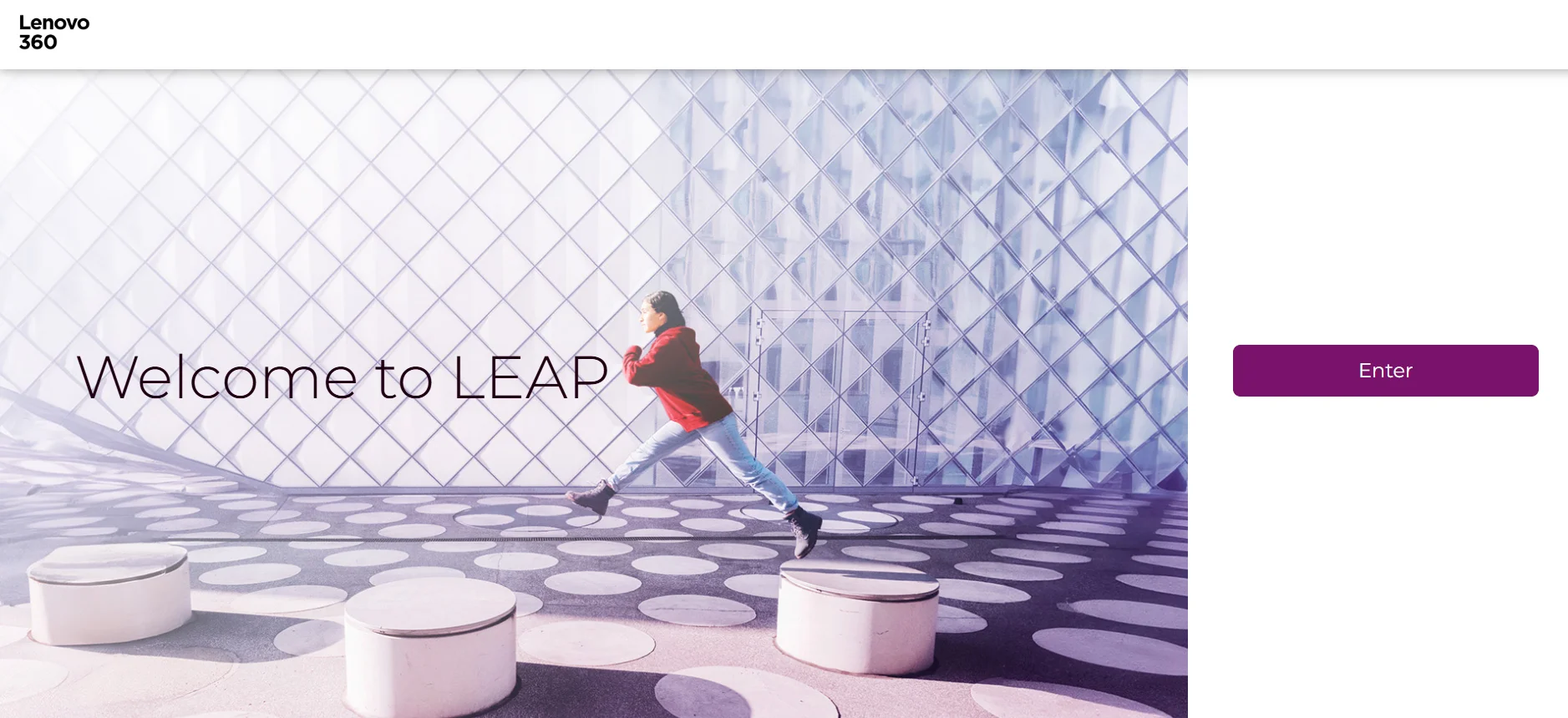
Lenovo LEAP (Lenovo Expert Achievers Program) rewards resellers, value-added resellers, and system integrators for driving Lenovo sales. Partners earn points for deal registration, product sales, training completions, and certifications. Points are redeemable for travel, electronics, gift cards, and merchandise across three tiers (Explorer, Achiever, and Expert), each unlocking higher point multipliers and exclusive access to Lenovo resources.
What makes it work: Lenovo pairs transactional rewards (sales points) with educational incentives (training bonuses). Partners who complete training sell more effectively, and staying in the program gives them a financial reason to keep doing it. Short-term rewards and long-term capability building create durable engagement.
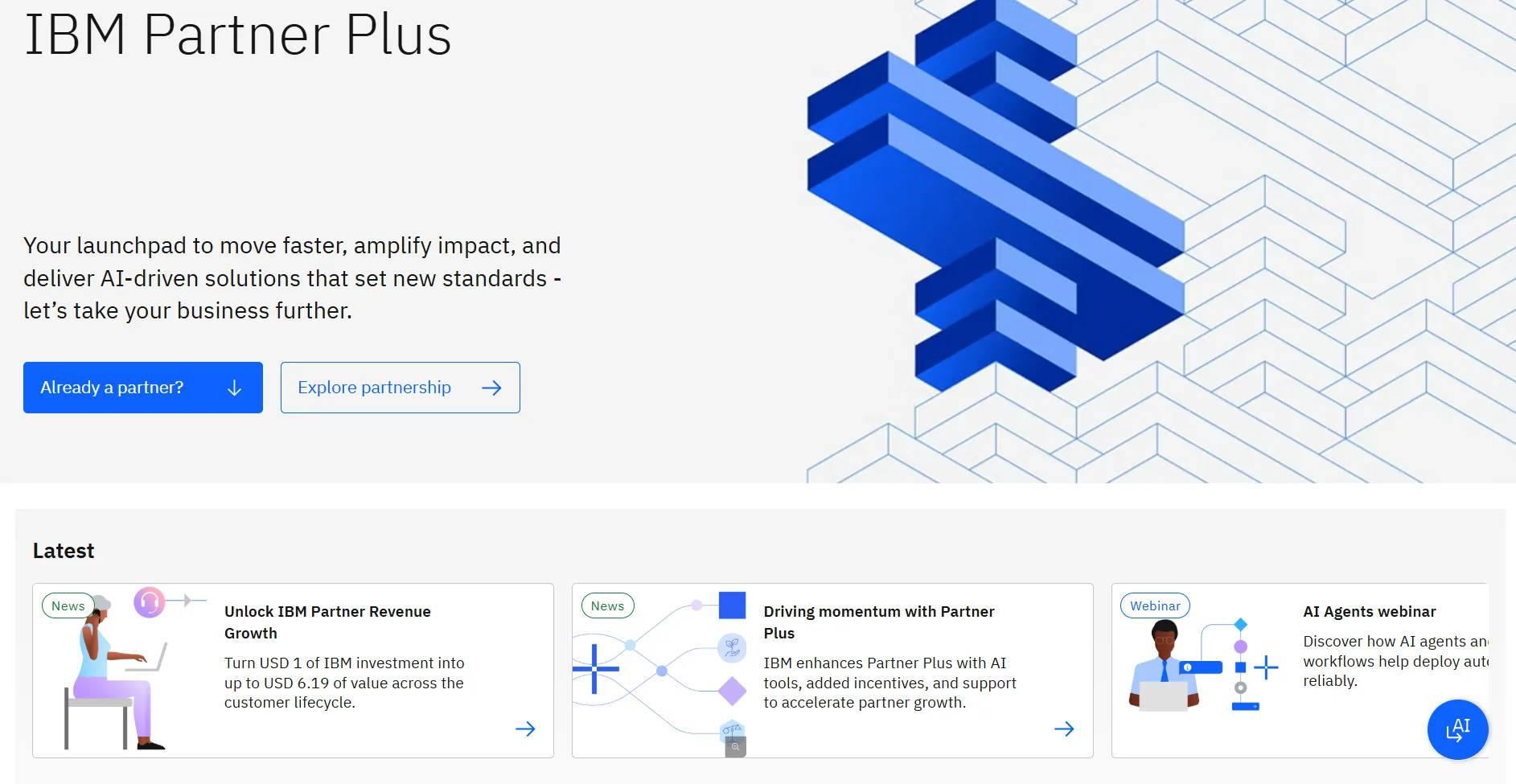
IBM Partner Plus runs a three-tier structure (Silver, Gold, and Platinum) where advancement is based on both revenue performance and technical badge completion, not just sales volume. Benefits scale with tier: Silver partners get co-marketing tools and training access; Gold and Platinum partners receive co-sell support, dedicated team access, and priority deal registration.
What makes it work: The combination of financial incentives and technical enablement rewards both revenue and capability. IBM’s transparent “Partner Points” tracker lets partners know exactly where they stand and what they need to advance, which keeps engagement consistent between transactions.
Salesforce runs five tiers (Registered, Silver, Gold, Platinum, and Global Strategic) with advancement based on annual contract value delivered, customer success certifications, and Salesforce’s own satisfaction metrics. Higher tiers unlock revenue sharing on co-sourced deals, AppExchange marketplace priority, dedicated Salesforce team access, and co-marketing budget.
What makes it work: Salesforce ties rewards to client outcomes, not just revenue closed. Partner incentives align directly with Salesforce’s product goals, creating a structure where better client outcomes generate better partner rewards. It is self-reinforcing by design.
Mailchimp and Co is a free-to-join program for agencies, freelancers, and consultants who manage Mailchimp on behalf of clients. It removes the spend threshold that gates most enterprise partner programs. Members get priority support, a listing in the Mailchimp agency directory, revenue share on client subscriptions, exclusive training, and early feature access.
What makes it work: The low barrier to entry drives high enrollment. Escalating benefits (revenue share, directory placement) then give partners a concrete financial reason to grow their Mailchimp client base. It converts service providers into active advocates without a minimum revenue requirement.
HubSpot’s tiered program (Gold, Platinum, Diamond, Elite) is built around managed recurring revenue delivered to HubSpot. Benefits include co-selling support from HubSpot’s sales team, inbound lead sharing, a dedicated listing in HubSpot’s Solutions Directory, exclusive certifications, and in-person events at higher tiers. Elite partners get direct access to HubSpot’s product roadmap.
What makes it work: Clear, measurable advancement criteria tied to revenue delivered. The directory placement functions as both a reward and a lead-generation tool, making the program financially valuable beyond the HubSpot relationship itself.
Start with the number you are trying to move. Common goals include improving retention by a specific percentage, increasing average order value, growing share of wallet in a client segment, or reducing churn in your top accounts.
Your goals determine everything downstream: the program type, the reward structure, the KPIs, and the technology you choose. Vague goals produce vague programs that are impossible to measure or improve.
Not all clients are equal, and a single program structure rarely serves everyone well. Segment your client base by revenue contribution, purchase frequency, industry vertical, or relationship stage before designing a single reward.
High-value accounts may need a white-glove tiered program with bespoke incentives. Mid-market clients may respond better to a self-serve points system. Channel partners need a structure built around sales performance. Segmentation lets you build a program that delivers real value to each group rather than mediocre value to all of them.
Match the program type to what drives purchasing decisions in your client base. For channel partners, rebates and SPIFFs drive immediate behavior change. For long-term B2B clients, tiered programs build stickiness over time. For training-heavy products, learn-to-earn programs improve adoption and retention at the same time.
For rewards, prioritize business value over personal perks. Account credits, premium support, co-marketing funds, and priority access deliver value that feeds directly into your client’s own business goals. See our breakdown of types of loyalty programs for a detailed comparison across formats.
Your program is only as good as the platform running it. The right technology handles points tracking, tier management, reward fulfillment, client communications, and reporting, and integrates with your existing CRM or ERP.
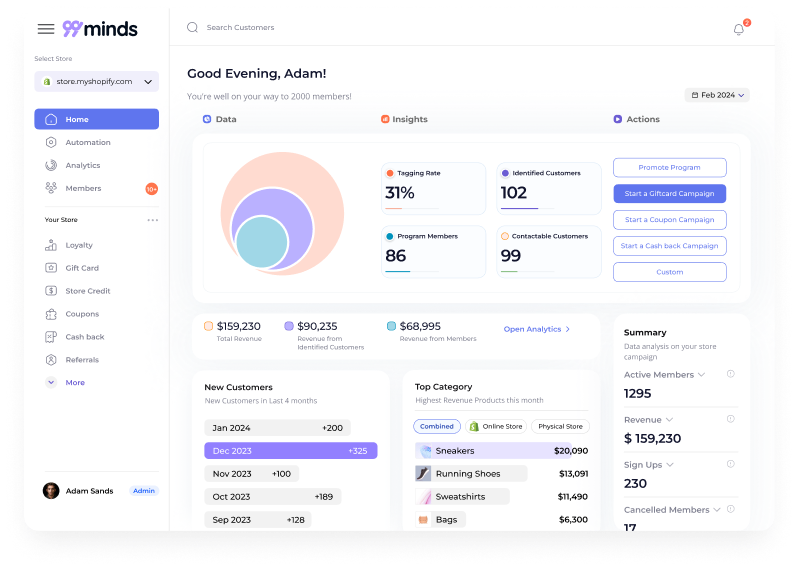
The 99minds loyalty program platform is built for exactly this: flexible reward structures, multi-tier management, referral tracking, and seamless integrations with ecommerce and CRM tools. Purpose-built platforms outperform custom builds on every dimension: setup time, maintenance cost, and reliability.
Complexity kills engagement. Your clients should be able to understand the program in 60 seconds. Publish the rules transparently: how points are earned, what actions qualify, what rewards are available, and how redemption works.
A client who can see exactly how far they are from the next tier is more motivated to close that gap than one who has to ask their account manager for a status update. Transparency is a feature, not optional. For strategic direction on keeping programs compelling over time, see our loyalty program strategy guide.
A great program that nobody knows about has zero impact. Launch with direct outreach to your existing client base: email campaigns, account manager conversations, and in-product notifications where applicable. Offer an enrollment bonus to build early momentum.
After launch, communicate regularly. Monthly status updates, milestone notifications (“You are 200 points from Gold”), and time-limited offers keep the program front of mind and give clients reasons to act. For ongoing engagement tactics, our loyalty marketing guide covers how to sustain participation well past the initial rollout.
Generic rewards do not work in B2B. A program that offers the same incentives to a $500,000 client and a $10,000 client leaves value on the table for both. Personalize reward options, communication cadence, and incentive structures based on account size, industry, and behavior.
Account-level personalization also signals to clients that you understand their specific business, which is itself a loyalty driver independent of the reward mechanics. See our guide to increasing loyalty with personalized rewards for practical frameworks.
If enrollment takes more than five minutes or involves paperwork, participation rates collapse. Digital enrollment, single sign-on options, and an intuitive dashboard are baseline requirements, not premium features. Remove every unnecessary step between a client deciding to join and being inside the program.
Every enrolled client should be able to answer three questions without contacting support: How many points do I have? What can I redeem them for? What do I need to reach the next tier? If those answers are not immediately visible in their dashboard, fix that before anything else. Opacity is the fastest way to kill engagement.
Your clients interact with you across email, account calls, your website, and your product portal. The loyalty program should be accessible and consistent across all of those touchpoints, not buried in a separate portal that clients visit once and forget. For a broader look at multi-channel client engagement, see our guide to omnichannel loyalty programs.
Gamification applies game mechanics (progress bars, achievement badges, milestone bonuses, leaderboards) to drive engagement between major purchase events. Used well, they turn passive program members into active ones. For a full breakdown, see our gamification loyalty programs guide.
A program that only rewards the next transaction produces transactional behavior, not loyalty. Build in long-term incentives: annual bonuses for program tenure, increasing value at higher tiers, and exclusive access that grows more valuable over time. Clients should feel that the longer they stay, the more they benefit.

Building a program without a measurement framework is how good programs get cancelled. Track both behavioral and financial metrics from day one so you can prove impact and adjust based on data.
For a full measurement framework including how to calculate and benchmark each metric, see our guide to KPIs for loyalty programs.
Three trends are reshaping how leading B2B companies are building loyalty programs right now.
AI-driven systems can analyze client purchase history, predict churn risk, and automatically trigger personalized offers before a client goes quiet. Automated follow-ups based on behavior (a bonus offer triggered when a client’s order frequency drops below their historical average, for example) remove the manual oversight that most account teams cannot sustain at scale.
The result is a program that responds to individual client signals without requiring human intervention at every touchpoint. For broader context on how AI is reshaping B2B commerce, see our breakdown of B2B ecommerce trends.
B2B buyers increasingly factor environmental responsibility into vendor selection, particularly in industries where ESG credentials are a procurement requirement. Some companies are beginning to link loyalty rewards to sustainable behaviors: bonuses for choosing lower-carbon shipping, participating in product recycling programs, or hitting sustainability certification milestones.
Still early, but a meaningful differentiator in markets where procurement teams evaluate vendors on more than price and product.
The most effective programs connect loyalty data directly into CRM workflows so account managers see a client’s tier, points balance, and redemption history alongside standard account data, and into ERP systems so rebate calculations are automated and accurate. Integration removes friction, reduces errors, and makes the program run in the background of every client interaction automatically.
B2B loyalty programs are not a nice-to-have. In markets where price pressure is constant and client relationships are hard-won, a structured program is a strategic asset that compounds over time.
The playbook is concrete: pick the right program type for your client base, study what Lenovo LEAP, IBM Partner Plus, and Salesforce have built and understand why those mechanics work, build with the right technology from day one, and track the KPIs that connect program activity to business outcomes.
Companies that get this right do not just retain more clients. They increase revenue per account, reduce acquisition costs through referrals, and build a base of partners who actively advocate for them.
Ready to build a B2B loyalty program that drives measurable results? 99minds gives you the platform to design, launch, and manage it, with the flexibility to run points, tiers, rebates, and partner programs from a single system. Sign up free and configure the structure that fits your business.