We're building the future of agentic promotions. Sign up for early access!
Sign up
We're building the future of agentic promotions. Sign up for early access!
Sign up 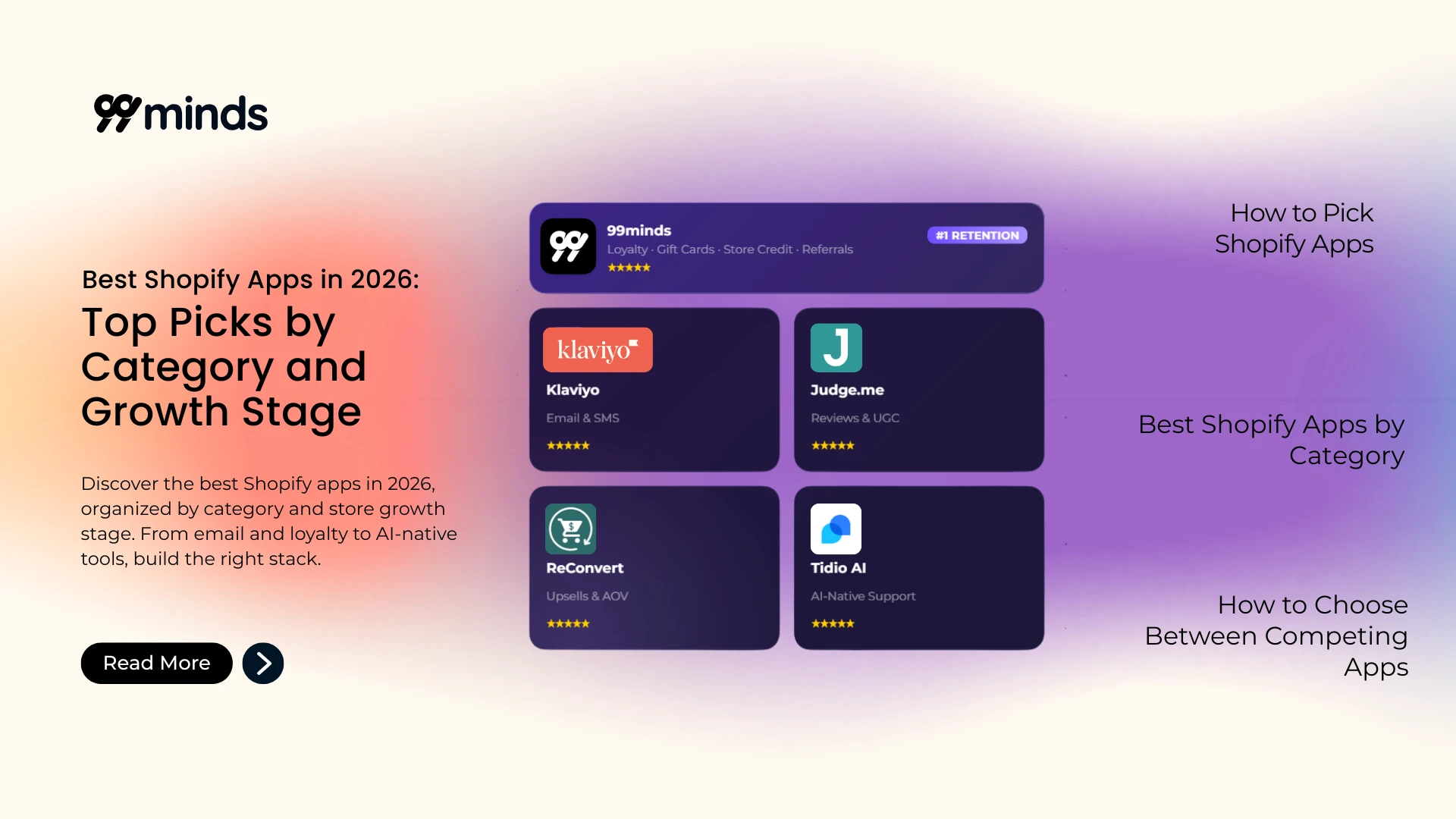
Table of Contents:
The Shopify App Store has over 10,000 apps. That sounds like a good problem to have, but for most store owners, it’s just a time sink: too many options, too many overlapping feature sets, and no clear answer to “which ones do I actually need?”
Here’s the thing: the best Shopify apps aren’t the same for every store. A brand new store launching its first product has completely different needs from a seven-figure DTC business optimizing retention. Installing the wrong apps doesn’t just drain your budget, it slows your storefront, fragments your customer data, and creates maintenance overhead you don’t need.
This guide cuts through the noise. We’ve organized the best Shopify apps by category and by store growth stage, so you can build a stack that actually fits where you are right now.
| App | Category | Best For | Starting Price |
|---|---|---|---|
| 99minds | Loyalty, gift cards, store credit | All-in-one retention: loyalty programs, gift cards, store credit, and referrals | $49/month |
| Klaviyo | Email and SMS | Advanced lifecycle marketing and segmentation | Free plan available |
| Omnisend | Email and SMS | Email + SMS in one platform for SMBs | Free plan available |
| Privy | Beginners building their first email list | Free plan available | |
| Judge.me | Reviews | Unlimited reviews on a free plan | Free plan available |
| Loox | Reviews | Visual-first brands needing photo/video UGC | $9.99/month |
| ReConvert | Upsells | Post-purchase upsells on the order confirmation page | $4.99/month |
| Frequently Bought Together | Bundles | Product recommendation bundles | $9.99/month |
| Rebuy | AI personalization | AI-driven recommendations across the buying journey | $99/month |
| Tidio AI (Lyro) | AI-native | Autonomous AI customer support | Free plan available |
| Smile.io | Loyalty | Simple, standalone loyalty program | Free plan available |
| PageFly | Page builder | Custom landing pages and product pages | Free plan available |
| Smart SEO | SEO | Automated meta tags and structured data | Free plan available |
| Gorgias | Helpdesk | Customer support for DTC and ecommerce brands | $10/month |
With thousands of apps competing for your attention, a few quick filters help separate the signal from the noise.
Integration compatibility matters first: does the app work with your existing email platform, helpdesk, or loyalty tool? Conflicts and sync issues are the most common reason merchants uninstall apps they initially liked. Next, look at pricing at your actual volume: many apps are affordable at 100 orders per month and become expensive fast at 10,000. Always calculate cost at your current scale and at three times your current scale.
Finally, pay attention to app performance impact. Every app adds JavaScript to your storefront. Prioritize apps that lazy-load their scripts and check their impact on your Core Web Vitals score. A beautiful app that slows your store to a crawl will cost you more in lost conversions than it saves in productivity.
Not every app belongs in every stack. Here’s how to think about apps depending on where your store is right now.
When you’re just starting out, the goal is simple: build trust, capture emails, and start collecting reviews. You don’t need a sophisticated loyalty platform or an AI personalization engine yet. Keep your stack tight and focus on apps that pay back quickly.
Judge.me is the first app most new stores should install. It’s free, supports unlimited reviews, and lets you collect photo and video reviews from day one. Social proof matters more in your first year than almost anything else, and Judge.me lets you build it without spending a dollar.
Klaviyo (free plan) or Omnisend (free plan) handles your email capture and basic automations. An abandoned cart sequence and a post-purchase thank-you flow alone will recover more revenue than most other investments at this stage.
Smart SEO helps you set up proper meta tags, structured data, and image alt text automatically, which is easy to neglect when you’re busy with everything else a new store demands.
PageFly gives you a free page builder for creating better landing pages and product pages than Shopify’s default editor allows, with no coding required.
Gameball or Smile.io (both have free plans) lets you run a basic rewards program to encourage repeat purchases even when your customer list is still small.
At this stage, you’ve got product-market fit and a growing customer base. The risk most stores face here isn’t acquisition, it’s retention. You’re spending on ads and email to bring customers in, but without the right tools, you’re losing them after one purchase.
This is exactly where customer retention becomes critical, and where your app stack needs to evolve.
99minds belongs in the growth stack for any store that wants to run loyalty programs, gift cards, and store credit without managing three separate apps. It handles all of them from one dashboard, with Klaviyo and Omnisend integrations already built in.
ReConvert turns your order confirmation page into a revenue opportunity with one-click post-purchase upsells, product recommendations, and customer surveys.
Okendo adds photo and video reviews plus UGC collection, giving you the social proof assets you need for ads and product pages as you scale.
Gorgias brings your customer support tickets, order data, and conversation history into one place, which becomes a genuine time-saver once your support volume starts climbing.
Klaviyo (paid plans) unlocks advanced segmentation, predictive analytics, and SMS, all of which become significantly more valuable as your list grows past 5,000 subscribers.
At this scale, incremental gains compound. A one percent lift in conversion rate or a slight uptick in average order value translates directly into meaningful revenue. The apps you need here are less about filling gaps and more about optimization and personalization.
Rebuy handles AI-driven personalization across your full storefront: product recommendations, in-cart upsells, post-purchase flows, and re-order landing pages. At high volume, it pays for itself quickly.
Recharge or Skio powers subscription programs that turn your best customers into predictable recurring revenue. The best Shopify subscription app for your store depends on your product type and how much customization you need.
99minds continues to be relevant here, particularly for Shopify Plus merchants who need enterprise-grade loyalty programs, multi-currency gift cards, and advanced store credit workflows. Shopify Plus merchants also get access to exclusive app features that aren’t available on standard plans, which 99minds supports fully.
LoyaltyLion is worth considering at this stage if you need highly customized loyalty structures with advanced segmentation and enterprise integrations.
Most Shopify merchants over-invest in getting customers to buy once and under-invest in getting them to come back. 99minds Loyalty Program, 99minds Gift Card, and store credit are the most underused retention tools available, and they tend to generate more revenue per dollar than any acquisition channel at scale.
This is the category where the app you choose matters most, because the tools vary significantly in what they can actually do.
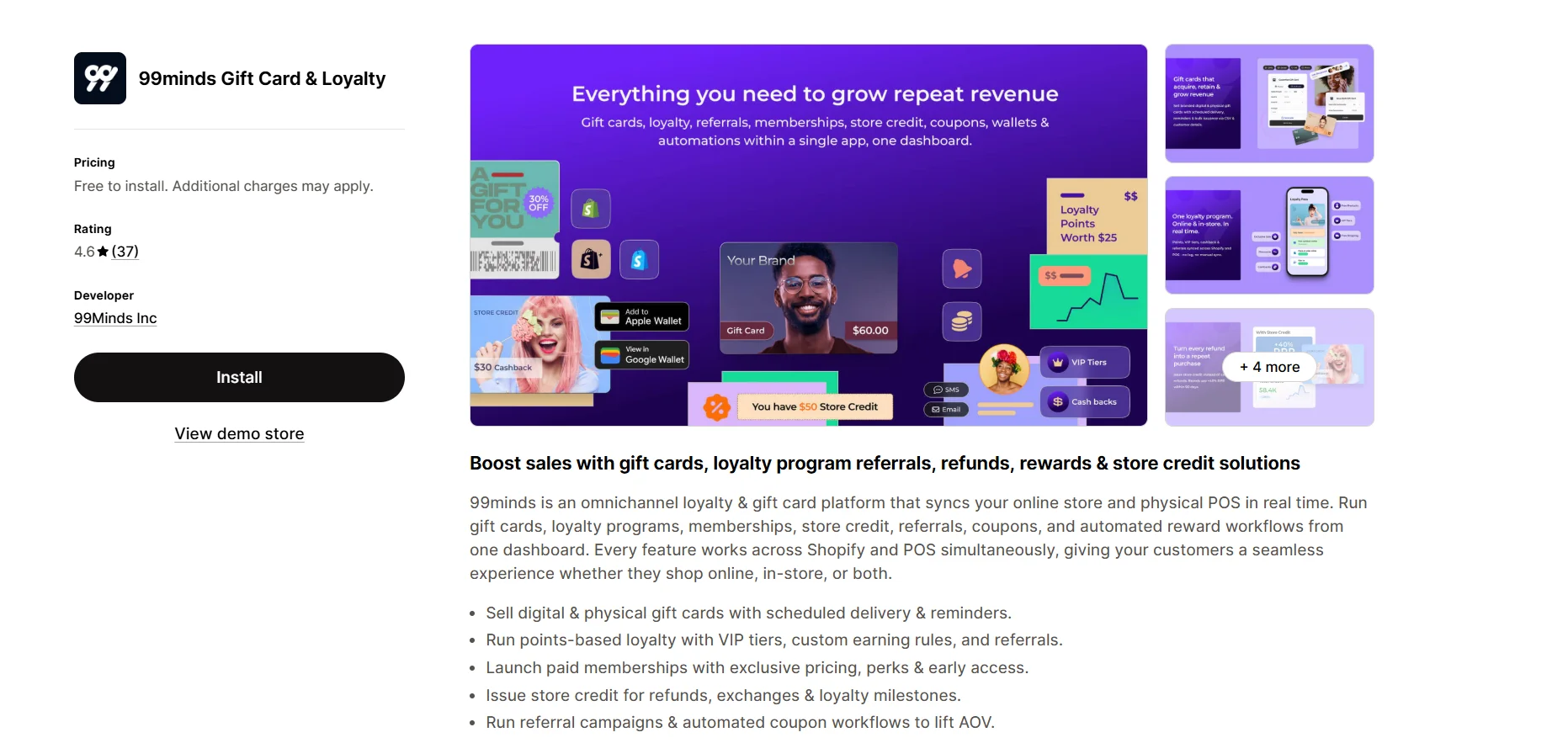
99minds is the only Shopify app that combines loyalty programs, gift cards, store credit, and referral programs in a single platform. For merchants who’ve been running three or four separate apps to cover these functions, consolidating into 99minds typically simplifies operations and reduces monthly costs.
On the loyalty side, 99minds supports both flat and tiered loyalty structures, automated workflows triggered by purchase events, and Apple and Google Wallet pass issuance. On the gift card side, it handles both digital and physical gift cards with multi-currency support, which matters for stores selling internationally. The 99minds Store Credit feature lets you issue credit for returns and rewards, keeping earned revenue inside your business instead of issuing cash refunds. The referral module runs coupon-based referral campaigns with detailed issuance and redemption reporting.
99minds integrates with Klaviyo, Omnisend, and other major Shopify apps, so it works within your existing marketing stack rather than replacing it.
Key Features:
Pros and Cons:
99minds’ biggest advantage is consolidating loyalty, gift cards, store credit, and referrals into one platform instead of three or four separate apps. The downside is that setting up the full suite takes more initial configuration than a single-feature app like Smile.io, and some advanced workflow features are gated to higher-tier plans. Merchants who only need one retention tool, for example just gift cards, may find simpler dedicated apps easier to start with.
Pricing Plans:
Ratings: Shopify 4.9/5, G2 4.8/5
With 99minds, run loyalty programs, gift cards, and store credit from a single Shopify app
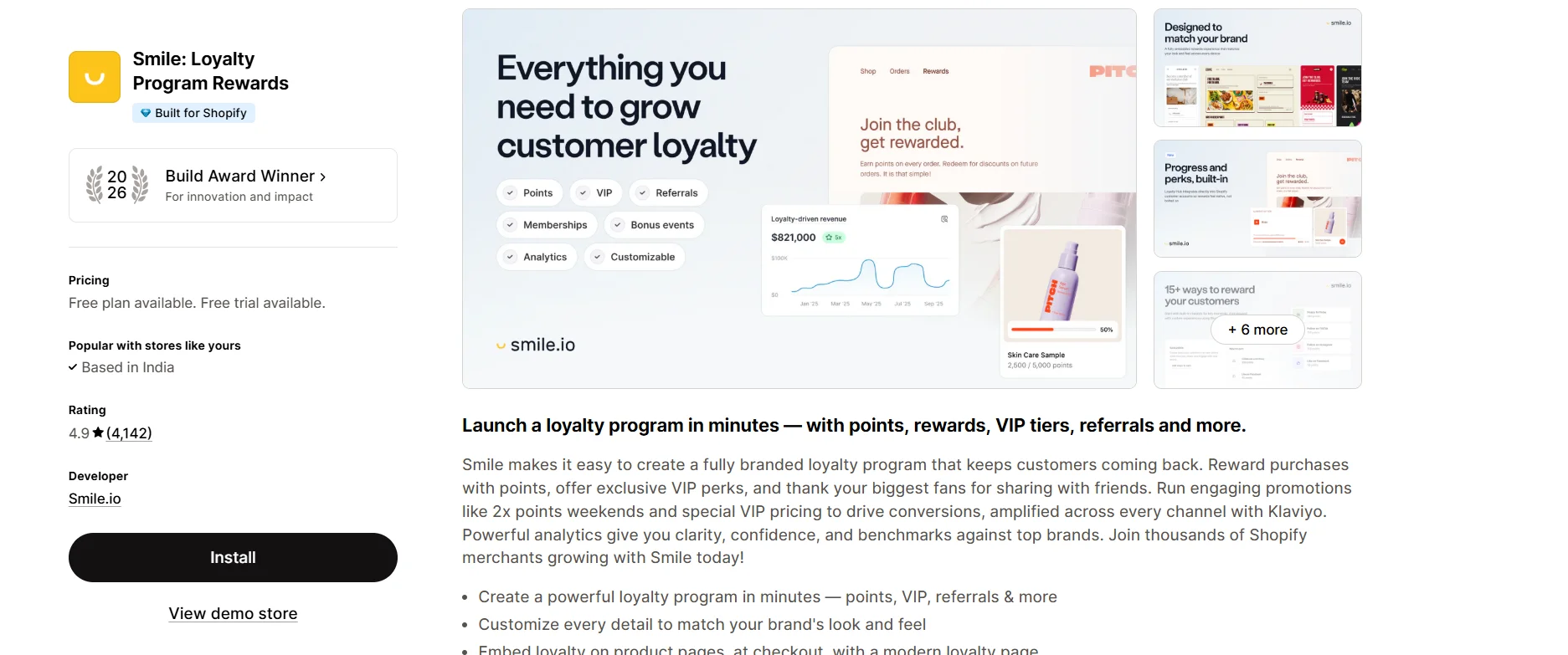
Smile.io is a solid choice for merchants who want a simple, no-fuss loyalty program without the complexity of a full retention suite. The free plan is functional enough for early-stage stores, and setup takes minutes. The main limitation is that Smile.io doesn’t handle gift cards or store credit natively, so stores that want those features will either need to add separate apps or upgrade to a platform like 99minds.
Key Features:
Pros and Cons:
Smile.io’s strength is ease of use and fast setup for a straightforward points, referral, and VIP program. Its limitations are no native gift card or store credit functionality, a free plan with limited customization and no analytics access, and no trigger-based automation beyond basic earn and redeem. There’s also no Apple or Google Wallet pass support, and higher-tier plans are expensive relative to what’s included compared to all-in-one platforms.
Pricing Plans:
Ratings: Shopify 4.8/5, G2 4.5/5
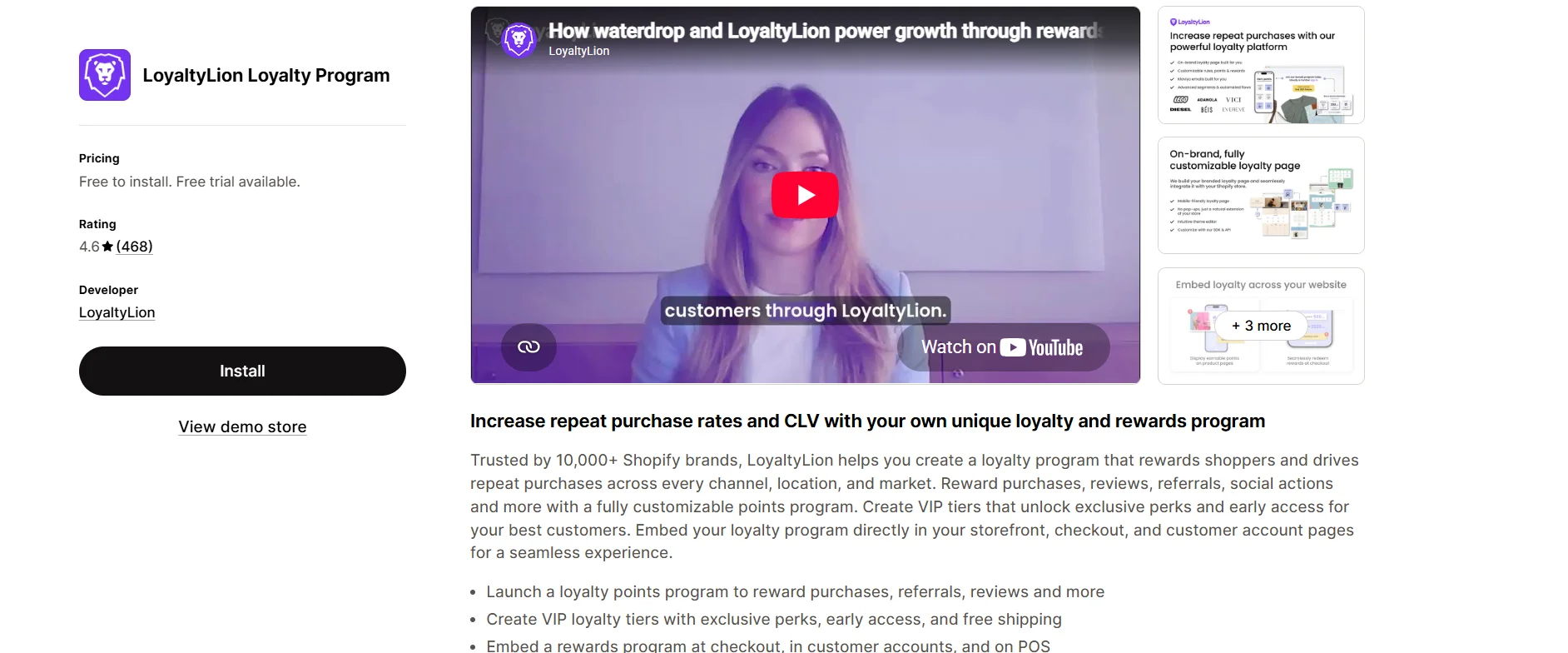
LoyaltyLion is designed for enterprise stores with complex loyalty requirements: advanced customer segmentation, deeper analytics, and integrations with enterprise CRM and helpdesk tools. It’s well-regarded but comes at a significantly higher price point. For most stores below $500K per year, 99minds or Smile.io will be more cost-effective.
Key Features:
Pros and Cons:
LoyaltyLion offers highly customizable reward logic and deep analytics for mature brands. On the downside, it’s one of the more expensive loyalty apps on Shopify at scale, full customization requires developer involvement, and onboarding can take weeks for complex configurations. It also has no native gift card or store credit functionality, so it’s better suited to stores with a dedicated marketing or CRM team.
Pricing Plans:
Ratings: Shopify 4.7/5, G2 4.5/5
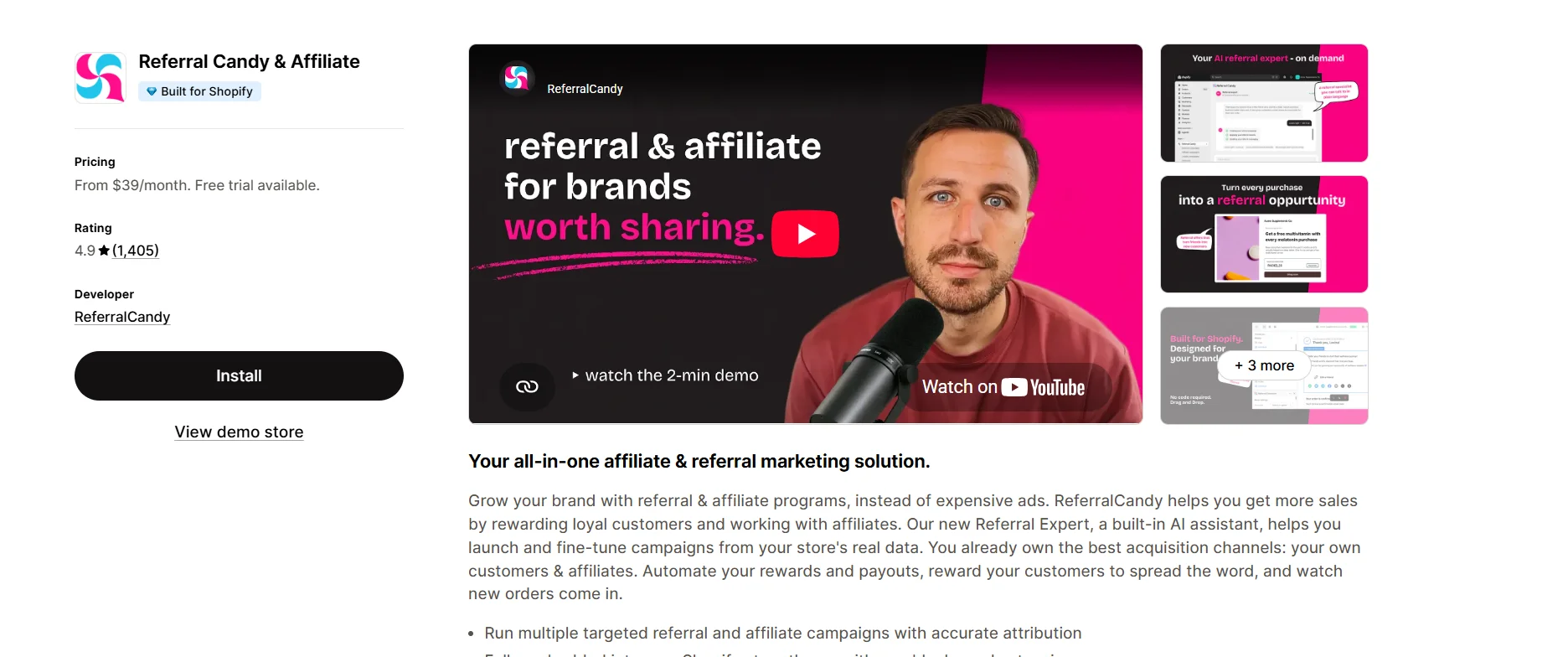
If referral marketing is your primary customer acquisition strategy rather than a retention play, ReferralCandy is worth a look. It’s purpose-built for referral programs and handles the mechanics well. Check out our guide to the best Shopify referral apps for a full comparison if referrals are a priority for your store.
Key Features:
Pros and Cons:
ReferralCandy handles referral mechanics well with solid fraud detection and easy integrations. Its limitations are that it’s focused solely on referrals, with no loyalty points, gift cards, or store credit functionality, and the commission fee on top of the monthly plan adds up at higher revenue volumes. Advanced referral logic (complex tier or multi-step structures) is also limited, and there’s no native POS integration.
Pricing Plans:
Ratings: Shopify 4.8/5, G2 4.4/5
Email and SMS consistently deliver the highest ROI of any Shopify marketing channel. The right tool depends on your list size, your budget, and how much automation complexity you need.
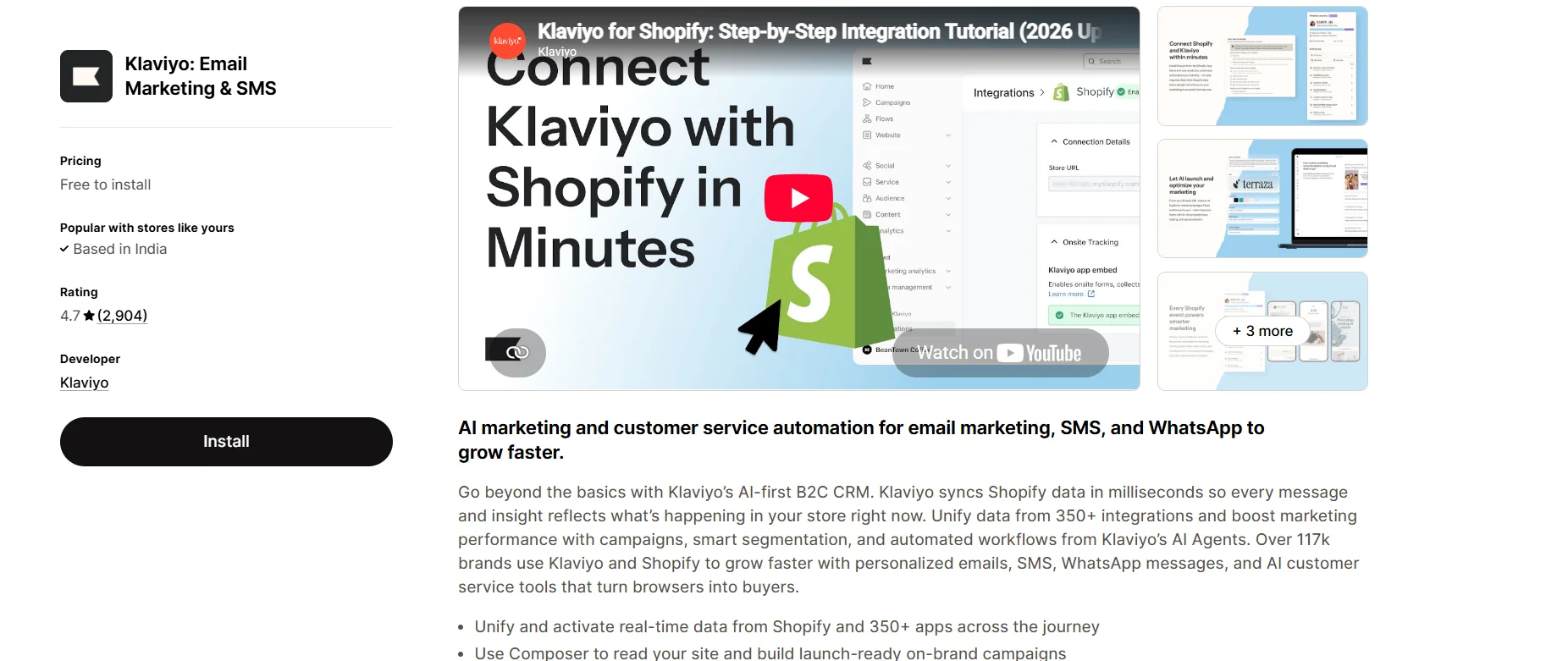
Klaviyo is the industry standard for DTC brands above $10K per month, and for good reason. Its segmentation engine is unmatched: you can build audiences based on purchase behavior, predicted lifetime value, browsing patterns, and more. Klaviyo’s email flows are powerful, but the real differentiation is in how tightly it syncs with Shopify data. If you’re above 5,000 subscribers and want to invest in lifecycle marketing, Klaviyo is the clear choice.
Key Features:
Pros and Cons:
Klaviyo’s segmentation and Shopify data sync are unmatched at scale. The tradeoffs are pricing that scales steeply by contact count, SMS availability limited mostly to the US, UK, Canada, and Australia, and a steeper learning curve than Omnisend or Privy for teams new to lifecycle marketing.
Pricing Plans:
Ratings: Shopify 4.7/5, G2 4.6/5
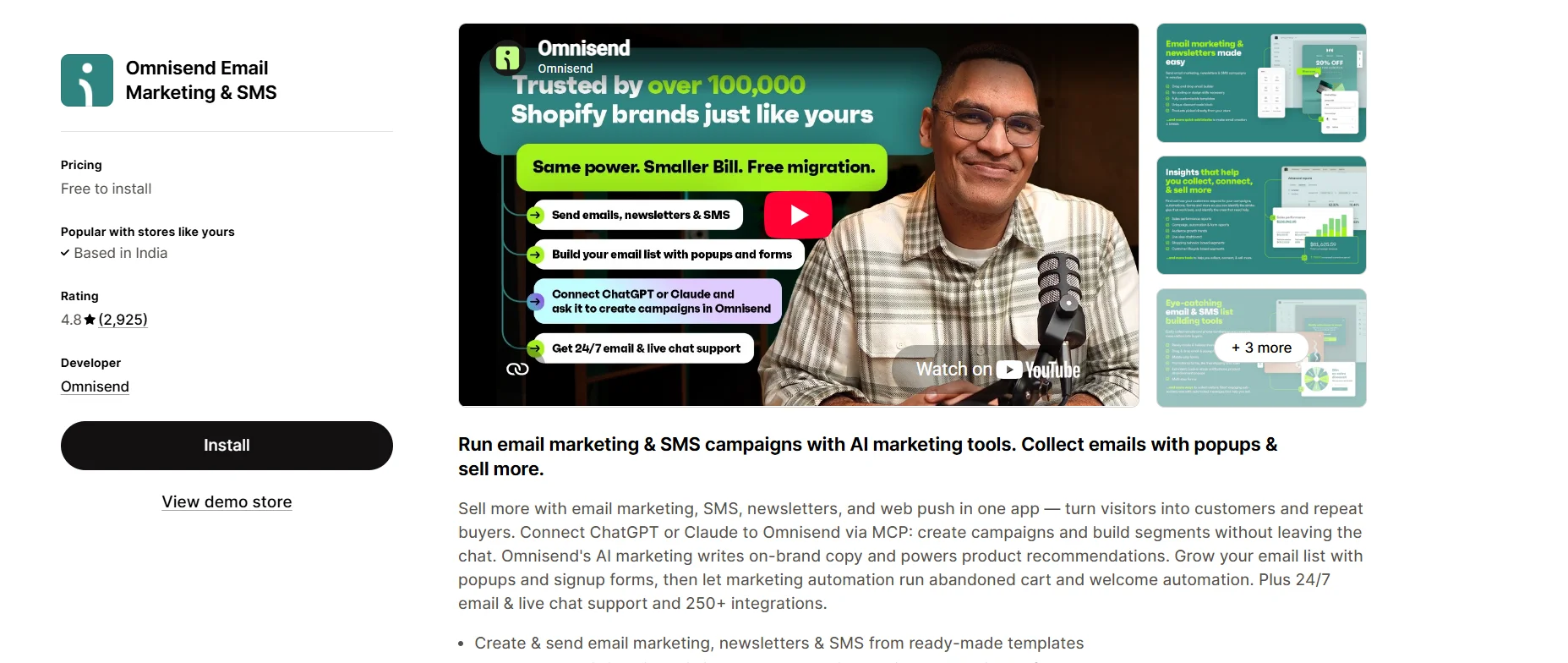
Omnisend is the better choice for merchants who want email and SMS in one platform without Klaviyo’s price tag. It covers all the essentials: pop-ups, segmentation, automations, and SMS, at a lower cost per subscriber. It’s particularly well-suited to stores in the $5K-$50K per month range that don’t yet need Klaviyo’s depth of analytics.
Key Features:
Pros and Cons:
Omnisend gives SMB stores email, SMS, and push in one affordable platform. Its segmentation is less granular than Klaviyo’s, particularly for predictive analytics, SMS coverage is more limited in some international markets, and it has fewer advanced integrations than Klaviyo’s 300+ partner ecosystem.
Pricing Plans:
Ratings: Shopify 4.8/5, G2 4.6/5
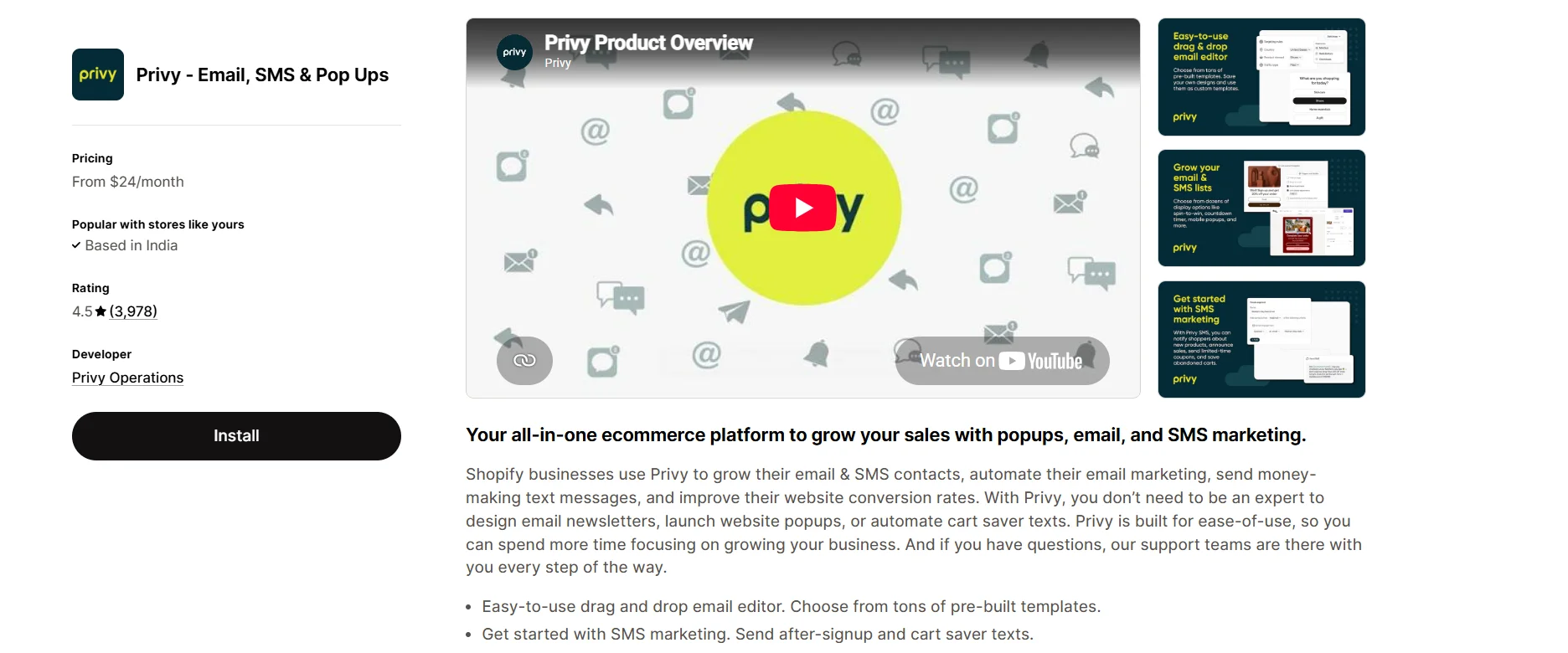
Privy is the friendliest starting point for stores just beginning to build an email list. The setup is simple, the pop-up templates are good, and the basic automations cover the most common use cases: welcome series, abandoned cart, and post-purchase. Once your list hits a few thousand subscribers, you’ll likely want to migrate to Klaviyo or Omnisend, but Privy will get you there.
Key Features:
Pros and Cons:
Privy is beginner-friendly with no technical setup required. Its limitations show up as you grow: limited advanced segmentation compared to Klaviyo or Omnisend, basic email analytics with minimal revenue attribution, no native SMS marketing, and performance issues once you scale beyond a few thousand contacts.
Pricing Plans:
Ratings: Shopify 4.6/5, G2 4.3/5
Social proof is one of the fastest conversion lifts available on Shopify, and it’s largely passive once you’ve set up the right review collection flow. The question isn’t whether to use a reviews app, it’s which one fits your brand and budget.
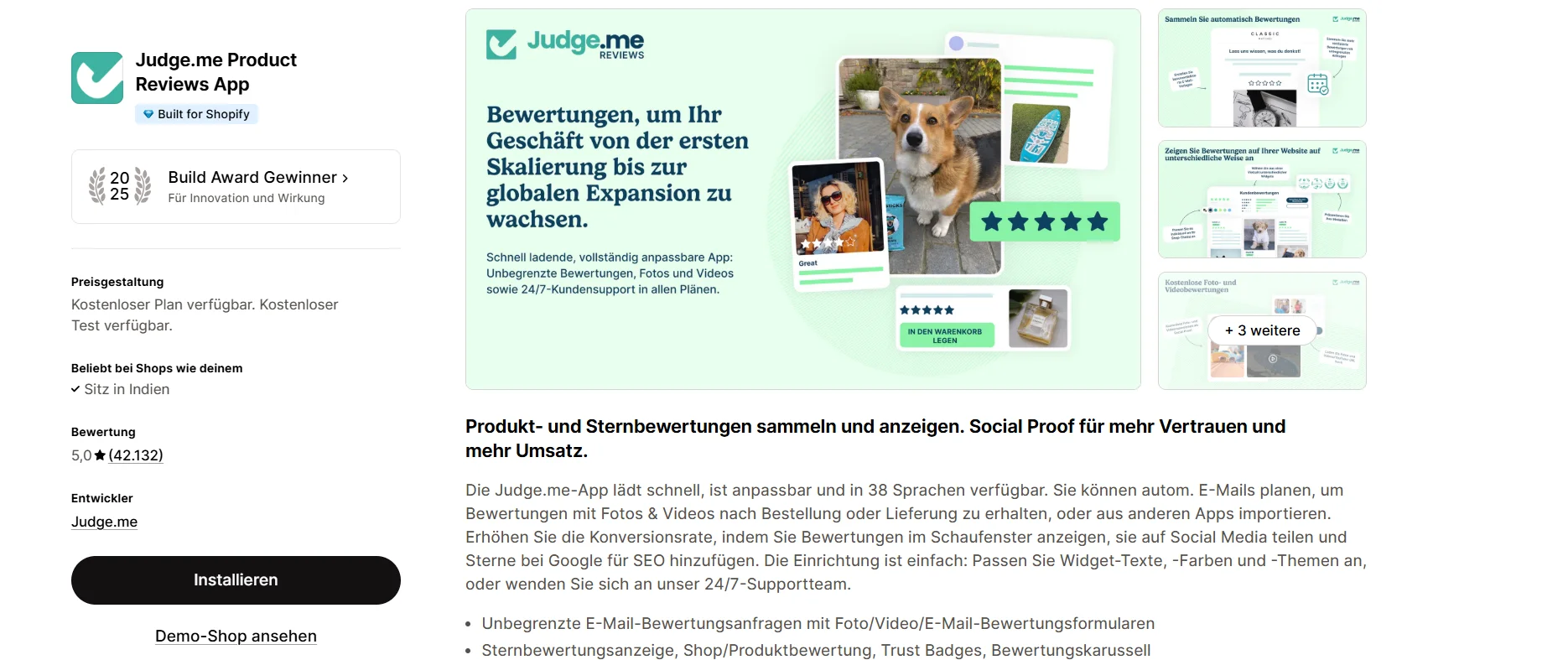
Judge.me is the best free reviews app on Shopify, and it’s genuinely competitive with paid alternatives. The free plan supports unlimited reviews, photo and video reviews, review request emails, and structured data markup for Google rich snippets. For most stores, especially those under $50K per month, Judge.me is the right starting point.
Key Features:
Pros and Cons:
Judge.me’s unlimited free tier makes it hard to beat for most stores. Its limitations are limited widget customization on the free plan, a less visual UGC focus than Loox, no built-in loyalty or SMS integration, and custom review forms or conditional logic that require the paid plan.
Pricing Plans:
Ratings: Shopify 5.0/5, G2 4.9/5
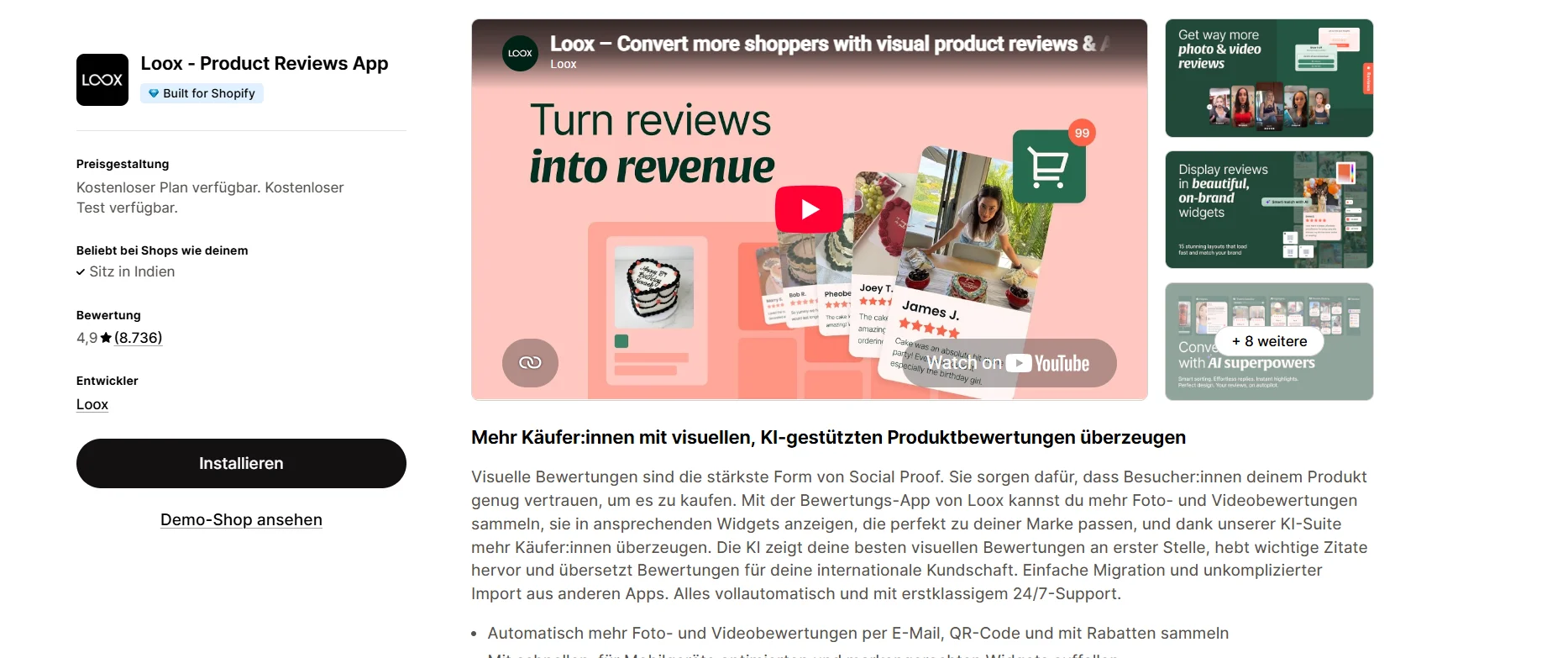
Loox is built for brands where visual social proof matters most: fashion, beauty, home goods, and lifestyle products. It collects photo and video reviews and displays them in an Instagram-style gallery that works well on product and collection pages.
Key Features:
Pros and Cons:
Loox’s Instagram-style gallery and photo incentives are strong for visual brands. There’s no free plan, so it’s paid from day one, and its heavy visual focus means text-only reviews get less prominence. It’s also more expensive than Judge.me for equivalent review volume.
Pricing Plans:
Ratings: Shopify 4.9/5, G2 4.7/5
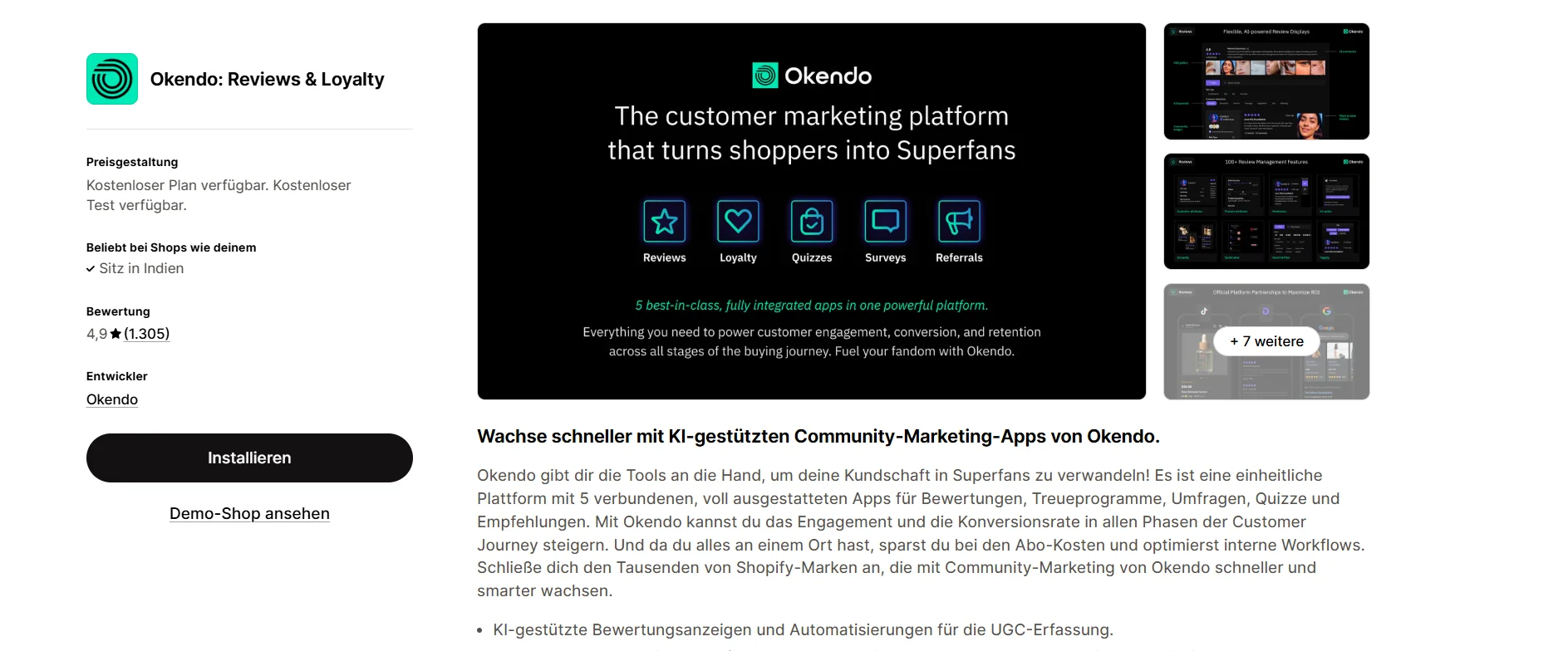
Okendo sits in the mid-market tier, combining reviews with product quizzes and customer attributes data. It’s a strong option for brands that want deeper customer insights alongside their review strategy.
Key Features:
Pros and Cons:
Okendo’s quiz and attribute data give brands more customer insight than a standard reviews app. The tradeoffs are a higher starting price than Judge.me or Loox, quiz and survey features gated to higher-tier plans, and some advanced customization that requires developer assistance.
Pricing Plans:
Ratings: Shopify 4.9/5, G2 4.7/5
Boosting your average order value by 10 to 15 percent has compounding impact on revenue without requiring any additional ad spend. The right AOV app depends on where in the buying journey you want to trigger the upsell.
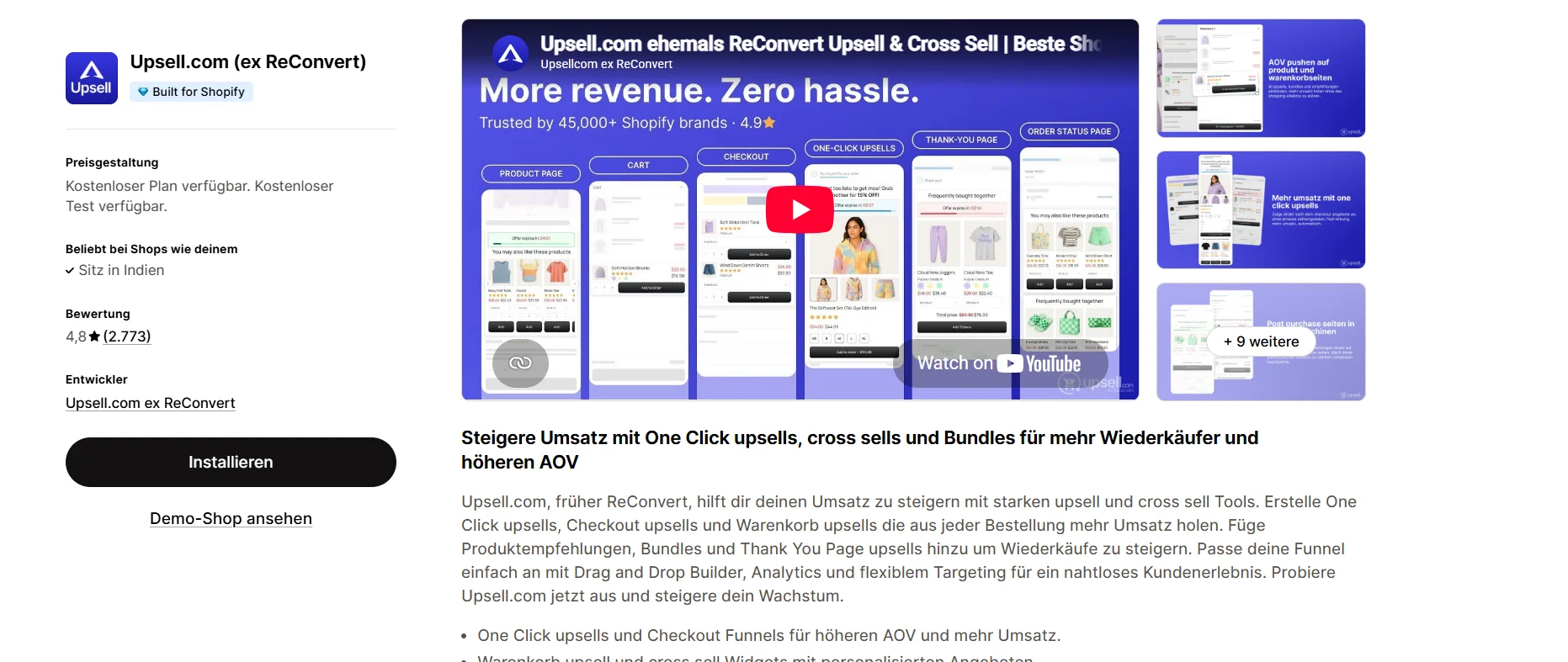
ReConvert turns the order confirmation page into a revenue-generating touchpoint. After a customer completes a purchase, ReConvert shows them targeted one-click upsells, product recommendations, and optional surveys. Because the customer has already committed to buying, conversion rates on post-purchase upsells are consistently higher than anywhere else in the funnel.
Key Features:
Pros and Cons:
ReConvert’s one-click, pre-filled post-purchase upsells convert well because the customer has already committed to buying. It only operates on the post-purchase/order confirmation page, not the cart or product pages, and pricing based on orders processed can make costs harder to predict. It’s also less powerful than Rebuy for pre-purchase personalization.
Pricing Plans:
Ratings: Shopify 4.9/5, G2 4.6/5
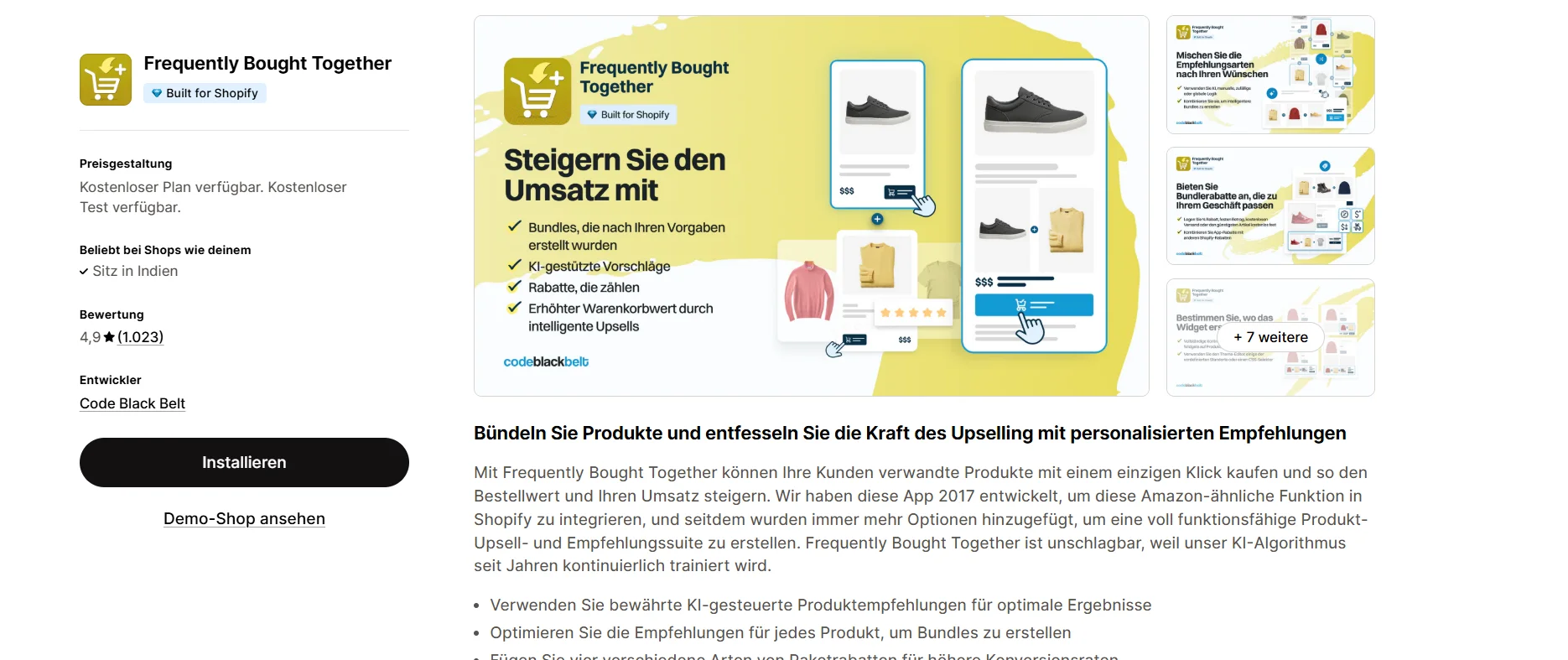
Frequently Bought Together replicates the classic Amazon-style product bundle recommendation directly on your product pages. It’s simple to set up, works well for stores with complementary products, and the flat monthly fee makes the economics easy to predict.
Key Features:
Pros and Cons:
Its flat monthly fee makes budgeting simple, and setup is quick for stores with naturally complementary products. The widget displays only on product pages, not cart or checkout, its AI recommendations are less sophisticated than Rebuy’s machine learning model, and it has no post-purchase upsell functionality.
Pricing Plans:
Ratings: Shopify 4.9/5, G2 4.7/5
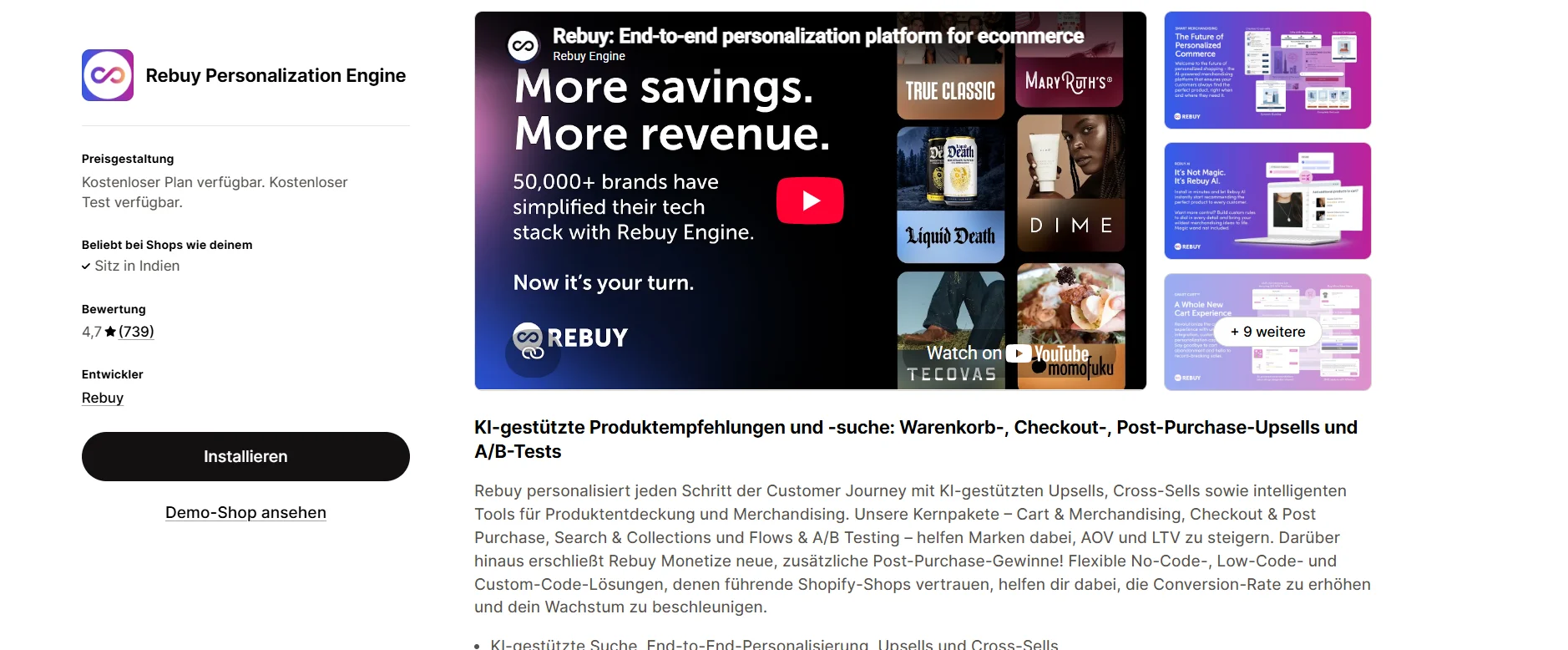
Rebuy uses machine learning to personalize product recommendations across the full buying journey: product pages, cart, checkout, post-purchase flows, and re-order landing pages. It’s the most sophisticated AOV tool on this list. The $99/month starting price is justified at higher volumes, typically $50K per month or more, where the personalization lift compounds meaningfully.
Key Features:
Pros and Cons:
Rebuy’s machine learning recommendations improve over time and cover the full buying journey. The high starting price makes it hard to justify at low order volumes, setup requires meaningful configuration time, and it’s best suited to stores above $50K/month rather than early-stage stores.
Pricing Plans:
Ratings: Shopify 4.9/5, G2 4.7/5
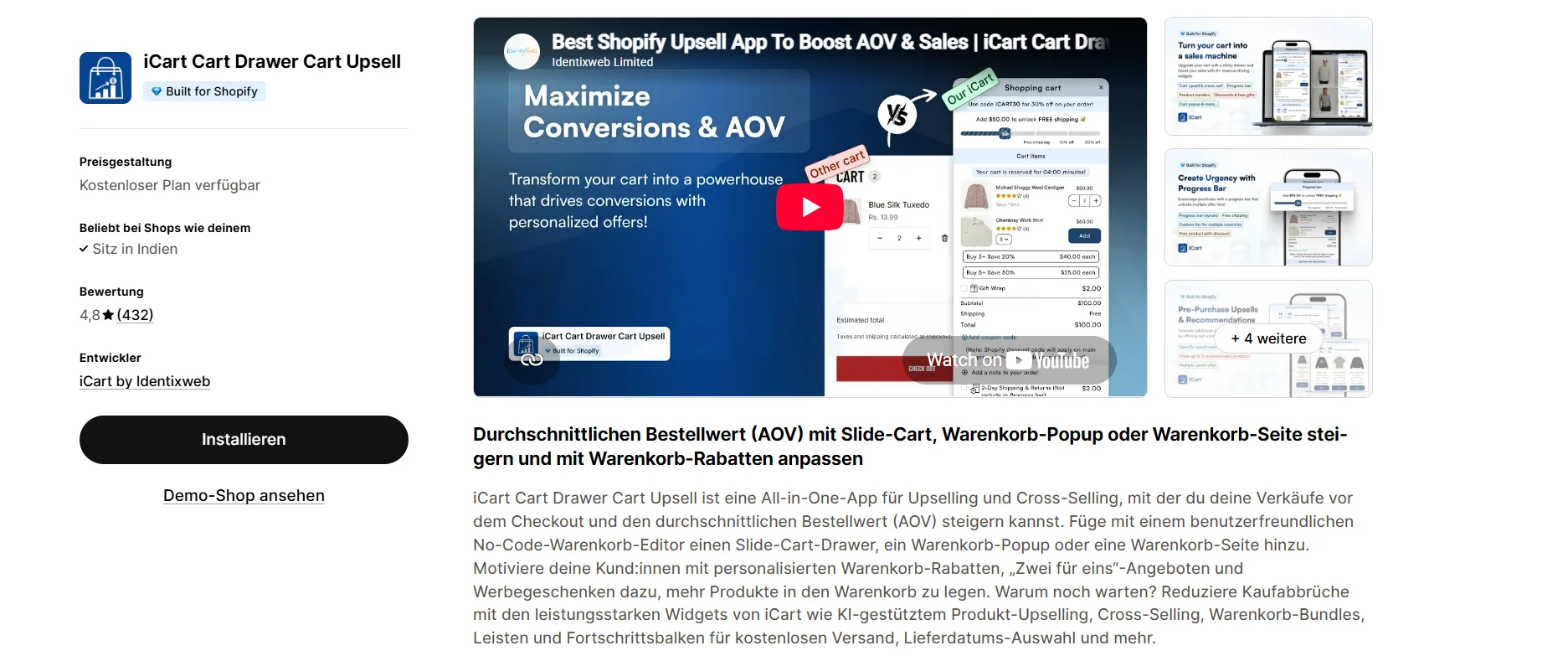
iCart enhances your cart drawer with upsell recommendations, free gift thresholds, and progress bars that encourage larger cart sizes. It’s a strong pre-purchase AOV tool that complements post-purchase apps like ReConvert well.
Key Features:
Pros and Cons:
iCart pairs well with post-purchase tools since it’s primarily cart-focused, with no post-purchase upsell functionality of its own. Some template customizations require CSS knowledge, its recommendation logic is rule-based rather than AI-driven, and analytics reporting is less detailed than dedicated analytics tools.
Pricing Plans:
Ratings: Shopify 4.8/5, G2 4.5/5
There’s a meaningful difference between apps that slap “AI” on a feature and apps where AI is the actual product. The 2025-2026 Shopify app landscape has produced a handful of genuinely AI-native tools that deliver real value.
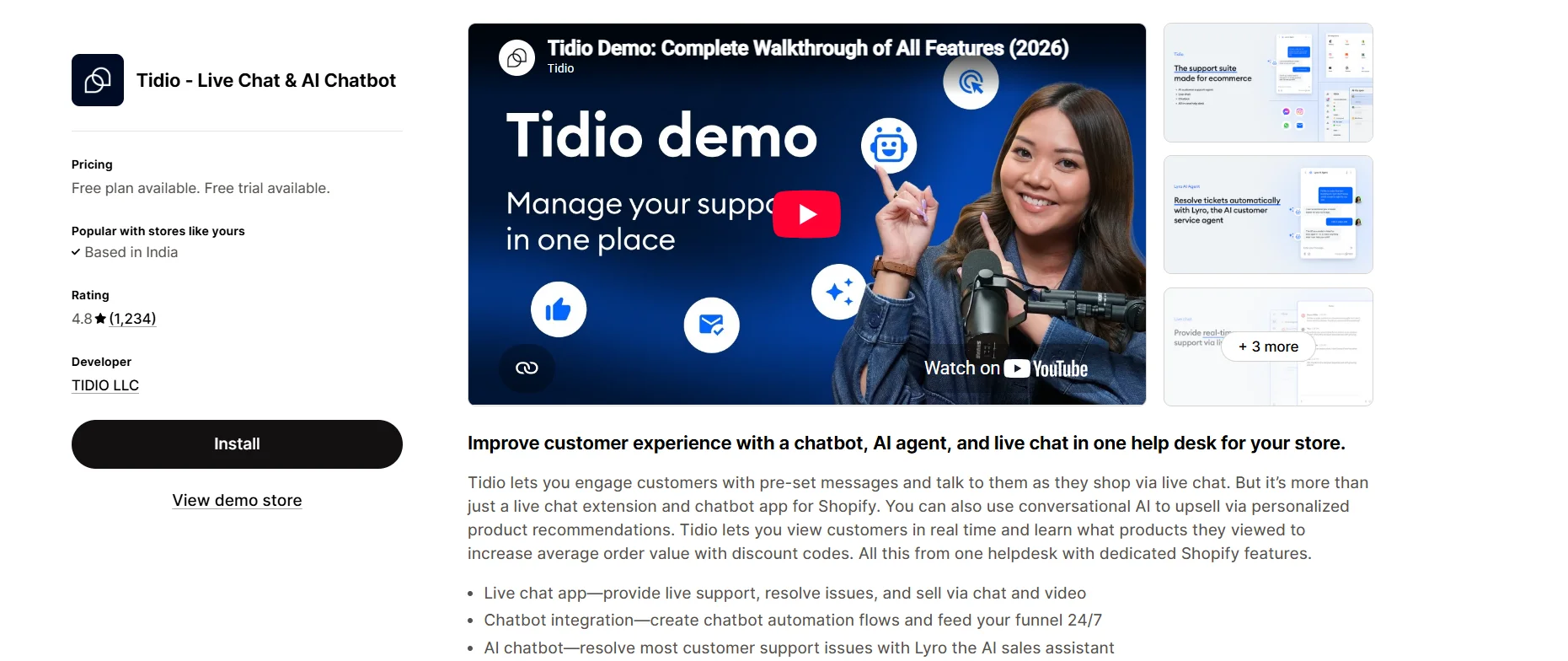
Tidio’s Lyro AI handles customer support conversations autonomously, learning from your store’s FAQ content and product data to resolve queries without human involvement. For stores dealing with high volumes of routine questions (order status, returns policy, size guides), Lyro consistently handles 50 to 70 percent of tickets without escalation.
Key Features:
Pros and Cons:
Lyro handles the majority of routine support tickets without human involvement, and the free plan is generous enough to test it meaningfully. It’s limited to 50 Lyro AI conversations/month on the free plan, the knowledge base requires ongoing maintenance, and complex, multi-step queries still require human handoff.
Pricing Plans:
Ratings: Shopify 4.7/5, G2 4.7/5
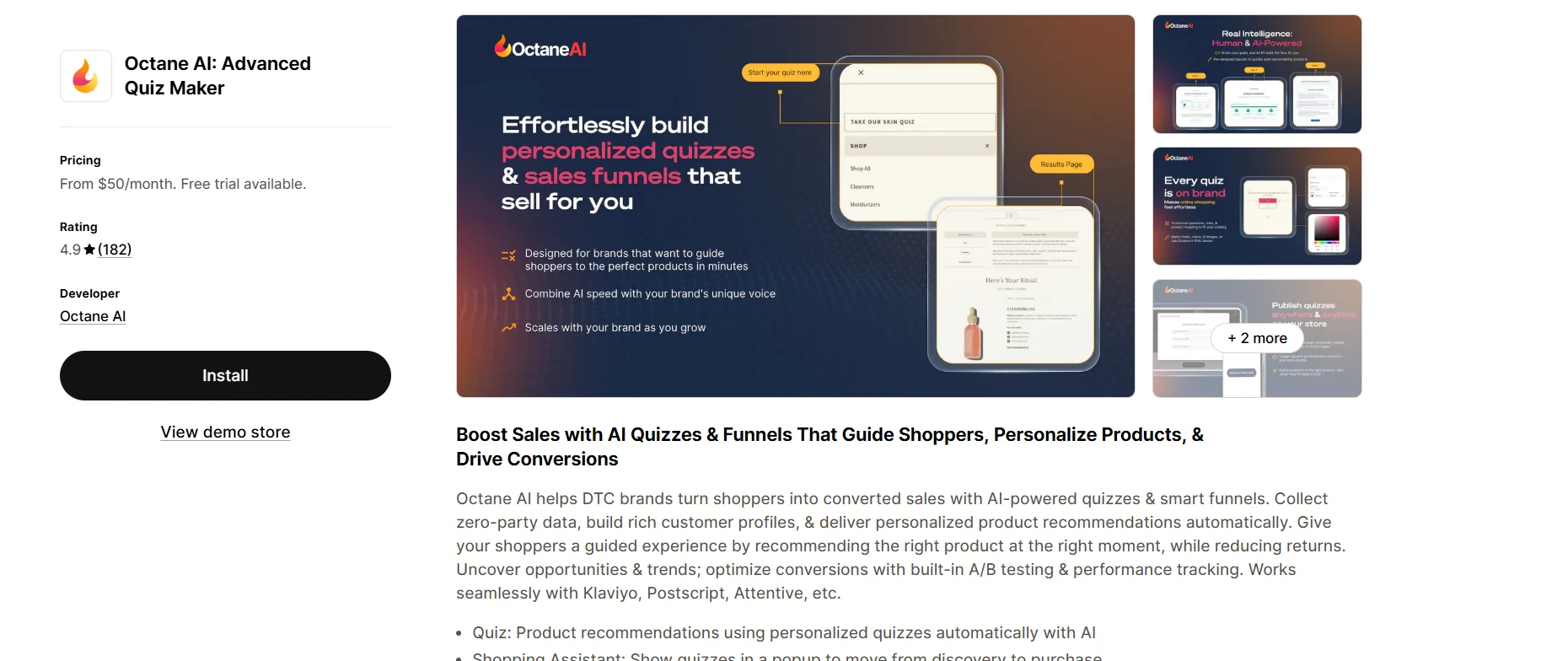
Octane AI builds personalized shopping quizzes that recommend the right product for each customer based on their answers. It’s particularly effective for health, beauty, and apparel brands where customers often need guidance to find the right product.
Key Features:
Pros and Cons:
Octane AI’s quiz flow doubles as a data capture mechanism for segmentation. It’s primarily focused on quizzes, so it’s less versatile than broader AI support or personalization tools, requires meaningful content investment to build quizzes that convert well, and carries a higher price point relative to the specific use case.
Pricing Plans:
Ratings: Shopify 4.8/5, G2 4.4/5
Rebuy appears again here because its core value is genuinely AI-driven: the recommendation engine learns from purchase history, browsing behavior, and order data to serve relevant suggestions. Unlike rule-based “frequently bought together” logic, Rebuy’s recommendations improve over time. See the full breakdown in the AOV section above for features, limitations, and pricing details.
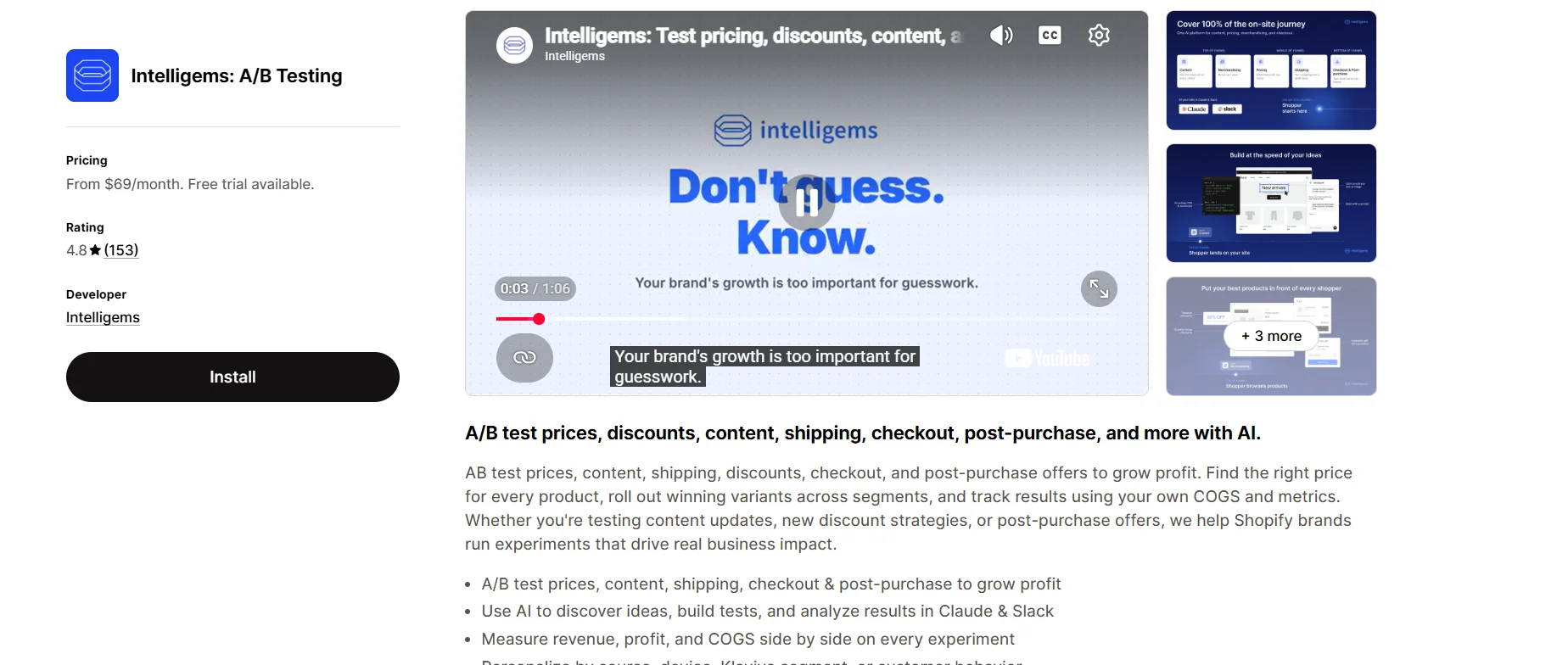
Intelligems is one of the more interesting emerging tools in the Shopify ecosystem: an AI-powered price testing platform that runs controlled experiments on your pricing and measures the revenue impact. Best suited to stores above $100K per month where pricing optimization has real leverage.
Key Features:
Pros and Cons:
Intelligems lets you test pricing systematically instead of guessing. It requires significant traffic to generate statistically valid results, is still a maturing product with fewer integrations and less documentation than established apps, and is focused exclusively on testing with no AI personalization or recommendation functionality.
Pricing Plans:
Ratings: Shopify 4.7/5, G2 limited reviews (newer product)
Most Shopify app categories have three to five strong options that all look similar on the surface. Here’s a practical framework for making a decision without spending weeks on research.
Step one: define your must-have use case. Ignore the feature comparison matrix and start with one question: what’s the single most important thing this app needs to do for your store? A reviews app that can’t collect photo reviews is a dealbreaker for a visual brand, even if everything else is excellent.
Step two: check integration compatibility. Before installing anything, confirm that the app works with your email platform, your loyalty app, and your helpdesk. Incompatibilities between apps are a surprisingly common source of broken workflows and data gaps.
Step three: assess pricing at your scale. Many Shopify apps are priced as a percentage of revenue or by order volume, which means costs can multiply quickly as you grow. Calculate what you’d pay at your current volume and at three times your current volume before committing.
Step four: consider load performance. Every app adds scripts to your storefront. Check whether the app lazy-loads its JavaScript, and look for third-party speed test data before installing. A bloated app stack is one of the most common causes of poor Core Web Vitals scores.
Step five: read the one-star reviews, not the five-star reviews. The most useful information about any Shopify app is how the vendor responds when something goes wrong. Check the Shopify App Store reviews and filter by one star to get an honest picture of support quality and recurring issues.
Quick comparison guide for the most contested categories:
For reviews: Judge.me is the best free option for most stores; Loox is the best choice if visual UGC is central to your brand; Okendo is the strongest mid-market option for brands that want reviews alongside quizzes and customer attributes data.
For loyalty: Smile.io is the easiest starting point; 99minds is the best all-in-one option if you also need gift cards, store credit, or referrals (see our full guide to the best Shopify loyalty apps for a deeper comparison); LoyaltyLion is designed for enterprise complexity.
For email: Privy for beginners; Omnisend for SMBs who want email and SMS in one tool; Klaviyo for stores above 5,000 subscribers that want deep segmentation.
Building a great Shopify app stack is less about installing more and more about choosing deliberately. A few takeaways worth keeping in mind:
Match your app stack to your growth stage. The apps a new store needs are genuinely different from the apps a scaling store needs. Don’t install enterprise tools before you’ve grown into them, and don’t stay on starter apps after you’ve outgrown them.
Don’t underestimate retention. Most Shopify stores spend far more on acquisition than on keeping the customers they already have. Loyalty programs, gift cards, and store credit consistently deliver strong returns, and they’re still underused relative to their impact.
Fewer apps, chosen well, will always outperform a bloated stack. Every app you install is a dependency to manage, a performance cost to absorb, and a monthly fee to justify. Be selective.
If you’re ready to turn one-time buyers into repeat customers, 99minds gives you loyalty programs, gift cards, and store credit, all from a single Shopify app.
Get started with 99minds for free