We're building the future of agentic promotions. Sign up for early access!
Sign up
We're building the future of agentic promotions. Sign up for early access!
Sign up 
Acquiring a new customer is only half the job. The harder part is giving that customer enough reasons to come back, buy again, and eventually become a high-value customer.
That is why ecommerce brands rarely rely on a single retention tool. Their stack may include email and SMS, loyalty, customer support, reviews, subscriptions, returns, analytics, personalization, and automation. The challenge is knowing which tool solves which retention problem and whether the cost is justified by the revenue it influences.
Customer retention software helps ecommerce teams recognize valuable customers, reward repeat purchases, re-engage shoppers between orders, resolve problems, recover revenue, and keep more money inside the store.
Customer retention software is software that helps a business keep existing customers buying by recognizing their behavior, rewarding loyalty, staying in touch, resolving problems, and recovering revenue that might otherwise be lost.
For ecommerce, retention is broader than simply sending a win-back email. A shopper might stop buying because they received poor support, returned an item, forgot about a store credit balance, never received a relevant offer, or had no reason to choose the brand again.
That makes retention a stack rather than a single application. Email and SMS can bring customers back. Loyalty can give them a reason to return. Analytics can identify who is worth re-engaging. Returns software can influence what happens after a purchase. Gift cards and store credit can keep revenue inside the ecosystem.
Ecommerce retention also looks different from SaaS retention. SaaS companies often focus on subscription renewals, product usage, and customer churn. Retailers care heavily about repeat purchase rate, purchase frequency, average order value, customer lifetime value, and the time between purchases.
Before a brand can retain customers, it needs to know who those customers are.
Analytics and customer-data tools help identify first-time buyers, repeat purchasers, high-value customers, and shoppers whose buying frequency is falling. Cohort analysis, customer lifetime value, RFM segmentation, attribution, and purchase behavior can reveal where retention is actually breaking down.
Rewards create a reason to make another purchase.
This layer can include points, VIP tiers, referral rewards, cashback, and other incentives. It is where customer loyalty and retention software overlap most directly.
Customers do not automatically remember to buy again.
Email, SMS, mobile push, wallet passes, and onsite personalization help brands reach customers at useful moments: after a purchase, before a replenishment window, when a product comes back in stock, or when a customer is becoming inactive.
A retention strategy can fail even when marketing is working.
If a customer has a bad experience and cannot get help quickly, another promotional email will not fix the problem. Helpdesk software, product reviews, and post-purchase surveys give brands ways to solve issues and understand what customers actually think.
Some retention opportunities appear when customers are already considering leaving.
Returns software can encourage exchanges instead of refunds. Subscription platforms can recover failed payments. Cancellation flows can identify customers who are about to churn.
This is the layer many retention software lists overlook.
Gift cards can bring new shoppers into the brand. Store credit gives existing customers a balance they can spend later. Wallet passes keep balances and rewards visible on a customer’s phone. Cashback can turn an incentive into money that stays within the brand ecosystem.
The best customer retention software for ecommerce depends on where customers are dropping out of the buying journey. Some platforms focus on re-engagement, others on support, analytics, returns, subscriptions, or keeping revenue in the store.
| Tool | Retention job | Best for | Shopify native? | POS support | Starting price | Free plan or trial |
|---|---|---|---|---|---|---|
| 99minds | Reward, Keep Revenue | Loyalty, gift cards, store credit | Yes | Yes | $49/mo paid plans | Free plan |
| Klaviyo | Re-engage | Email, SMS, customer data | Yes | Syncs Shopify POS orders | $20/mo email | Free plan |
| Attentive | Re-engage | SMS at scale | Yes | Not listed | Custom | Free trial |
| Gorgias | Resolve | Ecommerce customer support | Yes | Not listed | $10/mo | 7-day trial |
| Zendesk | Resolve | Larger support teams | Yes | Not listed | $19/agent/mo | 14-day trial |
| Judge.me | Resolve | Reviews and UGC | Yes | No | $0 | Free plan |
| KnoCommerce | Recognize, Resolve | Post-purchase surveys | Yes | No | $19/mo | 7-day trial |
| Recharge | Recover | Subscription commerce | Yes | No | $99/mo + transaction fees | 60-day trial |
| Loop Returns | Recover | Returns and exchanges | Yes | Yes, on eligible plans | Free / $155/mo | Free plan |
| Triple Whale | Recognize | DTC analytics and attribution | Yes | Retail data on Enterprise | Free / GMV-based | Free option |
| Lifetimely | Recognize | LTV and profit analytics | Yes | Reports POS orders | Free / $49/mo | Free plan |
| Nosto | Re-engage | Personalization | Yes | Via integrations | Custom | PoC |
| Tapcart | Re-engage | Mobile apps and push | Shopify only | Via integrations | $500/mo | Demo |
| Shopify Flow | Automate | Workflow automation | Yes | Shopify ecosystem | Free | Free |
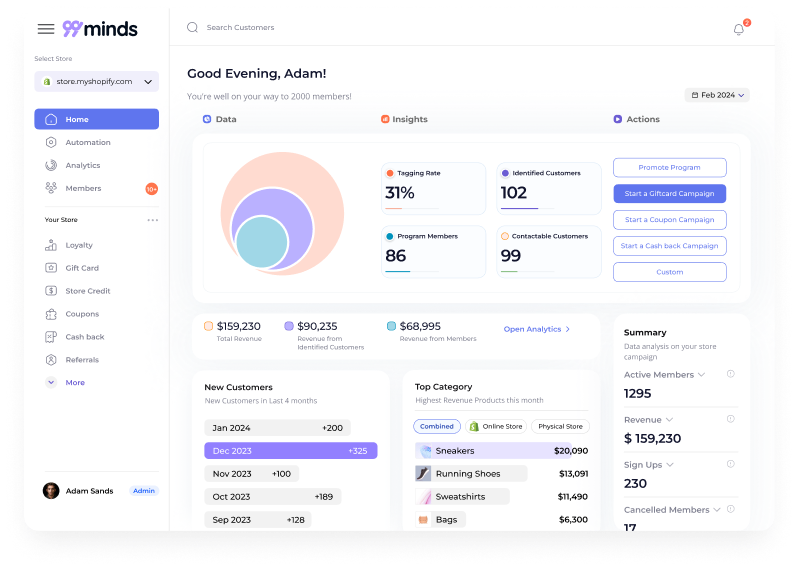
99minds brings several retention jobs into one ecommerce-focused platform, with particular depth around rewards and keeping revenue inside the store.
Instead of treating loyalty, gift cards, referrals, store credit, and wallet passes as separate customer experiences, brands can manage these programs together. The platform is designed for merchants that need retention programs to work across ecommerce and physical retail rather than stopping at the online checkout.
For a retailer, that distinction matters. A customer might earn loyalty points online, receive store credit after a return, purchase a gift card for someone else, and later redeem a balance in a physical store. A retention platform needs to understand those transactions as part of the same customer relationship.
99minds positions itself as customer loyalty and retention software for this broader use case.
The biggest advantage is the combination. A merchant does not necessarily need one system for loyalty, another for store credit, and another for gift cards when these programs are part of the same retention strategy.
99minds is primarily relevant when a business actually needs loyalty, gift cards, store credit, referrals, cashback, or wallet-based retention. A brand looking only for email automation or customer support would still need another specialist platform.
The breadth can also mean more planning during setup. Merchants need to define how points, balances, rewards, gift cards, and customer identities should work before launching the program.
99minds has a free plan with 50 transactions, followed by paid plans starting at $49/month. The Basic plan includes 800 free monthly transactions, while higher plans add more transactions, integrations, automation, referrals, VIP tiers, POS capabilities, and wallet functionality.
Klaviyo is primarily a customer engagement platform, but it plays a major role in ecommerce retention because it connects customer data with automated messaging.
Its strength is turning behavioral signals into communication. Instead of sending the same newsletter to everyone, a merchant can build flows around purchases, browsing, inactivity, product behavior, customer segments, and predicted future actions.
That makes Klaviyo especially useful for the Re-engage layer of a retention stack.
A useful setup is connecting loyalty or gift card data to Klaviyo so a customer can receive a message showing their current balance or available reward at the right moment.
Klaviyo can become expensive as contact counts and messaging volume grow. Its pricing is tied to active profiles and channel usage, so the cost should be modeled against future database growth rather than today’s list size.
Klaviyo offers a free plan for up to 250 active profiles and 500 email sends per month. Paid email plans start at $20/month for 251-500 active profiles and scale with profile count, while SMS and other mobile messages are billed through a separate Mobile Messaging plan starting at $15/month.
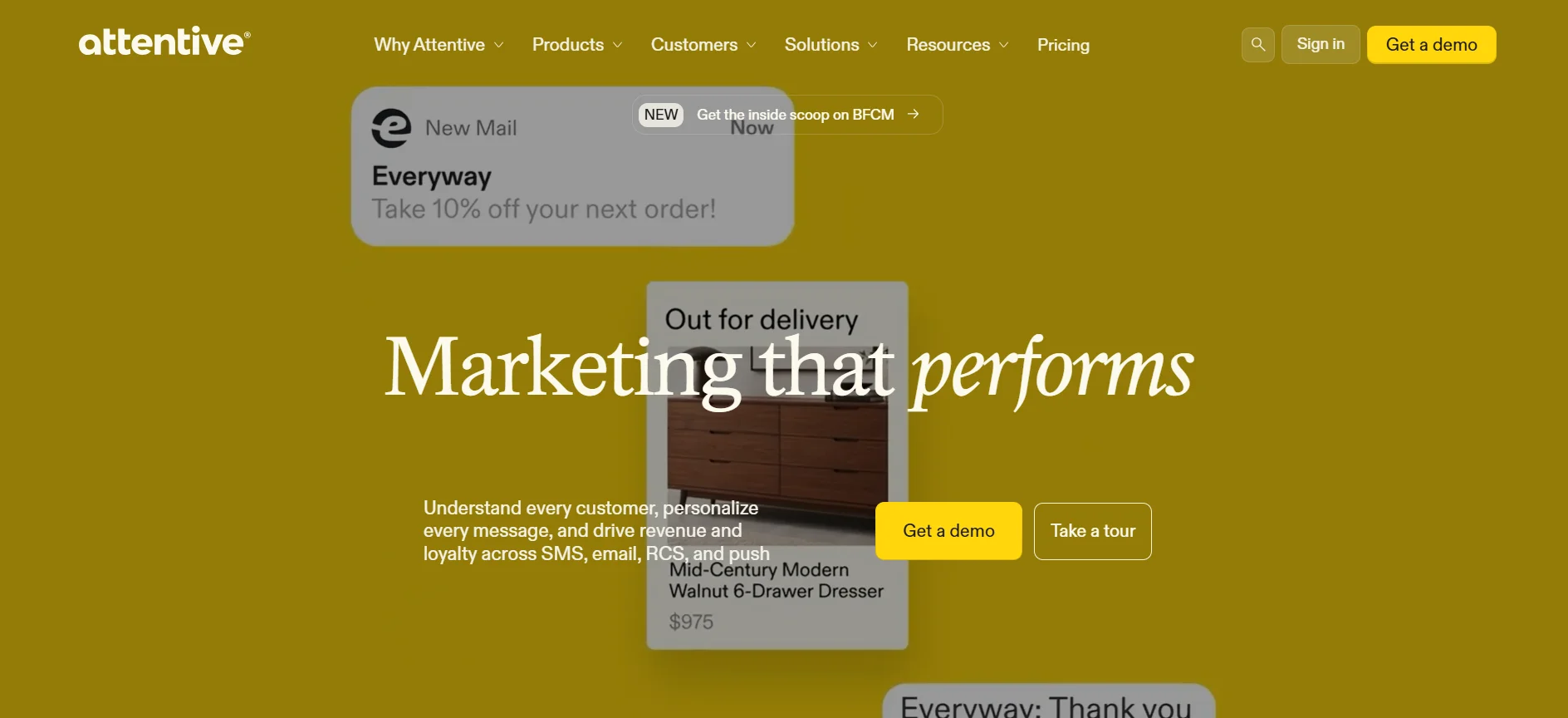
Attentive focuses on mobile messaging, particularly SMS, MMS, RCS, and increasingly cross-channel customer engagement.
For ecommerce brands with a large mobile audience, SMS can be a powerful retention channel because the message reaches customers somewhere they already spend time. The platform supports automated journeys, segmentation, campaign reporting, testing, and customer identity capabilities.
Its role in the retention stack is straightforward: reach customers quickly and make those messages relevant.
Attentive is specialized around messaging rather than being a complete retention platform. Brands still need separate systems for loyalty, gift cards, returns, customer support, and deeper commerce analytics.
SMS economics also require careful planning because costs depend on subscriber volume, message volume, channels, and other selected products.
Attentive does not publish one fixed starting price. Its pricing is based on factors including message volume, subscriber-list size, channels, and selected AI products. The company also offers free trials.
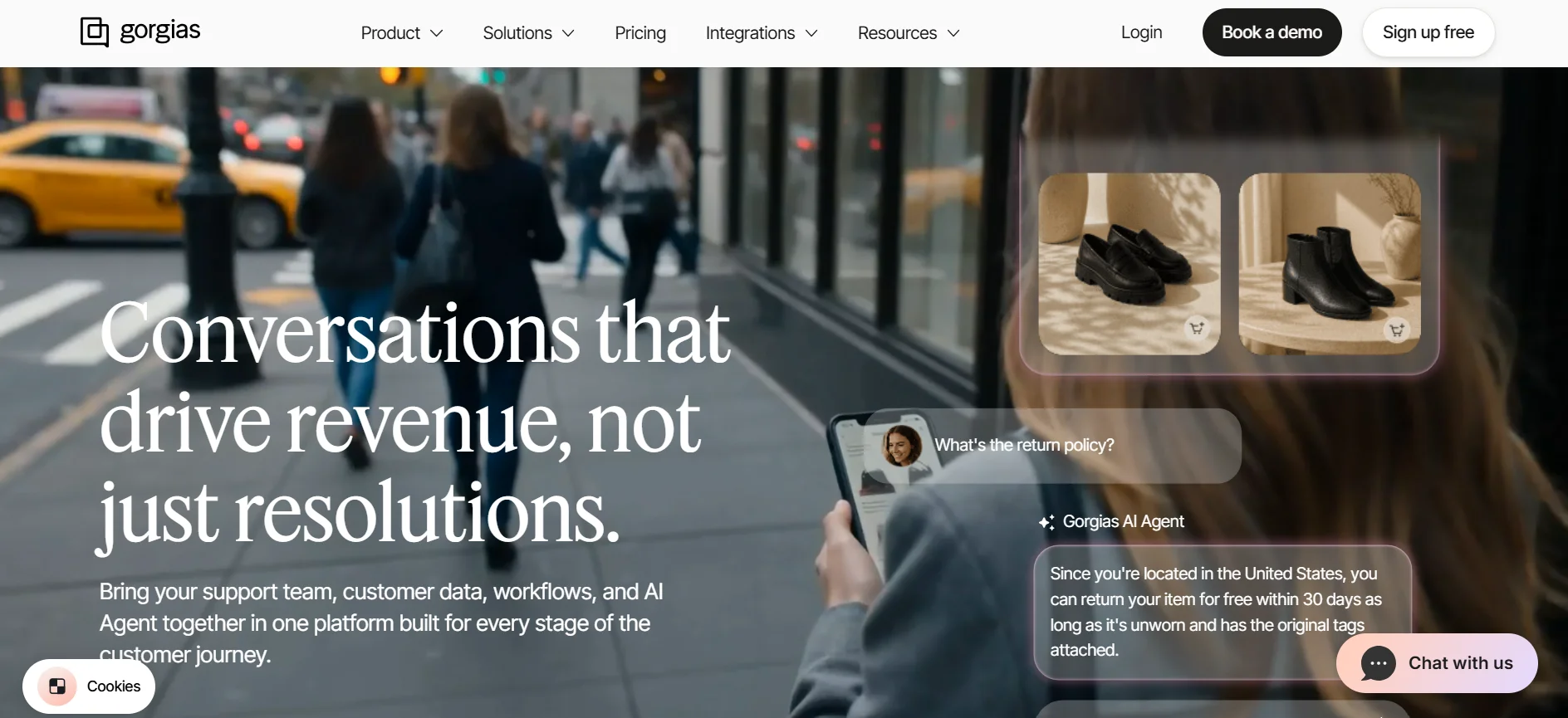
Gorgias approaches retention from the support side.
For Shopify merchants, the platform brings customer conversations together with ecommerce information so agents can understand an order while responding to the customer. That can make a meaningful difference after delivery issues, product questions, refunds, or other problems.
The retention connection is simple: customers who get problems resolved efficiently have fewer reasons to abandon the brand.
Gorgias pricing is based on ticket usage rather than simply the number of support agents. AI Agent interactions can add another usage-based cost, so brands with rapidly growing support volume should model the economics carefully.
Gorgias currently lists plans beginning at $10/month for Starter, with higher plans at $60, $360, and $900/month, plus custom Enterprise pricing. Its pricing is tied to ticket volume, and a 7-day free trial is available.
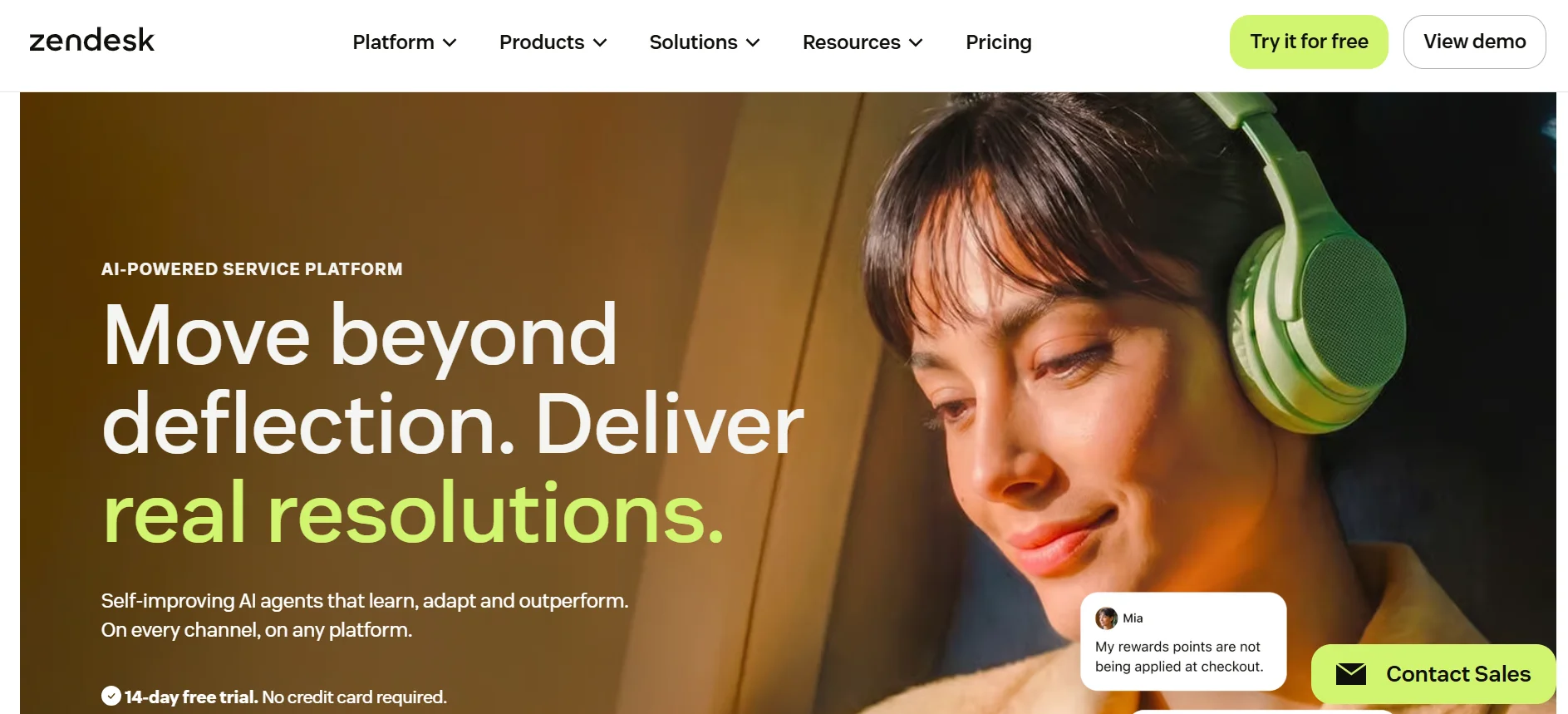
Zendesk is built for businesses that need a more extensive customer service operation.
Where a smaller Shopify store may be comfortable with a lightweight helpdesk, larger retailers and multi-brand organizations often need structured ticketing, routing, reporting, knowledge bases, SLAs, and support across multiple channels.
Zendesk therefore fits the Resolve layer of a mature retention stack.
Zendesk can be more infrastructure than a small ecommerce team needs. Implementation, configuration, and per-agent costs can also become significant as the support organization grows.
Zendesk pricing is per agent. Support Team starts at $19/agent/month billed annually, Suite Team at $55/agent/month, and Suite Professional at $115/agent/month, with custom Enterprise pricing. Add-ons such as Copilot AI and workforce engagement cost extra, and a 14-day free trial is available.
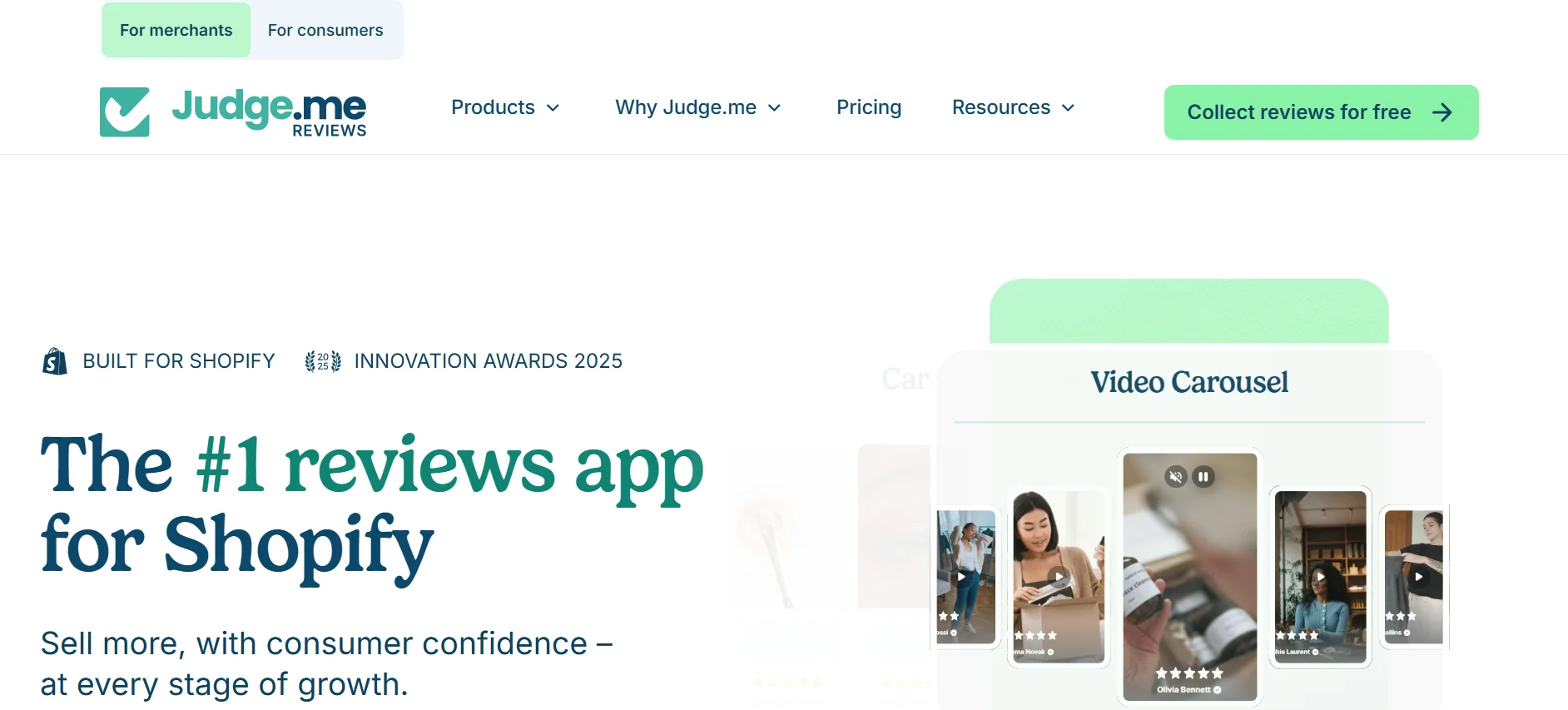
Judge.me focuses on one of the simplest retention-adjacent assets in ecommerce: customer trust.
Product reviews, photos, videos, ratings, and UGC help shoppers make purchase decisions. They can also give existing customers a reason to interact with the brand after an order.
For smaller stores, the appeal is its simplicity. You can collect and display reviews without adding a complicated customer-data layer.
Judge.me is a reviews platform, not a complete retention system. It cannot replace email/SMS, loyalty, customer support, or customer analytics.
Judge.me offers a free plan with unlimited reviews and a $15/month Awesome plan with additional capabilities such as AI features, integrations, referrals and coupons, and greater customization.
KnoCommerce helps brands understand what happens after the order.
Its post-purchase surveys can capture information that normal analytics cannot easily explain: why someone bought, what influenced the decision, how they heard about the brand, and what they think after receiving the product.
That makes it useful for both Recognize and Resolve. Instead of guessing why retention is weak, merchants can collect direct customer feedback and connect those responses to their broader marketing and attribution strategy.
Survey data is only useful when customers respond and when the business actually acts on the findings. It is therefore a supporting retention tool rather than a standalone customer retention platform.
KnoCommerce currently lists a Starter plan at $19/month and an Analyst plan at $119/month. A 7-day free trial is available, with annual billing offering savings.
Recharge is designed around subscription commerce, where retention has a very specific meaning: getting the next scheduled order to happen.
For subscription brands, a customer does not need to place a new order manually every month. The retention challenge is keeping the subscription active, preventing failed payments, reducing unnecessary cancellations, and making it easy for customers to manage their subscriptions.
Recharge is most useful when recurring purchases are a meaningful part of the business. For a retailer selling mostly one-time purchases, much of the platform’s functionality may be unnecessary.
Recharge lists a Starter plan at $99/month plus 1.49% + 19¢ per transaction and a Plus plan at $499/month plus 1.34% + 19¢ per transaction, with a 60-day free trial. High-volume brands can request Custom volume-based pricing, so merchants should evaluate total cost including transaction fees, not just the platform fee.
Returns are often treated as the end of a customer relationship. Loop Returns takes a different approach: the return can become another opportunity to keep the customer.
Its returns and exchanges infrastructure helps merchants manage the process while giving shoppers alternatives to simply receiving money back. Exchange-first experiences, store credit, and incentives can help preserve revenue.
Loop is primarily a returns and post-purchase platform. It will not replace a loyalty program, messaging platform, or broader customer-data system.
Its economics also depend heavily on return volume and the value of the revenue retained through exchanges and store credit.
Loop currently lists a free Checkout+ plan, an Essential plan starting at $155/month, and an Advanced plan starting at $340/month. Advanced functionality includes features such as Instant Exchange, Bonus Credit, Shop Now, fraud prevention, and Loop POS.
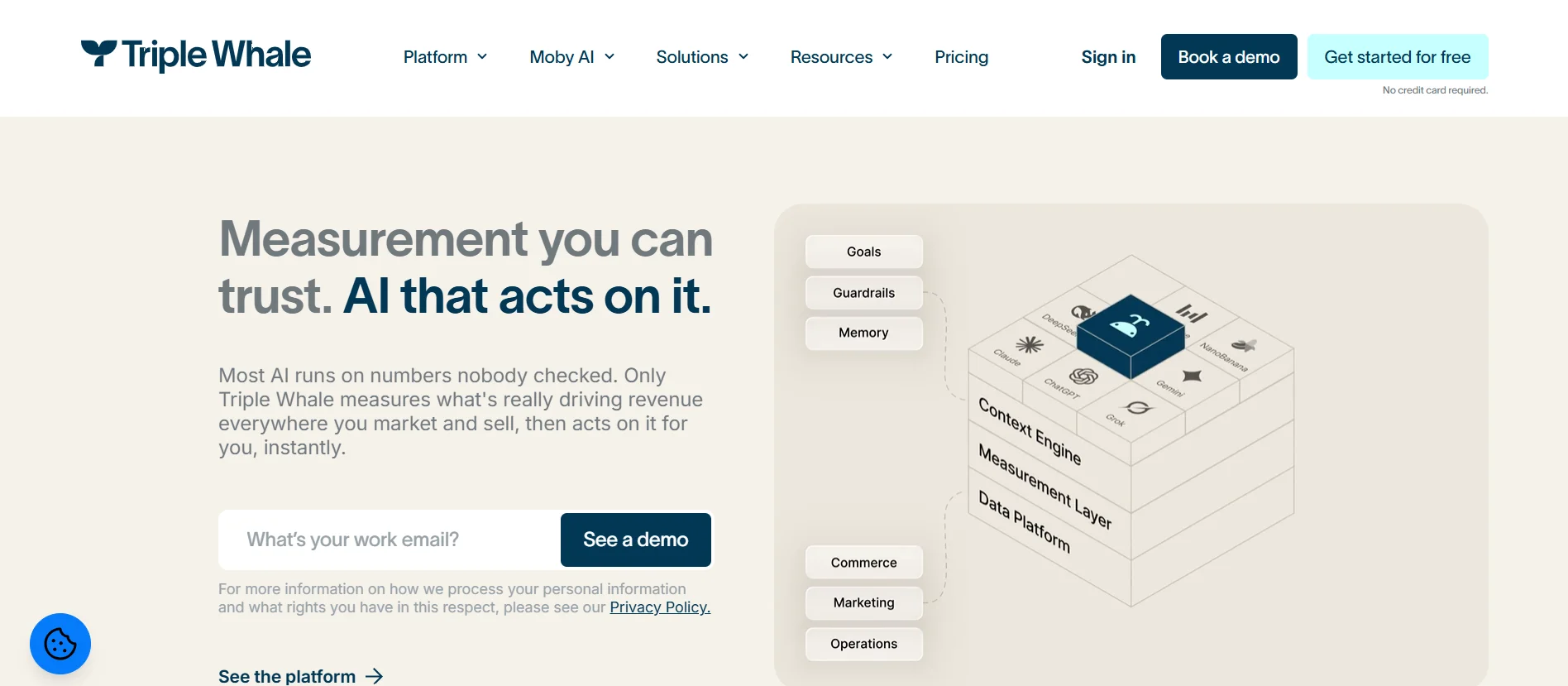
Triple Whale sits on the Recognize side of the retention stack.
Its role is not to send a customer another message. It helps the business understand what is happening across marketing and commerce data so teams can make better decisions about acquisition, retention, attribution, and performance.
For DTC brands, this can help answer questions such as which channels produce customers who continue buying and how marketing performance changes across cohorts.
Analytics platforms can tell you where performance changed, but they do not automatically fix the underlying retention problem. Teams still need operational tools to act on those insights.
Triple Whale’s pricing also varies by annual GMV and selected package.
Triple Whale currently offers Free, Foundation, Automate, and Enterprise options. Paid pricing depends on annual GMV and the package selected rather than one universal starting price. On the Shopify App Store, Foundation is listed from $219/month and Automate from $749/month, with Enterprise priced through sales.
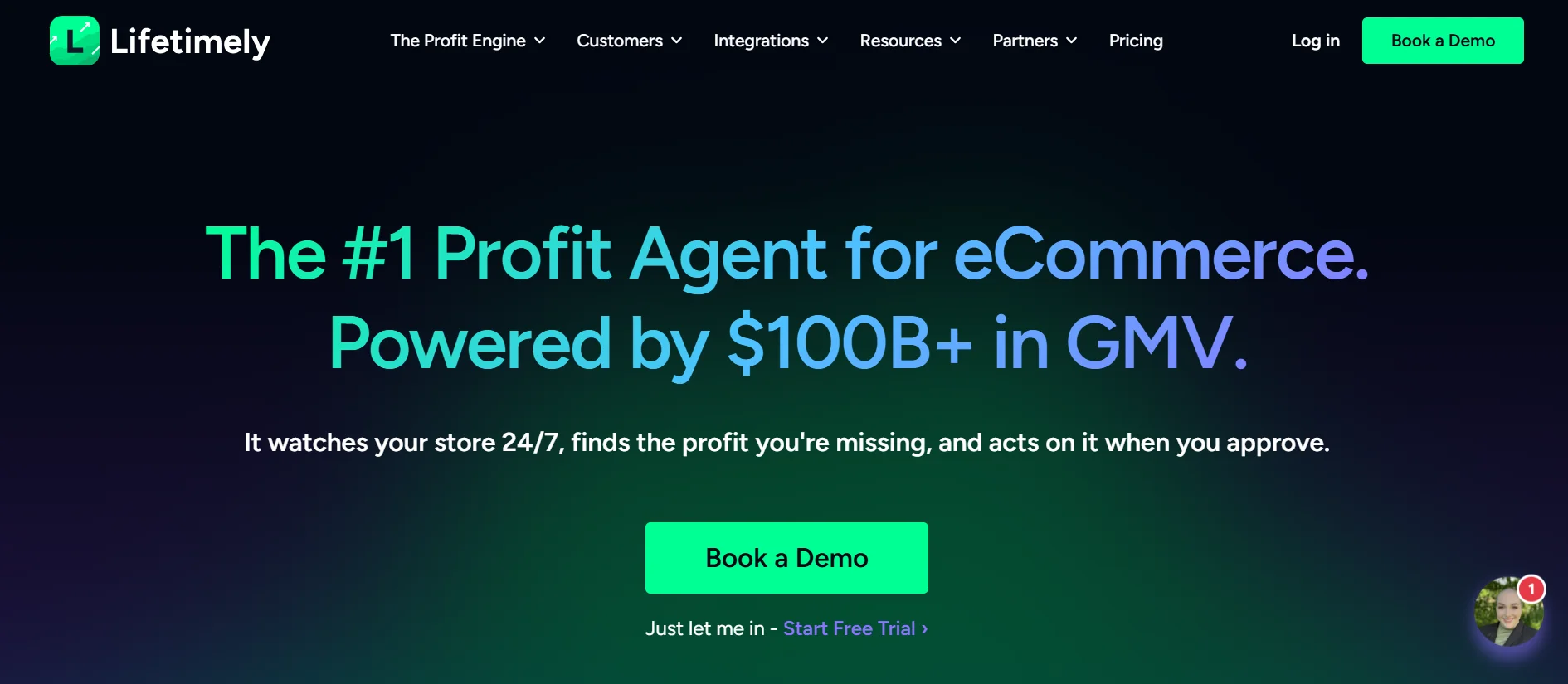
Lifetimely is designed for merchants who want a clearer financial picture of customer behavior.
Its focus on lifetime value, profit, customer behavior, cohorts, and forecasting makes it particularly useful when a retention team needs to move beyond surface-level metrics such as email clicks.
The key question becomes: are customers who come back actually profitable?
Lifetimely is an analytics layer. It can show that retention is improving or declining, but the actual retention campaigns still need to happen elsewhere.
Lifetimely has a free plan. Paid plans currently start at $49/month for up to 500 orders/month, with higher tiers at $149/month and $299/month for larger order volumes. A 14-day free trial is included on paid plans.
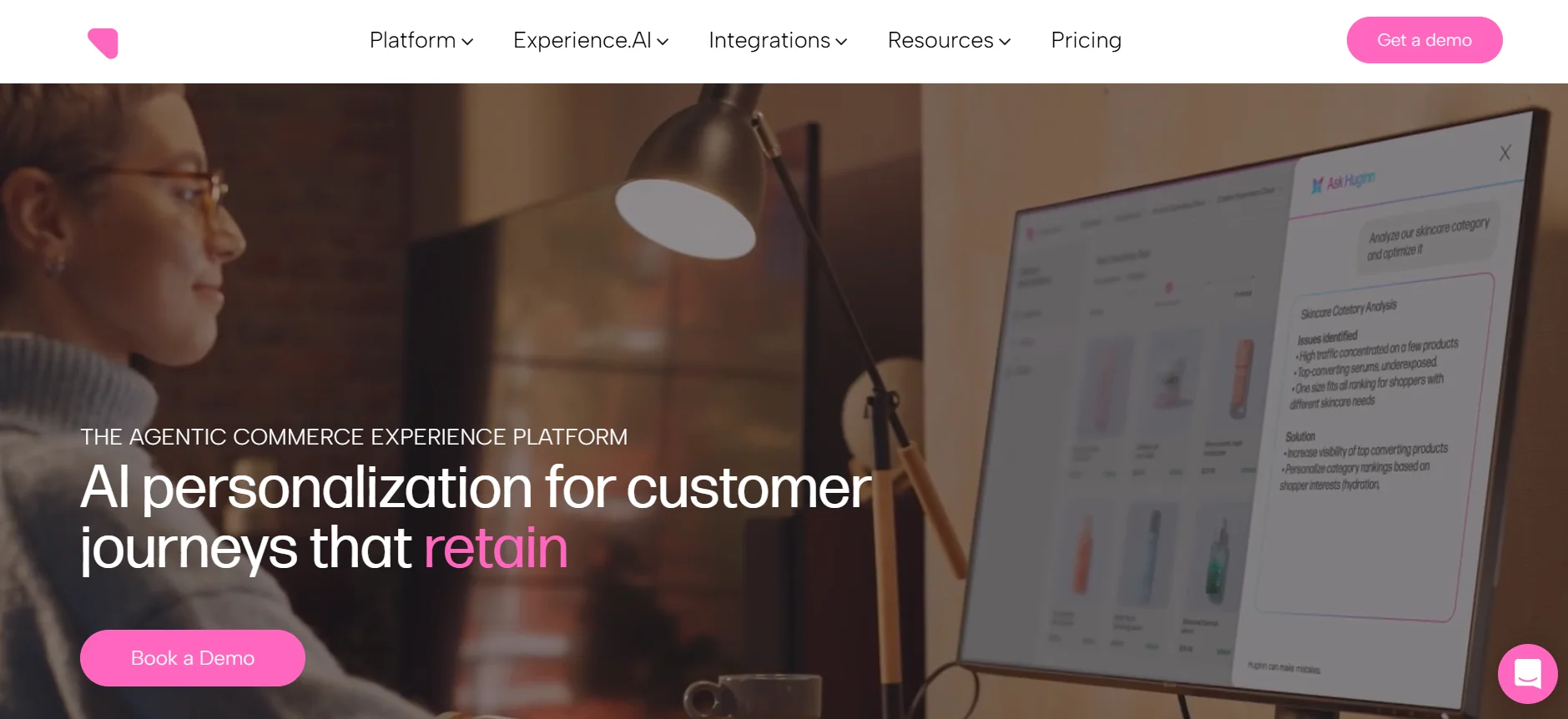
Nosto focuses on personalization.
Instead of showing every shopper the same storefront, product recommendations, search results, or merchandising, Nosto uses customer and product data to create more relevant experiences.
That matters for retention because returning customers already provide behavioral information. The more effectively a store uses that information, the easier it becomes to make the next visit feel relevant.
Nosto is powerful when a store has enough traffic, catalog depth, and behavioral data to benefit from personalization. Smaller merchants may see less value if there is not enough traffic to support meaningful testing.
Nosto uses modular pricing based on business volume, including GMV and traffic, as well as the modules and support requirements selected. It does not offer a standard self-service free trial; qualified merchants can use a proof-of-concept process.
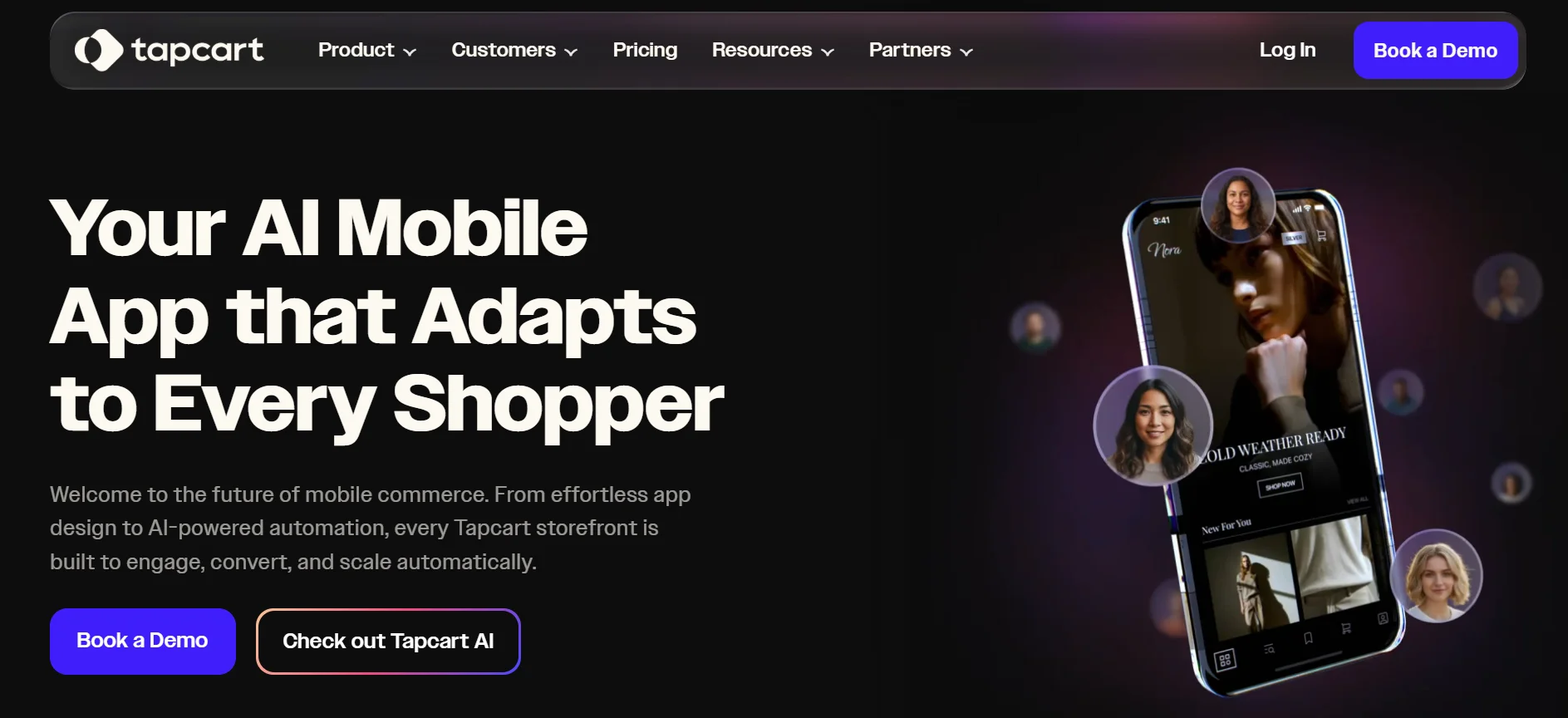
Tapcart turns a Shopify storefront into a branded mobile shopping app.
The retention opportunity is straightforward: a mobile app gives brands another direct channel for reaching existing customers through push notifications, personalized content, product discovery, and app-specific experiences.
It is particularly relevant for brands where customers purchase repeatedly and where mobile engagement is already strong.
Tapcart is Shopify-focused and does not serve merchants on every ecommerce platform. Building an app also creates another channel that needs content, merchandising, analytics, and ongoing management.
Tapcart’s current pricing lists Growth at $500/month, Scale at $1,250/month, and Enterprise+ at $2,850/month. An AI add-on is listed at $250/month and is available on all plans. Tapcart also notes that Apple Developer and Google Play accounts are additional requirements for publishing.
Shopify Flow is the automation layer of the stack.
It does not replace loyalty, email, support, analytics, or returns software. Instead, it connects events to actions. That makes it useful for reducing the manual work between the tools already installed in a Shopify store.
A simple example: when a customer crosses a spending threshold, Flow can apply a tag, trigger another workflow, or pass information to another application.
Flow is only as useful as the systems and data connected to it. It can automate a process, but it does not provide the full loyalty, support, analytics, or messaging functionality behind that process.
Shopify Flow is free for Shopify Basic, Grow, Advanced, and Plus stores, although certain capabilities and usage limits vary by Shopify plan.
Gift cards and store credit are not always categorized as retention technology, but they can directly influence whether money leaves the store or comes back later.
Store credit is the clearest example. When a customer receives a balance instead of a cash refund, the money remains tied to a future purchase. That balance becomes a reason to return.
Returns can therefore become part of the retention strategy. Offering customers the option to receive store credit, potentially with an incentive, can change the outcome from “customer received a refund” to “customer has another reason to shop.”
Gift cards work differently because they can expand the customer base. The person who buys the gift card is one customer; the recipient may become another. Gift cards can therefore function as both a revenue and acquisition mechanism.
The accounting side still matters. Unused gift card balances are not simply free profit. They represent an outstanding obligation until redeemed or otherwise treated according to applicable accounting rules. Brands should understand their gift card liability and applicable breakage rules rather than treating breakage as an automatic margin boost.
Digital wallets add another layer. A customer who can see a balance, reward, membership information, or offer on their phone has a persistent reminder of the brand without needing to open an email.
Cashback can work similarly when the cashback is issued into a store wallet. Instead of reducing the price of the current order, the business gives the customer value that encourages another transaction.
That is why a modern retention stack should consider not only how to communicate with customers, but also what happens to the money after a return, promotion, gift purchase, or loyalty transaction.
Omnichannel retention becomes difficult when the same person appears as two customers.
Someone may purchase online using an account and then walk into a physical store using a phone number or email address. If loyalty points, gift cards, and store credit do not recognize the same customer, the experience becomes fragmented.
The basic requirement is a shared customer identity. The shopper should be able to earn value online, see the balance, and use it in a store without needing to start over.
Consider a simple journey. A customer purchases online and earns loyalty points. A few weeks later, they receive a gift card and save it to their phone. They visit the physical store and redeem that gift card at checkout. After the transaction, their balance updates and the wallet pass reflects the new state.
That is omnichannel retention in practice: the customer sees one relationship with the brand even though the transactions happen in different channels.
99minds supports this model through ecommerce and POS integrations, including Shopify, BigCommerce, and supported POS systems. The goal is to make loyalty, gift cards, and store credit usable across the customer journey rather than isolating them to one storefront.
Before comparing customer retention software, start with the customer behavior you want to change, not the feature list you want to buy.
One practical exercise is to model your customer retention software stack at twice your current volume. A platform that looks inexpensive at today’s order count can become much less attractive if your store grows rapidly.
Retention software should ultimately be judged by customer behavior and financial impact, not by the number of features inside the dashboard.
Consider an illustrative ecommerce store with 30,000 annual customers, an $80 average order value, and a 40% gross margin.
If the store improves its repeat purchase rate by five percentage points, that represents 1,500 additional repeat customers.
If each of those customers makes two additional $80 purchases:
1,500 × 2 × $80 = $240,000 in additional revenue.
At a 40% gross margin:
$240,000 × 40% = $96,000 in additional gross profit.
The example is deliberately simple. Real ROI calculations should account for discounts, product margins, incremental customers, platform costs, campaign costs, and the difference between revenue that would have happened anyway and truly incremental revenue.
The metric you track should also match the tool.
| Tool type | Metric that proves it works |
|---|---|
| Loyalty | Member vs. non-member repeat rate, AOV, redemption rate |
| Referral | Referred customer count and referred customer LTV |
| Gift cards | Sales, redemption rate, recipient overspend, outstanding liability |
| Store credit and returns | Refunds converted to credit and credit redemption |
| Email/SMS | Revenue per recipient and flow revenue |
| Helpdesk | First response time, CSAT, repeat purchase after support |
| Subscriptions | Churn and failed-payment recovery |
| Analytics | Cohort retention curve and LTV:CAC |
Where possible, use a holdout group or before-and-after comparison over 60 to 90 days. Changes in your customer retention rate can take longer to show than campaign-level metrics, especially for businesses with long repurchase cycles.
Customer retention software is not a single category. It is a connected system of tools that helps a brand recognize customers, reward them, communicate with them, resolve problems, recover revenue, and keep more value inside the store.
The right starting point is the retention problem that is already visible in your data. If customers are not returning, look at customer retention strategies built on loyalty and re-engagement. If refunds are high, examine returns and store credit. If customer service is hurting repeat purchases, strengthen support. If you cannot tell which customers are actually profitable, start with analytics.
For omnichannel retailers, the next step is connecting these experiences across online and in-store channels so customers do not have separate identities, balances, or rewards.
99minds brings loyalty, gift cards, store credit, referrals, cashback, and Apple and Google Wallet passes into the same retention layer, with ecommerce and POS connectivity. For brands evaluating a broader retention stack, that can provide the Reward and Keep Revenue foundation while email, support, analytics, and other specialist tools handle their respective jobs.
Book a 99minds demo to see how loyalty, gift cards, store credit, and wallet passes can work together across your online store and POS.