We're building the future of agentic promotions. Sign up for early access!
Sign up
We're building the future of agentic promotions. Sign up for early access!
Sign up 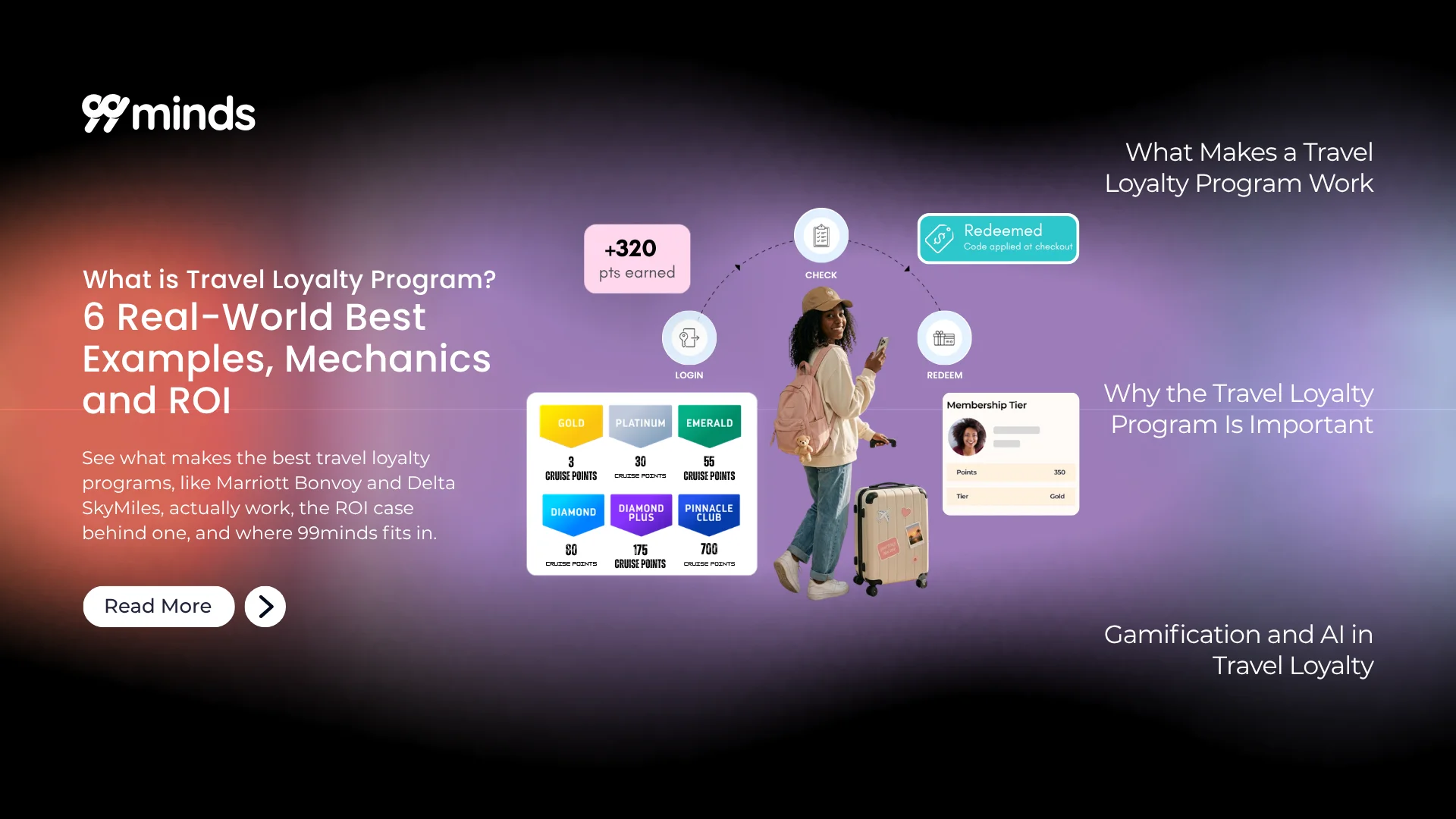
OTA commissions on travel bookings typically run 15 to 25 percent per booking, and that’s before add-on fees that push the effective rate even higher. Every booking that flows through an intermediary instead of your own channel hands that margin, and the customer relationship, to someone else.
A travel loyalty program is a structured rewards system that gives travelers a reason to book with the same brand again instead of shopping around every time. It’s how you win that relationship back, giving travelers a reason to come to you directly next time instead of restarting their search on a comparison site.
A travel loyalty program is a structured rewards system that gives travelers a reason to book with the same brand again instead of shopping around every time. Members earn points, credits, or status for bookings and spending, then redeem that value for free trips, upgrades, or other travel perks.
The core mechanics stay consistent whether it’s run by an airline, a hotel group, an online travel agency, or one of the many travel agent loyalty programs used by independent agencies: travelers earn currency through eligible bookings, they climb tiers based on that activity, and they redeem currency for rewards.
See How 99minds Powers Travel Loyalty Programs
Launch points, tiers, referrals, and automated rewards for your travel business, without custom development.
A travel loyalty program works when its reward currency, tier structure, and redemption rules all point at the same outcome: getting the traveler to book direct again.
Every program runs on an earn-and-burn loop: travelers earn currency on eligible spend, then burn it on rewards. The math that keeps this loop sustainable is the effective reward cost, the total value of rewards issued as a percentage of booking revenue.
Effective Reward Cost Formula
Reward Value Issued ÷ Booking Revenue = Effective Reward Cost
Target range: 0.5% to 1.5% of booking revenue
Aim to keep that number between roughly 0.5 and 1.5 percent of booking revenue. Below that range, the reward rarely feels meaningful enough to change booking behavior. Above it, the program starts eating into margin faster than it returns in repeat bookings.
That range still leaves room to design a program that feels generous. A $2,000 trip at a 1 percent effective reward cost issues $20 in redeemable value, which is enough to fund a meaningful upgrade or a percentage-off voucher on the next booking without putting real pressure on margin.
Most travel loyalty programs lean on one of three reward types, and the strongest ones blend more than one:
99minds’ reward-rule engine is built to support all three models from one place, so a program can run points-based rewards, instant coupon-style redemptions, and workflow-triggered experiential perks without stitching together separate tools.
A tiered loyalty program recognizes travelers by spend or engagement and can unlock real perks like priority service. But tier climbing alone isn’t a reliable motivator: Deloitte’s airline loyalty research found that 78 percent of the most loyal flyers sit at entry or mid-tier status, and are about half as likely as moderately loyal members to actively chase the next tier, per Deloitte. Treat tiers as a recognition layer, not the whole strategy.
Travel also has a mechanic most retail categories don’t: coalition loyalty, where an airline, hotel chain, and car rental company let members earn and transfer points across each other’s programs. A coalition loyalty program extends the places a member can use their balance, which makes the currency feel more valuable without the operator having to fund every redemption alone.
Loyalty programs in the travel industry aren’t a nice-to-have anymore, they’re a direct response to how much margin and relationship ownership travel businesses have already given up.
Intermediaries own the relationship: Every booking made through an OTA, marketplace, or comparison site hands the traveler’s contact details and future loyalty to that platform, not to the brand that actually delivered the trip. A loyalty program flips that dynamic. It gives the traveler a reason to skip the search next time and come straight to you, the same principle behind any strong customer retention strategy, just applied to a longer, higher-value purchase.
The revenue case is proven at scale: According to Deloitte, full-service U.S. airlines attribute 11 to 13 percent of total revenue to their loyalty programs. Much of that comes from co-branded card and partner relationships, not bookings alone.
The market is growing fast: According to Future Market Insights, the tourism industry loyalty programs market is projected to roughly double by 2035, from $30 billion in 2025 to $65 billion, an 8.1 percent CAGR. That growth reflects how many travel businesses are actively investing in loyalty right now.
Digital expectations have risen: IATA’s 2025 Global Passenger Survey found that 78 percent of travelers want a single smartphone experience that combines their digital wallet, passport, and loyalty cards. A travel rewards program that only lives on a plastic card or a spreadsheet is already behind that expectation.
Booking has become commoditized: Price and inventory are easy to compare across five browser tabs, which means the booking itself is rarely a differentiator anymore. Among loyalty programs in the travel industry, a well-designed one is among the few remaining levers a brand controls directly. It rewards a relationship, and a competitor can’t match that with a lower price on a single trip.
The best travel loyalty programs all borrow a small number of mechanics that any travel brand, regardless of scale, can copy. Here’s what each one does differently, and the specific takeaway an independent travel business can apply.
Marriott Bonvoy runs a single loyalty currency across more than 30 hotel brands, from budget-focused Fairfield Inn to luxury names like Ritz-Carlton. A member earns and redeems the exact same points regardless of which brand they book, with five elite tiers, Silver, Gold, Platinum, Titanium, and Ambassador, layered on top based on nights stayed per year.
That structure means a traveler never has to think about which “bucket” their points sit in before booking. The takeaway for a smaller travel brand: even if you only sell one type of trip today, design your point system so it can absorb new product lines later without forcing members to juggle separate balances.
Delta SkyMiles has long marketed a policy of no blackout dates on standard award redemptions, meaning a member can use miles on any available seat rather than a restricted subset of “award-only” inventory. Award pricing still moves dynamically with demand, but availability itself isn’t artificially limited.
This matters because restrictive redemption is one of the fastest ways to lose a loyal member’s trust. The takeaway: whatever currency you issue, make sure members can actually get meaningful value out of it without hunting for a narrow redemption window.
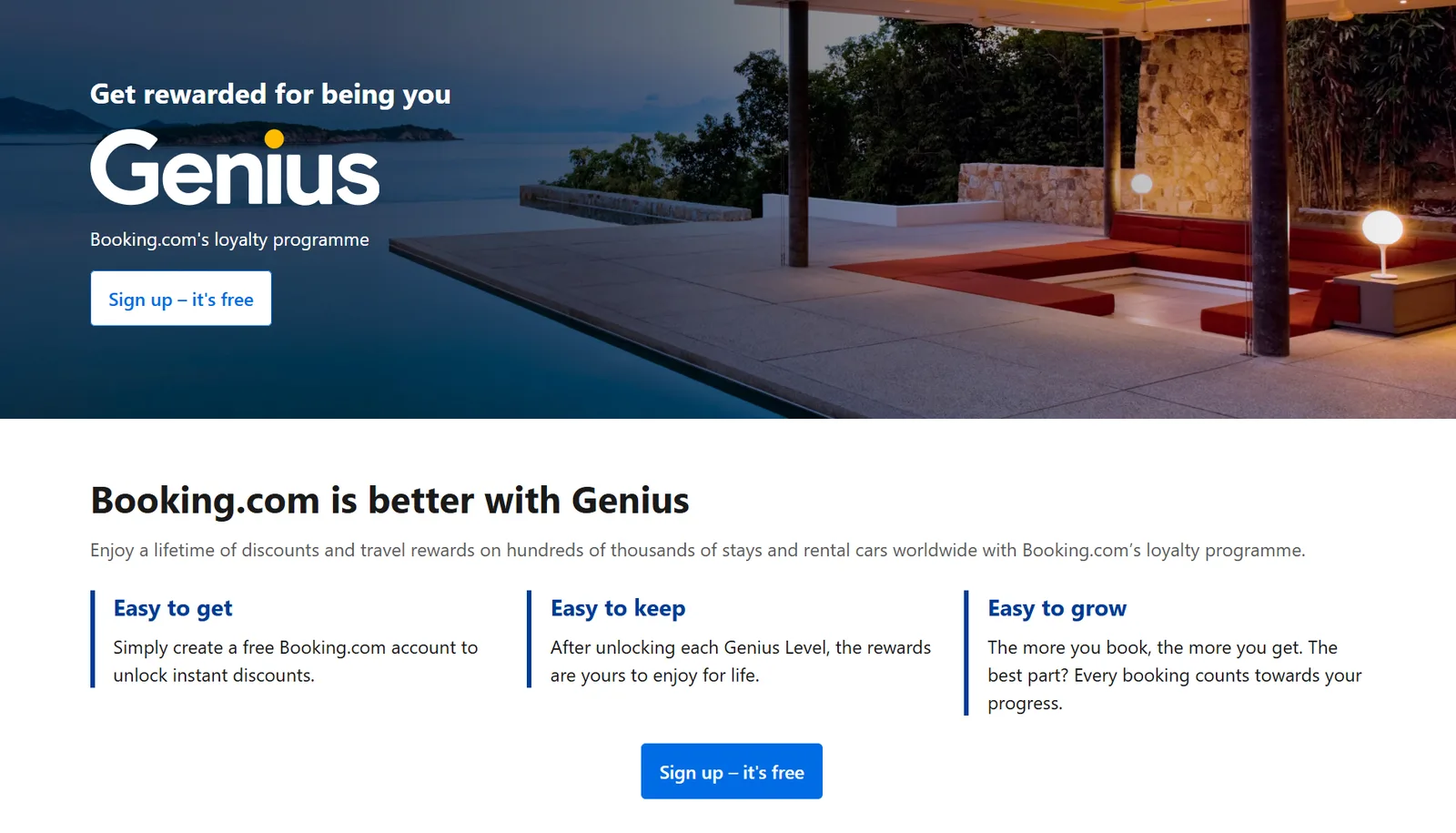
Booking.com’s Genius program has three levels, and a traveler is enrolled automatically just by creating a free account. Reaching Level 2 takes five completed bookings within a two-year window, and Level 3 takes 15, with discounts stepping up from roughly 10 percent at Level 1 to 20 percent at Level 3 on eligible, Genius-rated properties.
There’s no card to request, no app to download first, and no sign-up form beyond the account a traveler already needed to book. The takeaway: the less a member has to do to start earning, the more of your customer base actually ends up inside the program.
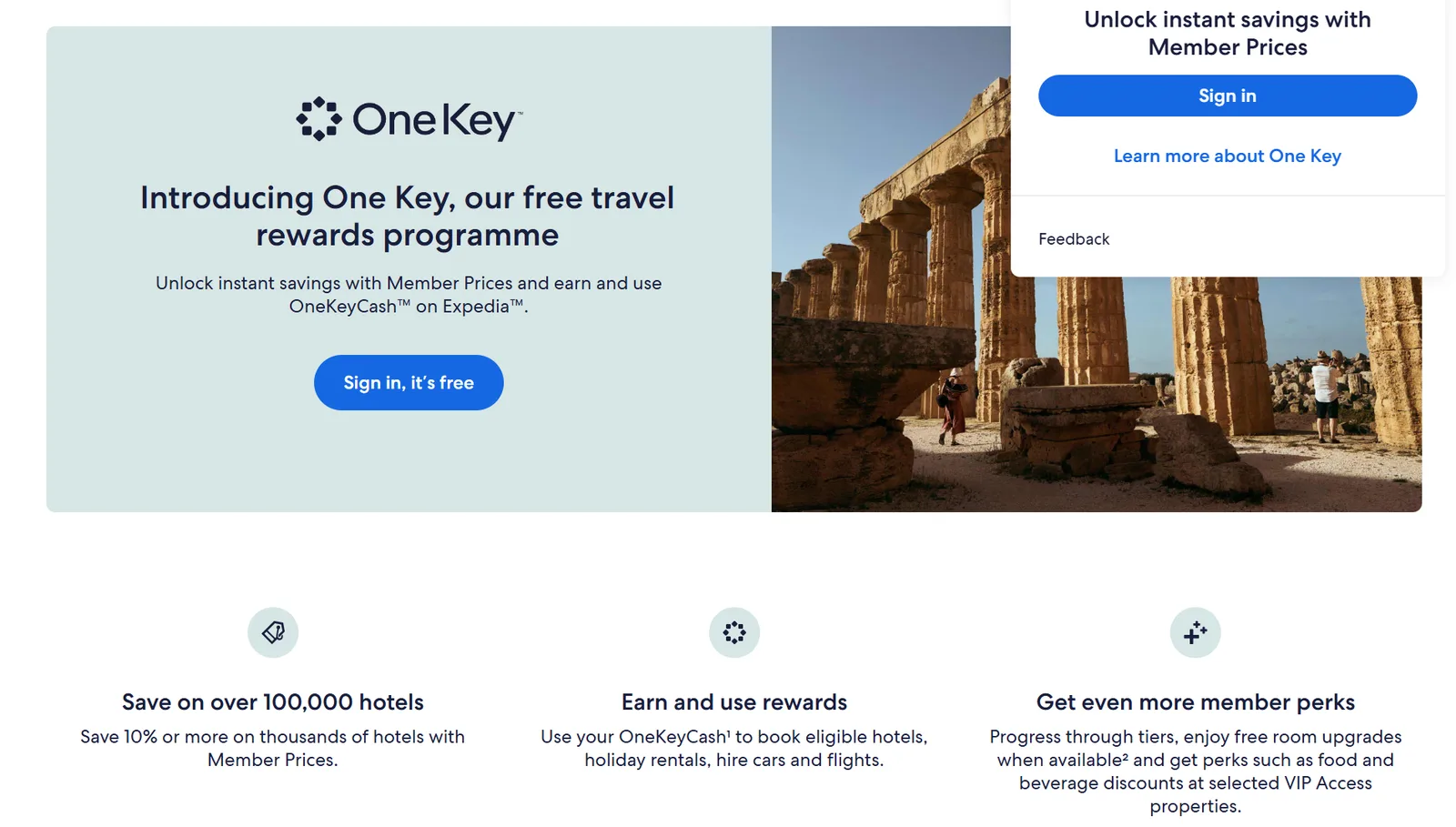
Expedia Group launched One Key in July 2023 to unify loyalty across Expedia, Hotels.com, and Vrbo under a single account and a single rewards currency called OneKeyCash. A member can earn OneKeyCash booking a Vrbo vacation rental and spend it on a Hotels.com stay or an Expedia flight, without converting anything.
That consolidation solved a real problem: travelers previously had to track three separate balances for what was functionally one company. The takeaway: if you run multiple storefronts or sub-brands, a single member identity and balance across all of them is worth more to the traveler than three smaller, disconnected programs.
Royal Caribbean’s Crown & Anchor Society has six tiers, Gold, Platinum, Emerald, Diamond, Diamond Plus, and Pinnacle Club, built entirely around cumulative cruise points rather than dollars spent. Members earn one point per night sailed, two points per night in a suite, and those points never expire once earned.
Tying the earn metric to nights sailed instead of spend rewards the exact behavior, repeat cruising, that the business actually wants more of. The takeaway: pick an earn metric that mirrors the engagement you’re trying to grow, not just the easiest number to track.
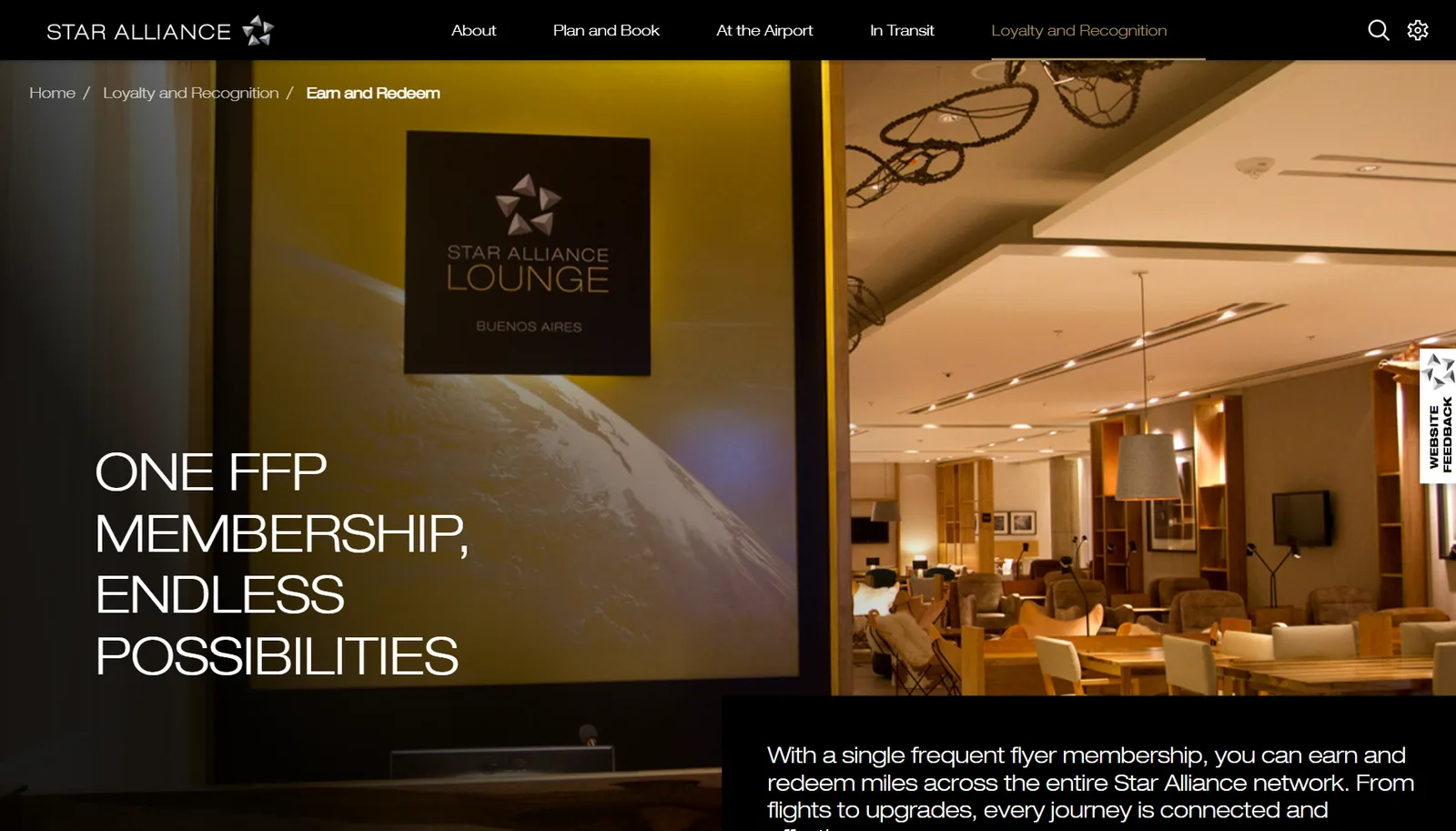
Star Alliance connects more than two dozen member airlines into one coalition network, letting a traveler earn miles on one carrier and redeem them on a completely different one within the alliance. No single airline has to fund every redemption alone, because the value gets spread across the whole partner network.
For an independent travel business, the coalition principle scales down easily: a single hotel-and-tour-operator partnership, or a shared rewards agreement with a complementary local business, works on the same logic. The takeaway: you don’t need two dozen partners to benefit from coalition mechanics, even one well-chosen partner extends what your currency can do.
Independent travel agencies and small tour operators don’t need to copy any of this at scale. What they can copy is the underlying logic: pick one or two of these mechanics, apply them consistently, and pair the software with the kind of personal recognition a mega-program can’t replicate, like remembering a traveler’s preferences or celebrating their fifth trip with a handwritten note.
None of these mechanics require airline-scale infrastructure to copy. A unified currency, flexible redemption, low-friction enrollment, an earn metric tied to real engagement, and coalition-style partnerships are all achievable at any program size with the right loyalty platform. What separates the best travel loyalty programs from the rest isn’t a bigger rewards catalog, it’s how few obstacles sit between a member earning value and actually using it.
Start Building Your Travel Loyalty Program Today
Points, VIP tiers, referrals, and automated rewards, all from one branded loyalty platform.
The ROI case for a travel loyalty program comes down to three measurable effects that compound on each other over time.
Commission recovery. Every booking that shifts from an OTA to your direct channel keeps the 15 to 25 percent commission you’d otherwise pay away. That’s the single largest lever a travel loyalty program pulls, because it recovers margin on bookings you were already going to fulfill.
Here’s how that plays out for a mid-size travel brand booking $3 million a year. If 40 percent of that volume currently flows through OTAs at a blended 20 percent commission, shifting just 10 percentage points of total bookings to direct, loyalty-driven channels recovers roughly $60,000 in margin annually, without adding a single new customer. That’s the baseline case, before repeat-booking and partner revenue are even factored in.
Repeat-booking rate and lifetime value. A member who has accumulated points or tier status has something to lose by booking elsewhere. That creates a real switching cost that favors your brand on the next trip.
Our guide to customer lifetime value walks through how to calculate that shift, and how loyalty programs move the number over a traveler’s full relationship with your brand.
Revenue beyond the booking. Loyalty programs open new revenue lines beyond the trip itself. Deloitte’s research shows loyalty already contributing 11 to 13 percent of total airline revenue, much of it through partner and co-branded card relationships that smaller travel brands can approximate through partnerships and referral rewards.
| OTA / Indirect Booking | Loyalty Program Member | |
|---|---|---|
| Commission cost | 15-25% per booking | $0 on direct bookings |
| Customer relationship | Owned by the intermediary | Owned by your brand |
| Rebooking cost | Full acquisition cost again | Lower, driven by earned rewards |
| Data on traveler preferences | Limited or none | Full booking and engagement history |
Point breakage. Not every point issued gets redeemed. Travelers who let a balance expire, or who never quite reach a redemption threshold, represent breakage. That lowers your true effective reward cost below the 0.5 to 1.5 percent target you designed for. It isn’t something to engineer for deliberately, but it does mean a well-run program’s real cost is often lower than the worst-case number you planned around.
Once your program is live, track it against the right loyalty program KPIs so you can tell early whether the reward structure is actually shifting bookings toward your direct channel.
Seeing the margin math work on paper is one thing. If you want to see it running against your own booking volume and commission rates, book a demo with the 99minds team.
Gamification and AI personalization are becoming standard tools for travel brands trying to stay relevant across the long gaps between bookings.
Milestone and streak mechanics fit travel’s naturally slow purchase cycle better than typical retail gamification. A goal like “book your third trip with us this year and unlock a bonus reward” gives travelers something concrete to work toward across a longer time horizon, and rewards the exact repeat-booking behavior a travel loyalty platform is built to drive.
Our guide to gamification in loyalty programs breaks down milestone and streak design in more detail.
Personalization is rising fast. According to Deloitte Digital’s earlier baseline study, Consumer interest in personalized loyalty offers has climbed 20 percent, with a measurable business impact for brands that deliver it well.
AI-driven churn prediction flags travelers who haven’t booked in months and triggers a re-engagement offer automatically, timed to when that traveler typically plans their next trip rather than a generic quarterly blast. For a travel loyalty platform, this matters more than in most retail categories, because the gap between purchases is measured in months, not days, and a manual outreach process simply can’t keep up.
In practice, this usually means pairing a rules engine with a segmentation layer: one workflow triggers a milestone reward the moment a member hits their third booking, while a separate workflow watches for members who’ve gone quiet and nudges them with a personalized offer before they lapse entirely. Neither mechanic is complicated on its own, but together they keep a program active during the long stretches when a traveler isn’t actively booking anything.
You don’t need an enterprise budget or airline-scale infrastructure to launch a travel loyalty program that works. You need a clear goal, a reward currency travelers actually value, and a platform that handles the operational work automatically.
99minds gives travel brands running an online storefront, such as tour operators, experience providers, travel gear brands, and boutique agencies on Shopify, WooCommerce, or BigCommerce, a fully branded loyalty platform. Points, VIP tiers, referrals, membership, and automated reward workflows all run from one dashboard, without the enterprise price tag or custom development work.