We're building the future of agentic promotions. Sign up for early access!
Sign up
We're building the future of agentic promotions. Sign up for early access!
Sign up Table of Contents:
The affiliate marketing industry is on track to surpass $47 billion by 2027, and over 80% of brands already run some form of affiliate program. Yet most of them are leaving serious growth on the table because they’re working with the wrong partner types or managing their programs without a clear framework.
Whether you’re a creator looking to monetize your audience or a brand ready to build an affiliate program that actually scales, this guide covers everything you need to know: what an affiliate marketing partner is, the different types and which one fits your business, how to find and vet partners, and how to keep your best ones around for the long run.
Let’s get into it.
An affiliate marketing partner is an individual or business that promotes your products or services to their audience in exchange for a commission on every referral that converts. They could be a blogger, an influencer, a coupon site, an email newsletter publisher, or a cashback platform: the format varies, but the core mechanic is always the same.
Here’s how it works: you give your affiliate partner a unique tracking link (or a promo code). They share it with their audience through content, social posts, emails, or ads. When someone clicks that link and completes a purchase, sign-up, or other conversion action, the affiliate earns a commission. You get a new customer. Everyone wins.
What makes affiliate marketing different from traditional advertising is the payment model. You don’t pay for impressions or clicks that don’t convert. You only pay when there’s an actual result, which makes it one of the most cost-effective customer acquisition channels available to e-commerce and SaaS brands.
The terms “affiliate partner” and “marketing partner” are sometimes used interchangeably, but there’s an important distinction: affiliate partnerships are specifically performance-based, tied to tracked links or codes. Broader marketing partnerships can include co-branding, joint campaigns, or reseller arrangements where payment isn’t always tied to individual conversions.
Understanding the mechanics from both sides helps you structure your program correctly, whether you’re building one or joining one.
You set up an affiliate program, define your commission structure (more on that shortly), and give each partner a unique tracking link. When a customer converts through that link, your affiliate software records the transaction and attributes the commission to the right partner. You pay out on a schedule, whether that’s monthly, net-30, or on a threshold basis.
The commission models you’ll typically choose from are:
Your affiliate partner creates content around your product and weaves their tracking link into it. This might be a review blog post, a YouTube tutorial, a newsletter recommendation, or an Instagram story swipe-up. When their audience follows the link and converts, the commission is credited to them automatically.
The best affiliates don’t think of themselves as advertisers. They think of themselves as recommenders, and their commission is the incentive that keeps them recommending your product consistently.
Affiliate tracking typically works through browser cookies that store the affiliate’s ID when someone clicks their link. If that person converts within the cookie window (anywhere from seven to 90 days depending on the program), the affiliate gets credit.
One thing worth knowing in 2026: third-party cookie deprecation is changing how affiliate attribution works. Savvy affiliate programs are shifting toward first-party tracking methods, promo codes, and fingerprinting-based attribution to maintain accuracy. If you’re building a program now, it’s worth building with this in mind.
One of the most common mistakes brands make when launching an affiliate program is recruiting the wrong type of partner for their business model. A D2C skincare brand doesn’t need the same affiliate mix as a SaaS platform. Here’s a breakdown of the seven main affiliate partner types and exactly who each one is best for.
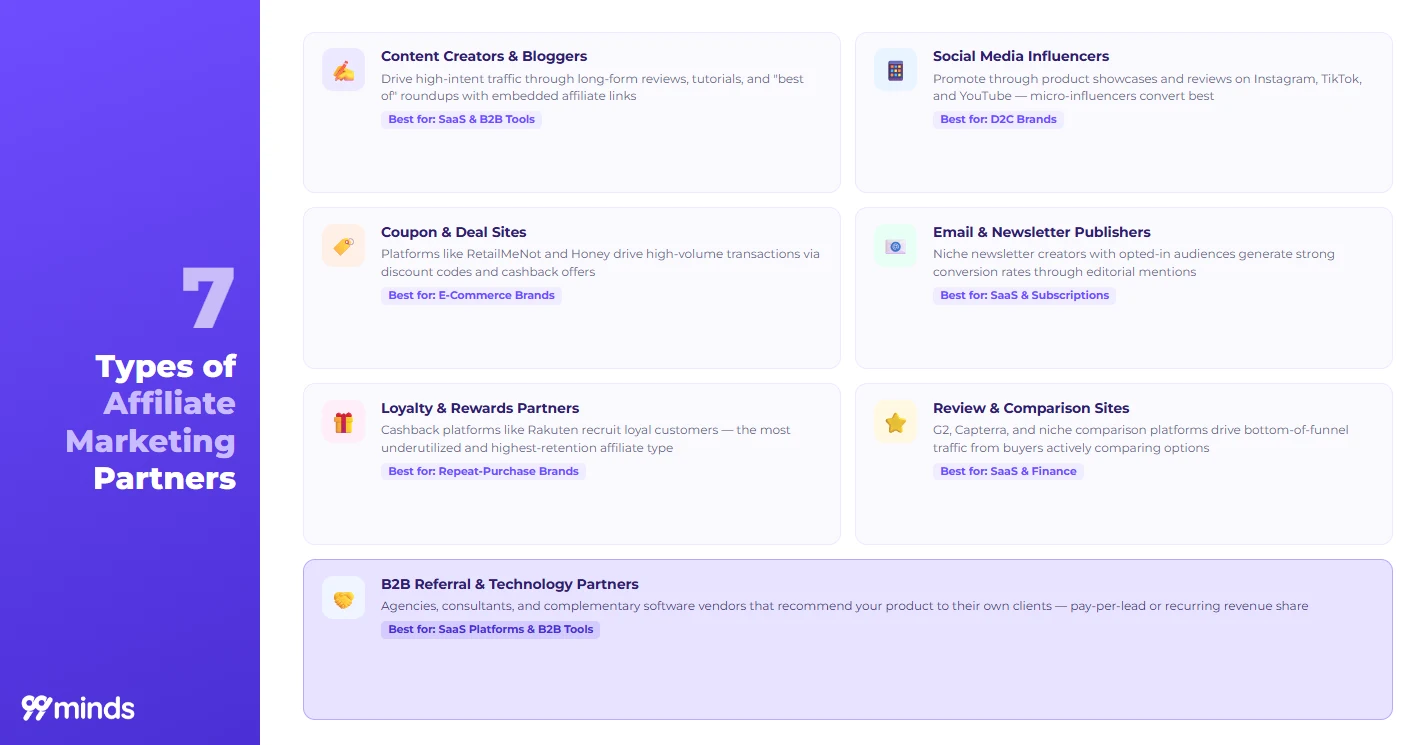
Content creators, including niche bloggers, YouTube creators, and podcast hosts, promote products through long-form reviews, tutorials, and “best of” roundup posts with embedded affiliate links. A SaaS tool that lands a spot in a “best project management tools” roundup from a well-ranked blog can generate consistent, high-intent signups for months.
Best for: Brands with high-consideration products where customers research before buying, including SaaS, B2B tools, finance products, and consumer electronics.
Typical commission model: Pay-per-sale.
Influencers promote through product showcases, unboxings, and review content across Instagram, TikTok, and YouTube Shorts. The most important distinction here is between mega-influencers and micro-influencers (roughly 10,000 to 100,000 followers). Micro-influencers consistently deliver stronger engagement rates and more genuine audience trust, which tends to translate into better conversion rates for affiliate programs.
Best for: D2C brands in beauty, fashion, lifestyle, and food and beverage.
Typical commission model: Pay-per-sale, or a flat fee combined with a commission for bigger partnerships.
Platforms like RetailMeNot, Honey, and Rakuten drive traffic through discount codes and cashback offers. These partners move high volumes of transactions, but it’s worth understanding that a lot of that traffic consists of customers who were already going to buy. Attribution quality is the key consideration here: coupon site conversions often show up as “last-click” wins that obscure the influence of earlier-funnel partners.
Our coupon marketing guide covers how to structure discount-driven partnerships that don’t erode your margins.
Best for: E-commerce brands with healthy margins that can absorb discount-driven traffic without crushing profitability.
Typical commission model: Pay-per-sale.
These are creators who’ve built owned email lists in a specific niche: finance, health, tech, parenting, and beyond. They promote through dedicated sponsor emails, editorial product mentions, or curated newsletter inclusions. Because the audience has opted in and trusts the publisher’s recommendations, conversion rates tend to be strong.
Best for: B2B brands, SaaS, financial products, and subscription services where the audience values expert recommendations.
Typical commission model: Pay-per-lead or pay-per-click for newsletter sponsorships; pay-per-sale for list owners promoting affiliate links.
This is the affiliate partner type that almost no brand talks about, and it’s one of the most powerful options for e-commerce brands that want to build long-term customer relationships instead of just one-time conversions.
Loyalty and rewards affiliate partners include cashback platforms like Rakuten, Swagbucks, and TopCashback, points-based communities, and rewards app ecosystems. The way they work is distinct: members of these platforms shop through affiliate links embedded in the cashback or rewards interface. The platform earns a commission from the brand, and the customer earns points or cashback in return. It’s a compounding incentive loop.
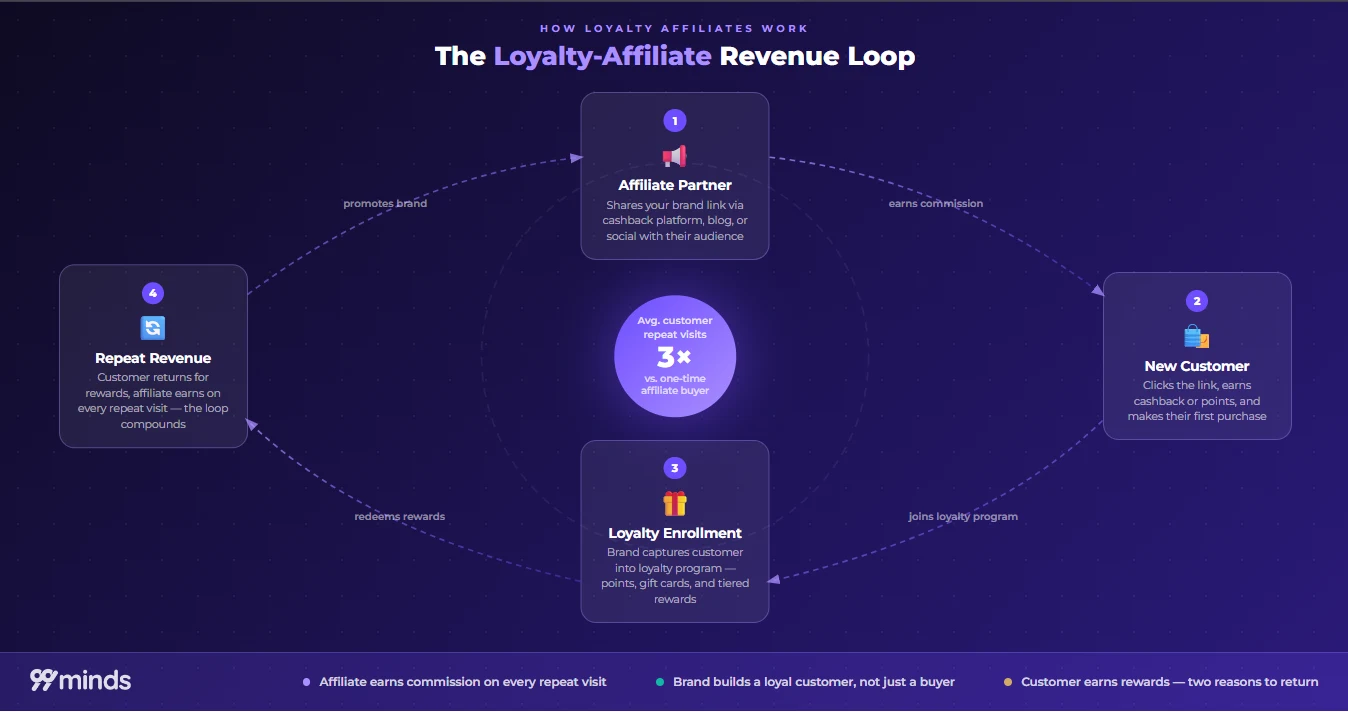
What makes this partner type so valuable is the loop it creates. A customer discovers your brand through a cashback affiliate partner and earns five percent back on their first purchase. Your brand captures them in your own 99minds Loyalty Program. The affiliate continues earning commission on repeat visits. That single referral has turned into a long-term customer relationship.
Here’s a simple example: a fashion brand partners with a cashback affiliate platform. Customers earn five percent back on purchases. The affiliate earns three percent commission on each transaction. The brand gains a customer who now has two reasons to return: the cashback platform’s points and the brand’s own loyalty rewards.
For brands running loyalty programs with 99minds, loyalty and rewards affiliate partners are a natural fit. An affiliate partner who promotes your loyalty program isn’t just recruiting buyers: they’re recruiting loyal customers. 99minds gives e-commerce brands the 99minds Gift Card, cashback, and tiered rewards infrastructure to make these partnerships trackable and measurable from day one. Pair that with a digital loyalty card program and you give customers a portable, app-free rewards experience that makes every affiliate-referred visit feel rewarding.
Best for: E-commerce brands, subscription businesses, and any retailer with a repeat-purchase cycle who wants affiliates recruiting loyal customers instead of just occasional buyers.
Typical commission model: Pay-per-sale, often with recurring commission on repeat purchases.
These are platforms like G2, Capterra, and Trustpilot (for software), as well as niche comparison sites in verticals like finance, insurance, and web hosting. They drive high-intent traffic from people who are actively comparing options. A strong presence on a review comparison site can generate consistent, qualified leads.
Best for: SaaS companies, financial products, and B2B services where buyers research thoroughly before committing.
Typical commission model: Pay-per-lead or pay-per-sale.
These are complementary software vendors, consultants, and agencies that recommend tools to their own clients. A marketing agency that recommends your e-commerce loyalty platform to all their clients is effectively running a 99minds Referral Program, even if the arrangement looks more formal than a typical affiliate link.
The line between affiliate and referral marketing blurs here, our guide to referral marketing vs affiliate marketing explains the key differences so you can structure the arrangement correctly before you launch.
If you’re in the B2B space, our complete guide to B2B loyalty programs covers how to build partner relationships that compound over time.
Best for: SaaS platforms, B2B tools, and any product where professional recommendations carry significant weight.
Typical commission model: Pay-per-lead, pay-per-sale, or recurring revenue share.
Finding affiliate marketing partners comes down to knowing where to look and being specific about who you’re targeting.
Join affiliate networks and marketplaces. Impact, ShareASale, CJ Affiliate, Rakuten Advertising, and PartnerStack all have large directories of publishers actively looking for programs to join. These are good starting points, especially for brands new to affiliate marketing.
Mine your existing customer base. Some of your best affiliates are already fans of your product. Add an affiliate recruitment call-to-action to your post-purchase email flow and your loyalty program communications. A customer who already loves your brand and has an audience will outperform a cold recruit almost every time.
Use social listening and competitor research. Search for content creators who are already writing about your category or reviewing your competitors. If they’re covering that space, they already have the right audience. Reaching out with a partnership offer is far warmer than a cold pitch to someone who’s never thought about your niche.
Reach out directly to niche content creators. If someone runs a blog that reviews products in your space, a direct email pitch often beats any marketplace. Be specific: tell them what you like about their content, what commission you’re offering, and why your product is a fit for their audience.
Look for loyalty and cashback platform partnerships. If you’re running a loyalty program or a gift card program, contact cashback and rewards platforms directly about becoming a merchant partner. These are B2B relationships where both sides benefit, and they’re often easier to establish than you’d expect.
Finding candidates is one thing. Choosing the right ones is where most programs succeed or fail. Here’s what to actually evaluate before approving an affiliate partner.
Audience alignment: Does their audience look like your ideal customer? Check the demographics, interests, and content topics. A lifestyle blogger with 50,000 followers won’t generate conversions for a B2B SaaS tool, no matter how strong their engagement is.
Engagement quality, not follower count: A micro-influencer with 15,000 highly engaged followers in your niche will outperform a mega-influencer with 500,000 passive ones. Look at comment quality, reply rates, and how their audience actually responds to sponsored content.
Content quality and brand safety: Review their existing content before approving them. How do they handle sponsored placements? Are they transparent with their audience? Does their tone match your brand? A poorly executed affiliate post can do more reputational damage than no affiliate marketing at all.
Attribution model fit: Think about where in your customer’s journey this partner shows up. Is this a top-of-funnel awareness partner or a bottom-of-funnel intent partner? Your commission structure and attribution window should reflect that. A loyalty and rewards platform that shows up late in the purchase journey still deserves credit: don’t let last-click attribution models undervalue what they bring.
Track record and transparency: Ask for data. A legitimate affiliate partner will be happy to share click rates, conversion rates, and audience demographics from past campaigns. If someone is vague about performance history, that’s a signal worth taking seriously.
Fraud signals to watch: Inflated click counts with suspiciously high conversion rates, traffic from geographies that don’t match your market, and sudden volume spikes from new partners are all red flags. Most affiliate management platforms have fraud detection built in, but it’s worth knowing what to look for.
Most brands spend 90% of their effort on recruitment and almost none on what comes after. That’s why so many affiliate programs have large partner rosters and thin active ones. Retention starts on day one.
Build a real onboarding kit: Your affiliate should receive: brand guidelines, approved product images, pre-written copy options (which they can adapt), instructions for generating their tracking link, and a direct point of contact. Don’t make them figure it out on their own or they’ll promote you inconsistently, if at all.
Set clear expectations upfront: Before an affiliate goes live, they should know your commission structure, payment schedule, attribution window, content approval requirements (if any), and FTC disclosure rules. Surprises erode trust fast.
Use commission tiers to reward performance: The single most effective retention lever is a tiered commission structure, the same principle that makes tiered loyalty programs so effective for customers. Partners who drive more volume earn higher rates. This gives your best affiliates a reason to keep pushing and signals to mid-tier partners that higher performance unlocks better rewards. If you’re running 99minds Store Credit or points-based incentives alongside cash commissions, that’s an additional layer of stickiness. A well-structured program also makes it easier to measure your customer retention rate and attribute affiliate impact to long-term revenue.
Stay in regular contact: Monthly performance updates, early access to new products, and seasonal campaign briefs keep your affiliates engaged and give them fresh material to work with. The brands that treat affiliates as partners, not just distribution channels, get better results.
Offer co-creation opportunities: Your top affiliates often have better audience insight than your own marketing team. Give them the chance to co-create content, beta test new features, or participate in exclusive campaigns. This builds a relationship that’s worth far more than any commission structure alone.
If you’re an e-commerce or retail brand thinking about affiliate marketing, the loyalty and rewards affiliate partner category is almost certainly underused in your strategy, and it’s the category where 99minds adds the most direct value.
Here’s what that looks like in practice:
Affiliate marketing works when the right partner type is matched to the right business model. Content creators drive high-intent traffic for considered purchases. Influencers build awareness and desire for consumer brands. Coupon sites move volume. And loyalty and rewards affiliate partners, the most overlooked category on this list, drive something even more valuable: repeat customers who have a built-in reason to keep coming back.
The other thing most brands miss is what happens after recruitment. The programs that generate consistent, compounding revenue are the ones that onboard partners well, reward performance generously, and communicate regularly. Treat your affiliate partners like the growth partners they are, and they’ll keep sending customers long after the first campaign ends.
If you’re building an e-commerce brand and want to make loyalty and rewards affiliates a real part of your growth strategy, the 99minds loyalty and rewards platform gives you the foundation to make it work.