We're building the future of agentic promotions. Sign up for early access!
Sign up
We're building the future of agentic promotions. Sign up for early access!
Sign up 
Employee gift cards are one of the simplest ways to recognize your team, and recognition does not always need to come in the form of a physical gift.
A gift card can be a simple way to thank an employee, celebrate a work anniversary, recognize a strong performance, or reward a team after completing an important project. Instead of guessing which product someone would like, you give them the freedom to choose something they actually want.
That flexibility is useful for companies with employees who have different interests, lifestyles, and locations. One employee might prefer a coffee shop, another might want electronics, while someone else may get more value from a restaurant, travel, or experience gift card.
The challenge is choosing the right employee gift card for the occasion.
Employee gift cards are gift cards provided by a company to employees as a reward, thank-you, or form of recognition.
Companies can use them for birthdays, work anniversaries, performance achievements, project milestones, employee referrals, holidays, team celebrations, and spot recognition.
Unlike a traditional corporate gift, where the company chooses the item, a gift card lets the employee decide how to use the reward. That can make the gift more useful when a company doesn’t know what every employee would personally choose.
For example, a company could give an employee a $50 gift card after they complete a difficult project. Rather than choosing a physical item on their behalf, the company lets the employee decide how to spend the reward.
Gift cards are a common choice for employee rewards because they:
Recognition itself also affects retention. According to Gallup research that tracked nearly 3,500 employees from 2022 to 2024, well-recognized employees were 45% less likely to have left their company after two years.
Employee gift cards can be physical or digital. Digital gift cards are particularly useful for remote teams because they can be delivered by email without dealing with shipping or physical distribution.
The best employee gift card depends on the employee, the occasion, and the reason for the reward.
A small coffee gift card may be appropriate for a quick thank-you, while a travel or experience gift may make more sense for a major work anniversary. The options below cover different types of employee recognition so companies can choose based on the situation.
A Visa gift card can be a practical choice when you want to recognize an employee but don’t know exactly what they would like to receive. Unlike a gift card tied to one retailer, a Visa gift card can give the recipient more freedom to decide how to spend the reward, subject to the card’s terms and where it is accepted. Mastercard and American Express prepaid gift cards work the same way.
This makes it useful for companies with diverse teams. Employees have different interests, spending habits, and priorities, so choosing one retailer for everyone can easily miss the mark. A flexible card removes much of that guesswork.
It can also work for different types of recognition. A company might use a smaller amount for spot recognition and a larger amount for a work anniversary or performance achievement.
Example: An employee takes responsibility for a project that is running behind schedule and helps the team complete it successfully. Instead of guessing whether they would prefer a restaurant, electronics store, or clothing retailer, the company sends them a $50 Visa gift card and lets them decide.
Best for: Performance rewards, spot recognition, milestone awards, and large teams.
Keep in mind: Fees, expiration rules, and usage restrictions vary by card, so check the terms before purchasing in bulk.
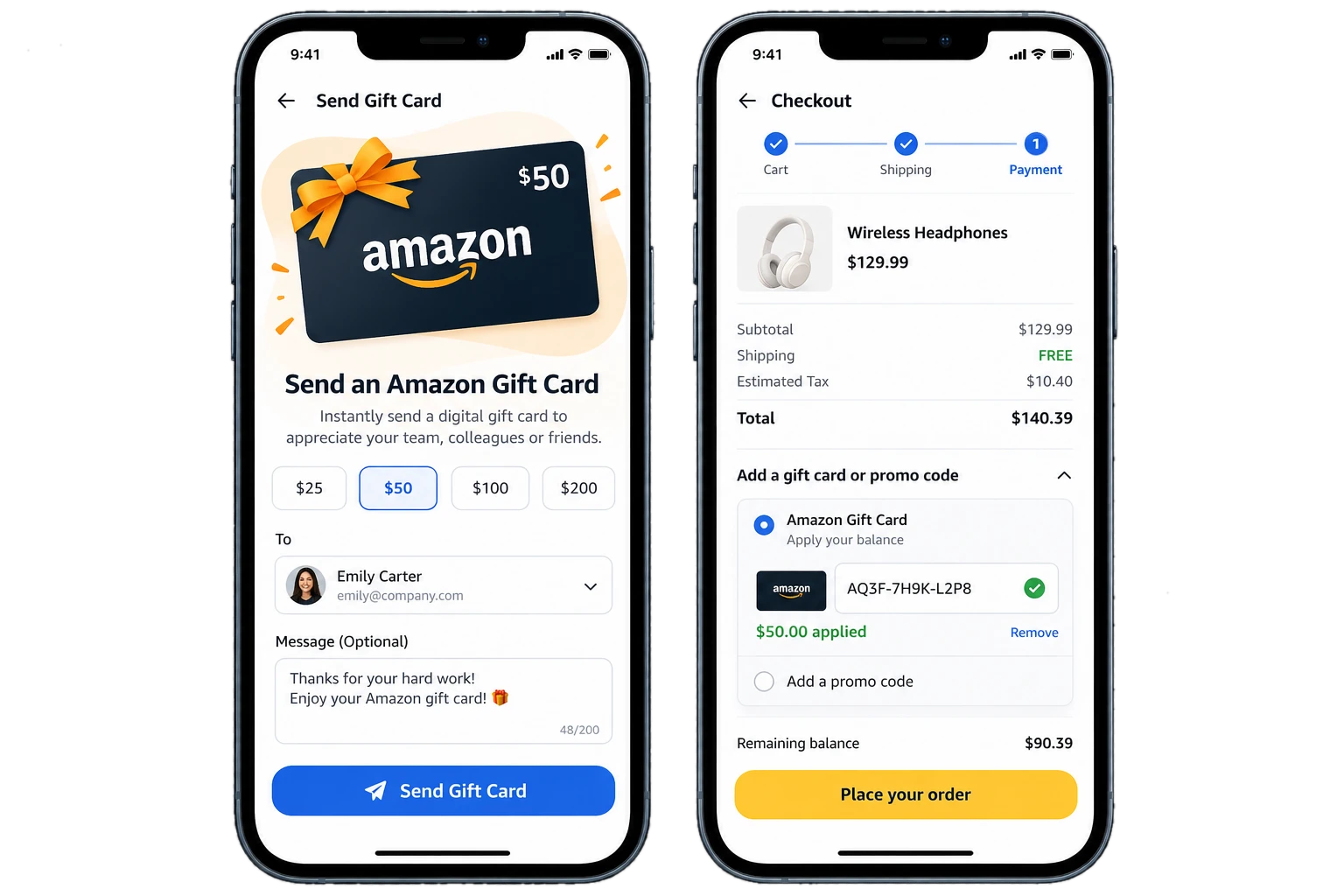
Amazon gift cards are useful when you want to give employees plenty of choice without asking them what they want beforehand.
One employee might use the reward for books. Another could put it toward headphones, household products, clothing, or something they’ve been planning to buy. The same reward can therefore work for employees with completely different interests.
Amazon can also be convenient for larger companies because employees are already familiar with the platform. HR doesn’t need to explain where the card can be used or find a different retailer for each employee.
Example: During Employee Appreciation Week, a company gives every employee a $50 Amazon gift card. Everyone receives the same reward, but each person chooses what they actually want.
Best for: Birthdays, holidays, general appreciation, work anniversaries, and company-wide rewards.
Keep in mind: Check that the gift card is valid for the employee’s country or marketplace.
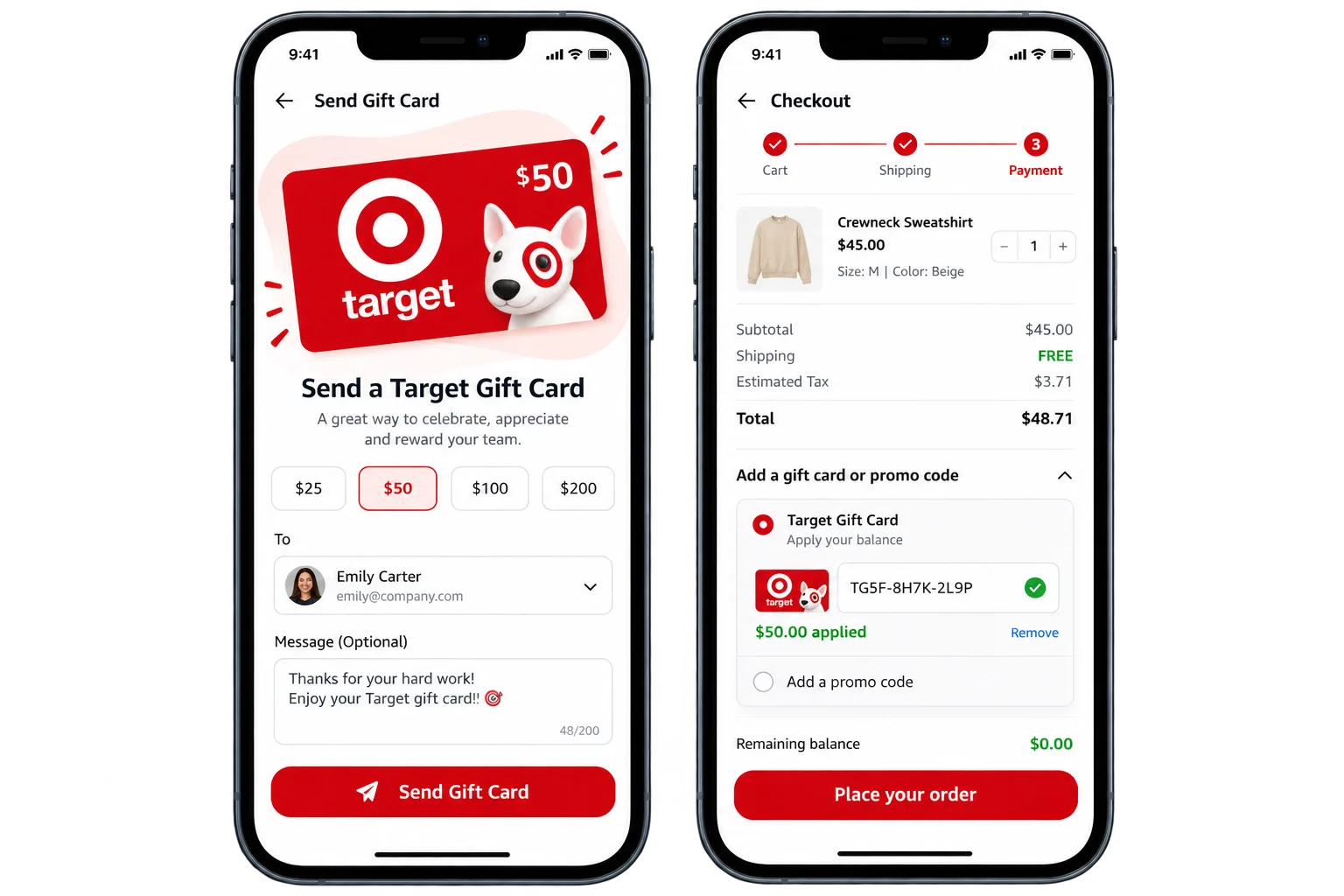
Few retailers cover as much everyday shopping as Target, which is what makes its gift card an easy pick for almost any employee. Employees can choose from groceries, household products, clothing, beauty products, electronics, and other categories.
That range makes the gift less dependent on a particular hobby or interest. You don’t have to know whether someone enjoys gaming, reading, cooking, or traveling. They can simply use the reward for something they need or want.
Target gift cards can also work well for employee appreciation programs where every employee receives the same reward. The company can standardize the value without forcing everyone to receive the same product.
Example: After completing a demanding quarter, a company gives each team member a $75 Target gift card as a thank-you. Employees can spend it on whatever is useful to them.
Best for: General appreciation, birthdays, holidays, and team recognition.
Keep in mind: Make sure the retailer is accessible to the employees receiving the reward.
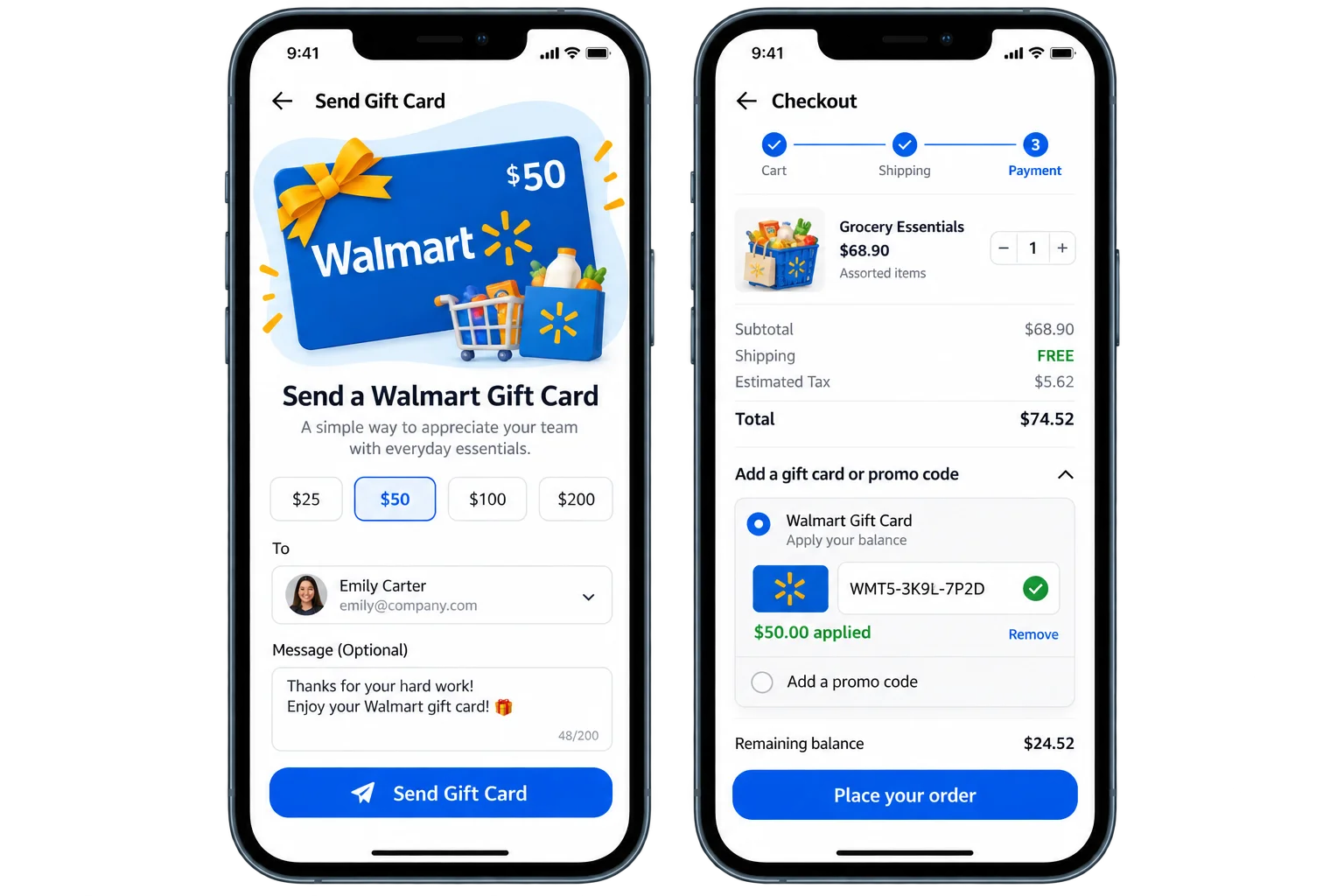
Some employees would rather receive something they can use for everyday purchases than a highly specific or experience-based gift. Walmart gift cards can fit that need.
Employees can choose from categories such as groceries, household items, electronics, clothing, and other everyday products. That makes the reward useful even when you don’t know much about the employee’s personal preferences.
This can be particularly useful for larger companies that want one reward option that works across a broad employee population.
Example: A company gives frontline employees a $50 Walmart gift card after a particularly busy seasonal period. The reward recognizes their extra effort while allowing each employee to decide how to use it.
Best for: General appreciation, frontline teams, holiday rewards, and large employee groups.
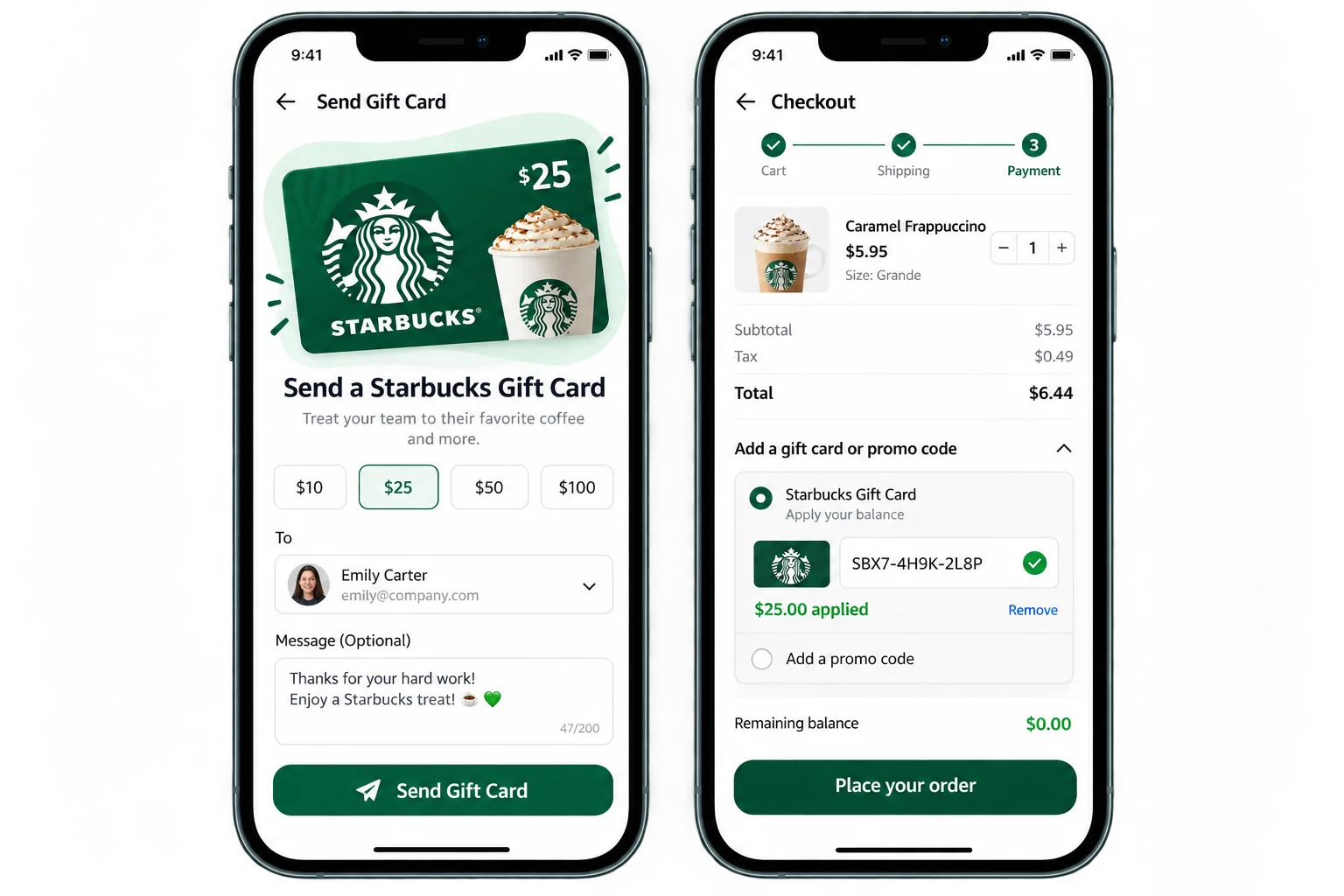
Not every recognition moment needs a large reward.
A Starbucks gift card can work well when a manager wants to acknowledge a small but meaningful contribution. An employee might have helped a coworker, taken on an extra task, stayed late to finish something urgent, or helped the team through a busy period.
The relatively small value can make this type of reward appropriate for everyday recognition. Managers don’t need to wait for a formal performance review or company-wide award program to recognize good work.
Example: An employee helps a teammate prepare for an important client meeting at short notice. Their manager sends a $20 Starbucks gift card along with a short message thanking them for stepping in.
The personal message is important here. Without context, a small gift card can feel like a generic reward. With a specific thank-you, it becomes recognition for something the employee actually did.
Best for: Spot recognition, small wins, informal appreciation, and quick thank-you gifts.
Keep in mind: It may not be useful for employees who don’t drink coffee or don’t have easy access to Starbucks.
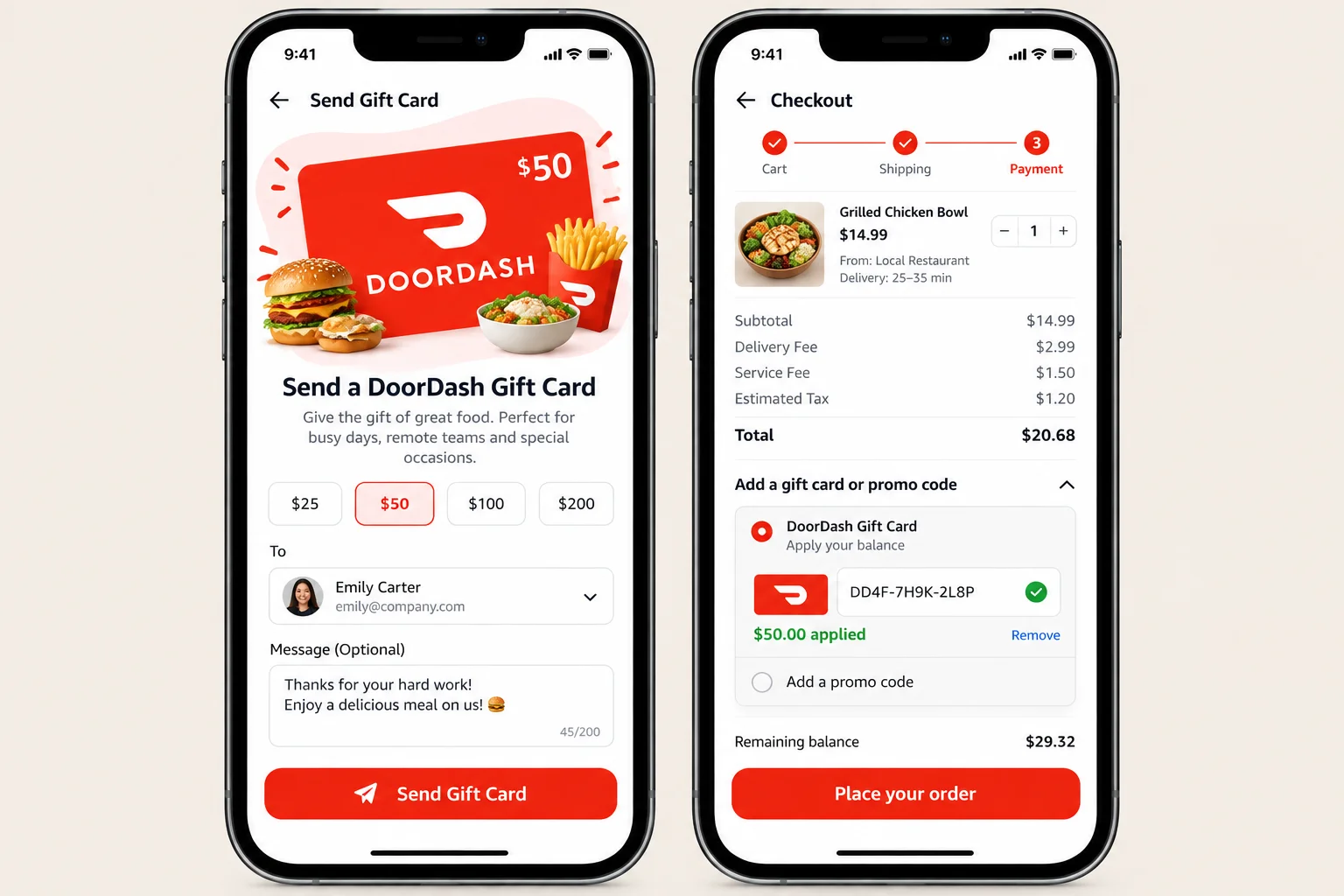
Food delivery gift cards can solve a common problem with remote employee recognition: you can’t simply take everyone out for lunch when your team is spread across different locations.
A DoorDash gift card gives employees the opportunity to order food available in their area, subject to service availability and applicable terms. This makes it useful for remote teams where employees may live in different cities.
It can also turn a virtual meeting into a shared event. Instead of asking everyone to join a video call while eating whatever they already have at home, the company can give everyone a meal budget.
Example: A remote company holds a virtual holiday celebration. Each employee receives a $40 DoorDash gift card before the event and uses it to order their own dinner.
This gives everyone the same reward while still allowing employees to choose what they want to eat.
Best for: Remote employees, virtual celebrations, team lunches, project completion, and employee appreciation.
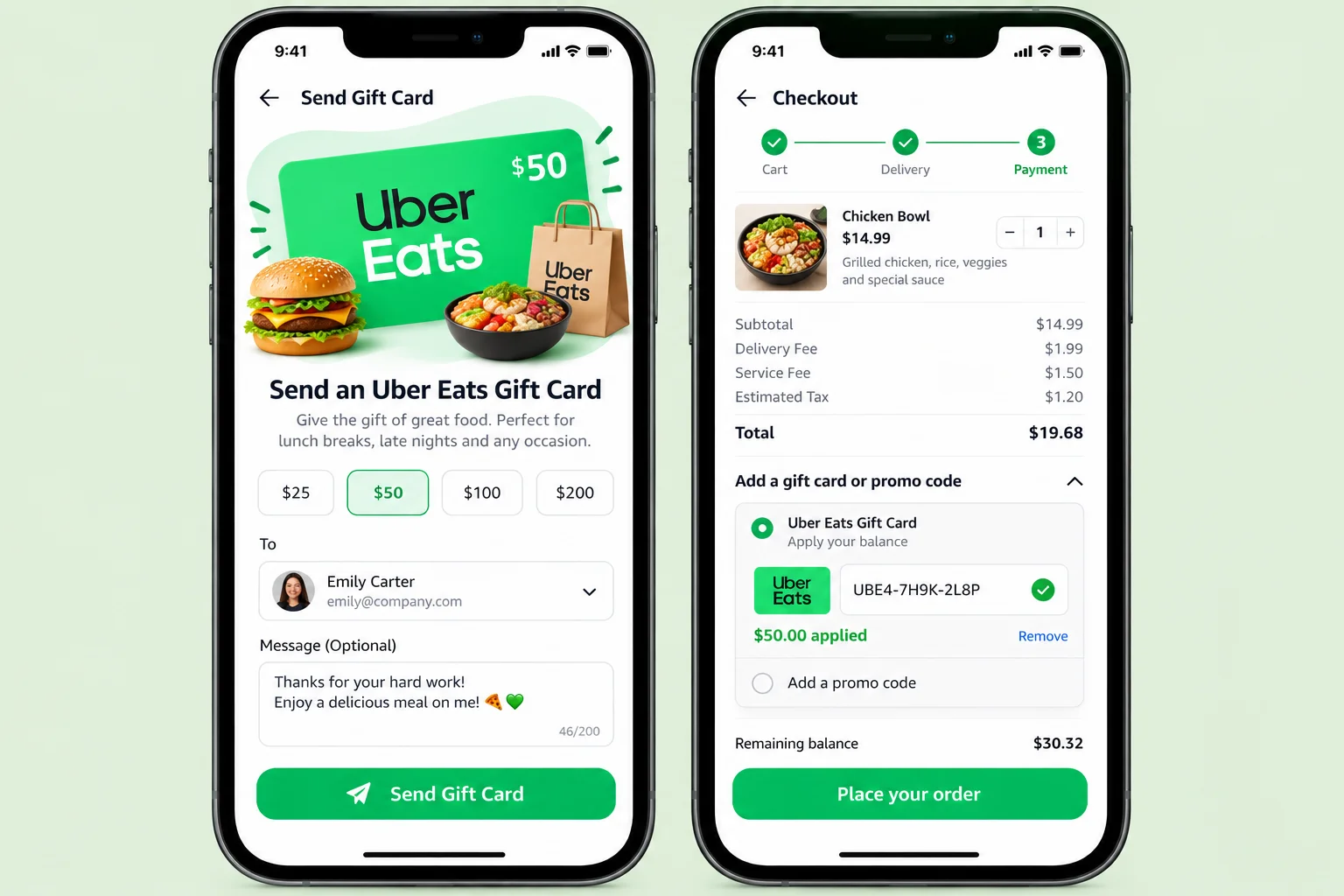
Uber Eats can serve a similar purpose for companies with employees working across different cities.
The company can give every employee the same reward amount while allowing each person to choose a meal from participating restaurants in their area. This can be easier than trying to coordinate a single restaurant or physical gift for everyone.
Food delivery gift cards are especially useful when the recognition is connected to a shared event.
Example: A product team completes a major launch. The company sends each team member a $30 Uber Eats gift card and holds a virtual team dinner that evening.
The reward becomes part of the celebration rather than simply being another item sent to an employee.
Best for: Remote teams, team celebrations, project completion, virtual events, and employee appreciation.
Keep in mind: Restaurant and delivery availability varies by location.
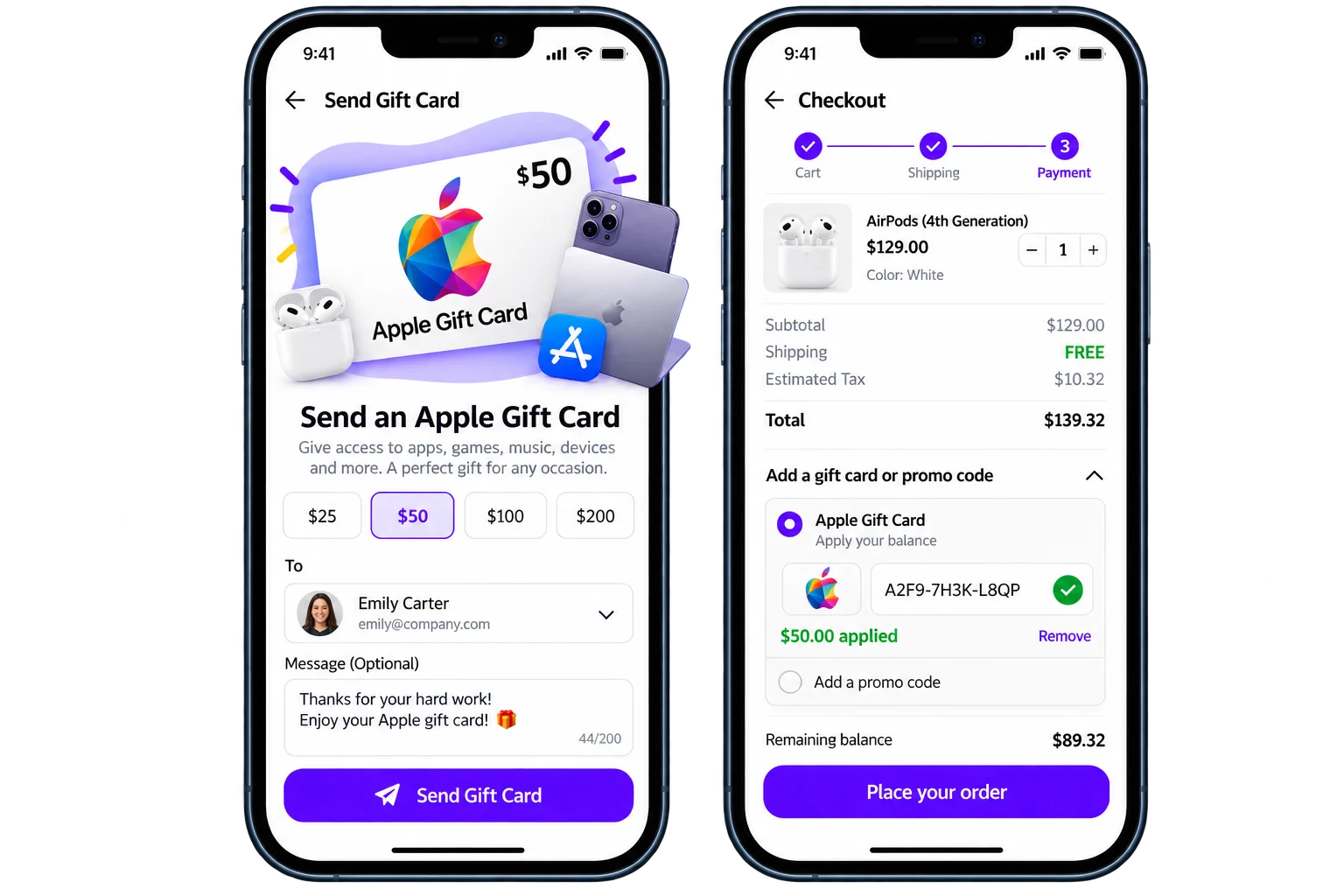
Apple gift cards can be a good choice when employees already use Apple’s products and services or have an interest in technology and entertainment.
Depending on the applicable terms, employees can put the reward toward eligible Apple products, services, apps, games, or other purchases. This gives them the freedom to choose rather than requiring the company to decide which technology product they should receive.
That can be particularly useful for larger rewards. Buying a specific piece of technology for an employee can be risky because you may choose the wrong model, size, or product.
Example: An employee reaches a five-year work anniversary. Instead of sending a predetermined technology gift, the company gives them a $150 Apple gift card and lets them decide how to use it.
Best for: Work anniversaries, major achievements, technology-focused teams, and larger rewards.
Keep in mind: Apple gift cards aren’t as universal as flexible prepaid cards, so consider whether employees are likely to use them.
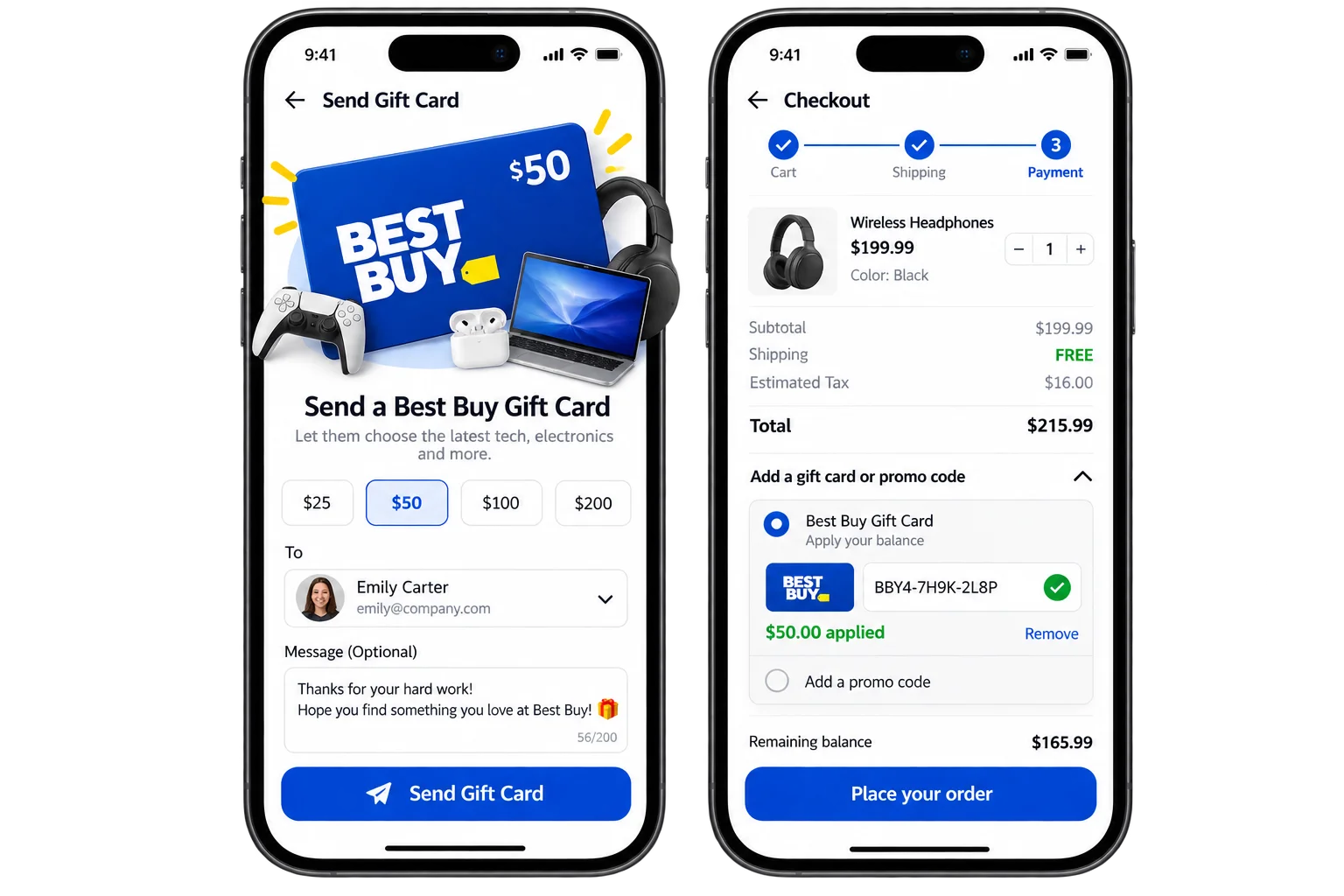
Tech gifts are hard to get right. Best Buy solves that by letting employees pick the gadget themselves instead of the company guessing.
An employee might want headphones, another might prefer a gaming accessory, and someone else may want equipment for their home office. A gift card lets each person make that decision.
This can be especially relevant for technology companies where employees may already be interested in electronics, but it can also work for general employee recognition.
Example: A software company gives employees a $100 Best Buy gift card after completing a major product release. Employees can put the reward toward whatever eligible product they want.
Employees could use the reward for:
Best for: Technology teams, gamers, home-office rewards, and major achievements.
Employee gifts don’t always need to be related to work.
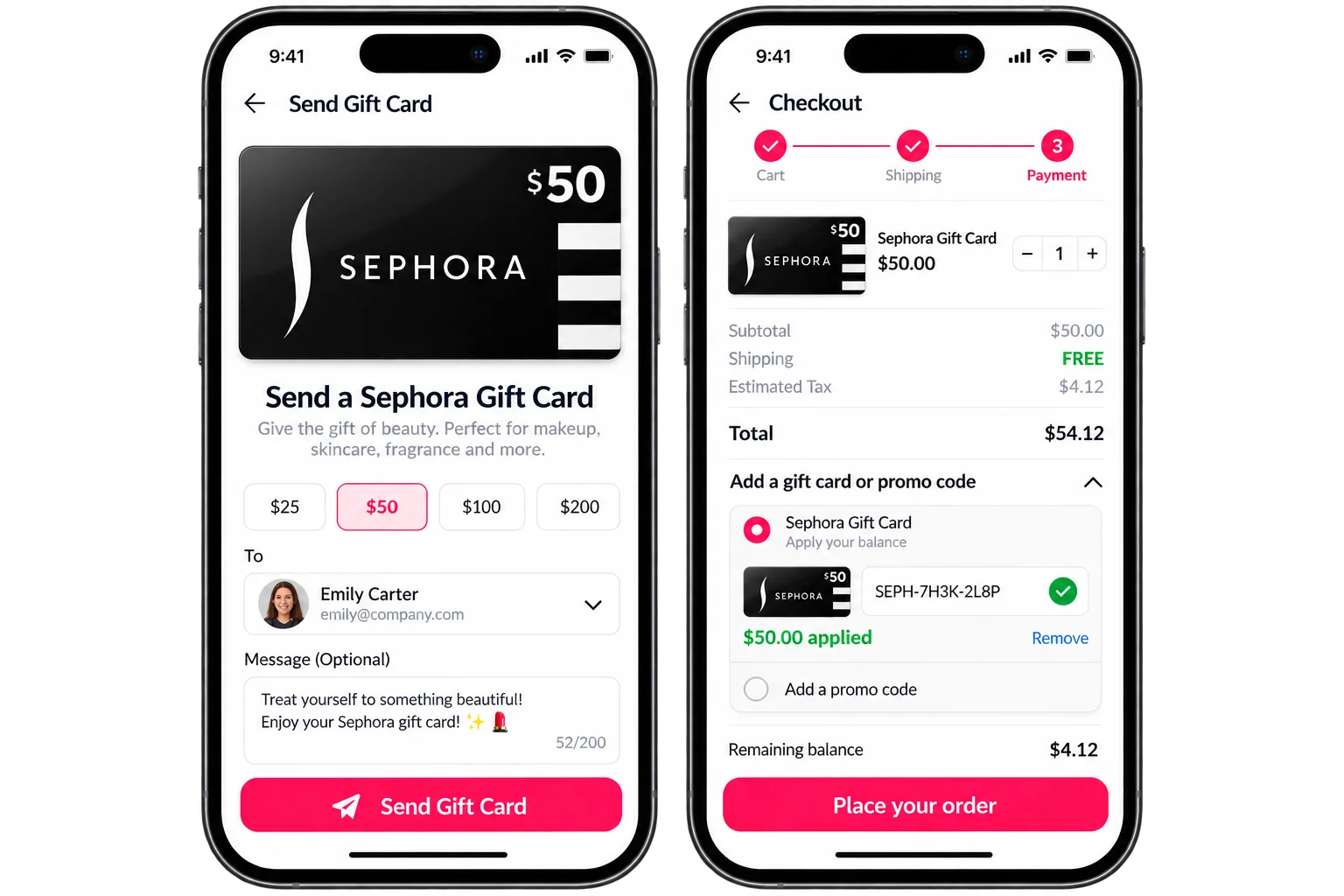
A Sephora gift card gives employees the freedom to choose beauty and personal-care products based on their own preferences. This can be more useful than an employer choosing a specific product that the employee may not want.
It can also make an employee appreciation campaign feel less corporate. Instead of sending another branded company item, the company gives the employee something they can use for themselves.
Example: During Employee Appreciation Week, a company gives employees a $50 Sephora gift card as one of several reward options.
The company doesn’t need to know which beauty products each employee prefers. The employee makes the final choice.
Best for: Birthdays, personal milestones, appreciation campaigns, and self-care rewards.
Keep in mind: It is a category-specific option, so it may not appeal to every employee.
For major milestones, a travel-related gift can be more memorable than another physical product.
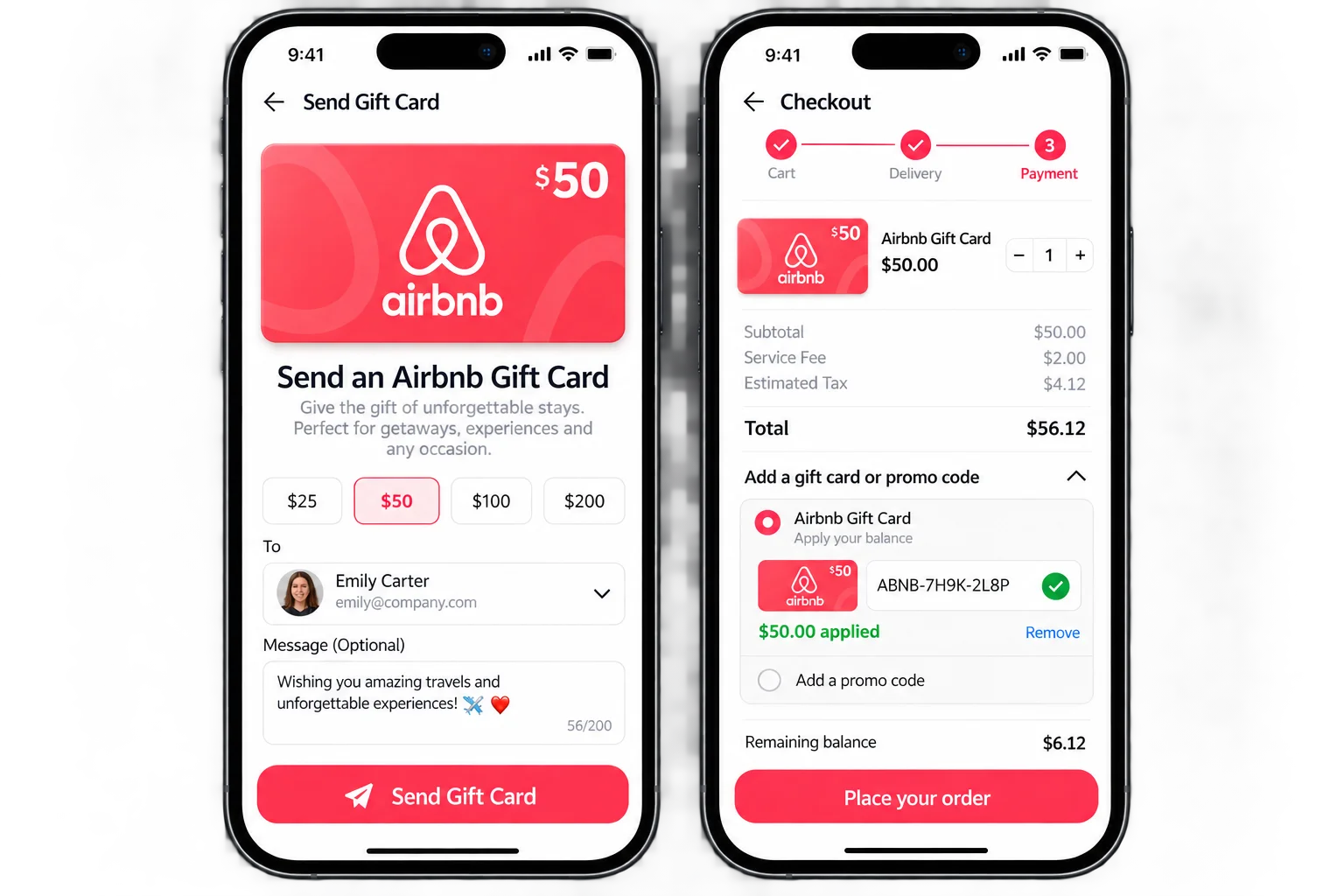
An Airbnb gift card can give employees the option to put the reward toward eligible Airbnb bookings, subject to the applicable terms. This can be especially appropriate for employees celebrating a significant work anniversary.
The main difference between this and a standard retail gift card is the type of value it provides. Instead of buying another item, employees can put the reward toward a trip or stay.
Example: An employee reaches their 10-year anniversary with the company. The company gives them a $250 Airbnb gift card as part of the anniversary recognition.
Best for: Long-service awards, major milestones, significant achievements, and high-value recognition.
Keep in mind: Travel rewards are generally better suited to major occasions than routine employee recognition.
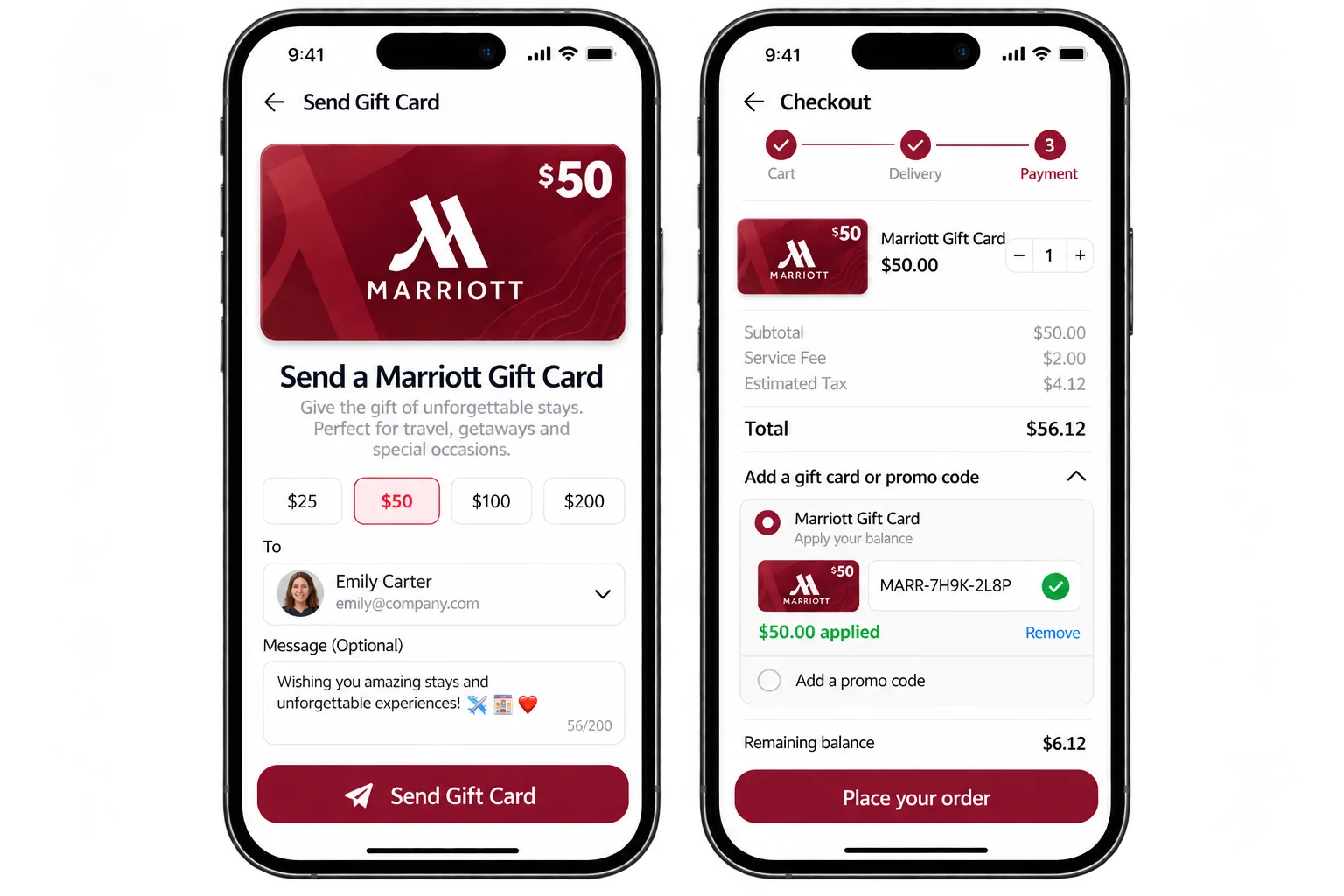
A hotel gift card is another option for companies that want to recognize employees with an experience rather than a physical item.
A Marriott gift card can give an employee the opportunity to put the reward toward an eligible hotel stay, subject to the card’s terms.
This can be a useful option for a significant milestone because the employee can decide when and where to use the reward.
Example: An employee completes five years with the company. As part of the anniversary recognition, the company gives them a $200 Marriott gift card.
Rather than choosing a physical anniversary gift, the company gives the employee something they can potentially use during a future trip.
Best for: Work anniversaries, long-service awards, major achievements, and travel-focused rewards.
Keep in mind: Employees who don’t travel may prefer a more flexible reward.
A restaurant gift card is simple, but it can turn recognition into an experience.
An employee can use the reward alone, with friends, or with family. That gives the employee more control over how they enjoy the gift.
Restaurant cards also work well when the company knows something about the employee’s preferences. If you know their favorite restaurant, the gift can feel more personal.
Example: After an employee manages a difficult client project, their manager sends them a $75 restaurant gift card along with a message thanking them for handling the project.
Best for: Employee appreciation, birthdays, work anniversaries, project completion, and team celebrations.
Keep in mind: Choose a restaurant the employee can realistically access, particularly if the workforce is remote.
For employees who spend their free time at the gym, in a yoga class, or on the sports field, a fitness or wellness gift card rewards a habit they already care about.
However, this type of gift works best when employees have some choice. Not everyone enjoys the gym, yoga, running, or other wellness activities, so giving everyone the same service may not be appropriate.
A gift card gives employees more control over whether and how they use the reward.
Example: A company runs an Employee Appreciation Month and gives employees a $75 wellness gift card that they can use toward an eligible fitness or wellness service.
Best for: Wellness initiatives, employee appreciation, lifestyle rewards, and personal development.
Keep in mind: Avoid assuming that every employee has the same fitness or wellness interests.
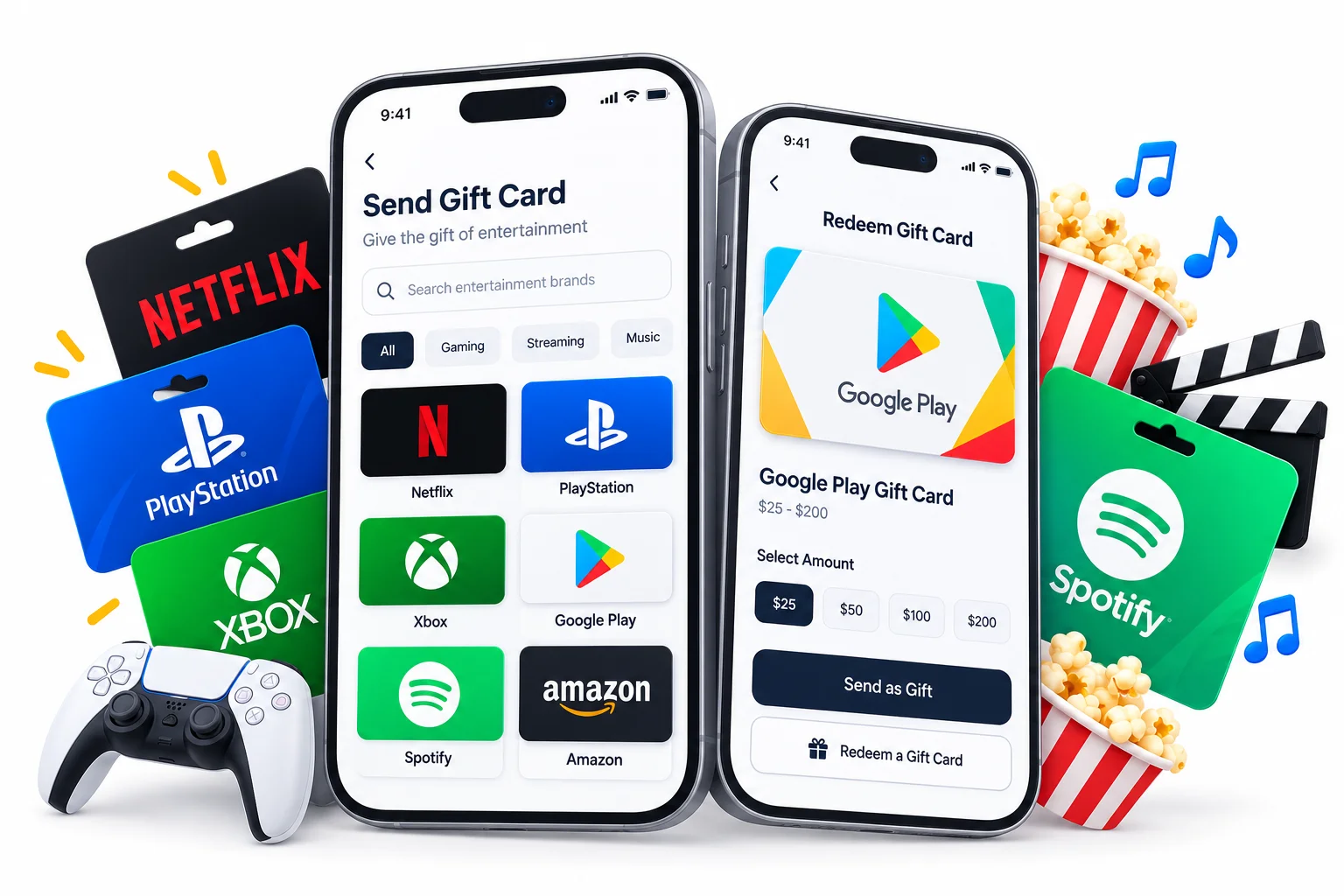
Employees spend a large part of their week working. An entertainment gift card gives them something they can enjoy outside of work.
This could include streaming services such as Netflix or Spotify, gaming cards such as Xbox, PlayStation, or Google Play, movie tickets, or other leisure activities.
The advantage is that the reward doesn’t have to be practical. Sometimes employees appreciate something that simply gives them an opportunity to relax.
Example: After completing a demanding product launch, a company gives each team member a $50 entertainment gift card as a thank-you.
Employees can use the reward for something they enjoy rather than receiving another work-related item.
Best for: Team rewards, birthdays, holidays, and project completion.
An experience can sometimes be more memorable than a physical product.
Depending on the provider, employees might choose from cooking classes, spa experiences, art workshops, outdoor activities, local attractions, or other experiences.
This makes experience gift cards particularly useful when the company wants to make a major recognition event feel different from everyday employee rewards.
Example: An employee reaches a major career milestone with the company. Instead of giving them a physical trophy, the company provides a $150 experience gift card.
The employee can choose an activity that fits their interests and schedule.
Possible experiences include:
Best for: Major achievements, leadership recognition, work anniversaries, and special milestones.
One of the hardest parts of employee gifting is that people don’t all want the same things.
A choice-based gift card can address this by letting employees select from multiple brands or categories. Instead of HR choosing one retailer for everyone, employees make the final decision.
This is particularly useful for large organizations. You can establish one reward amount while giving employees different options for using it.
Example: A company with 500 employees gives everyone a $50 employee recognition reward. Instead of sending one retailer’s card to the entire company, employees receive a choice-based reward and select the participating brand they prefer.
Choice cards can be useful when:
Best for: Large organizations, remote teams, employee appreciation programs, and company-wide recognition.
A local gift card can make recognition feel more connected to the employee’s community.
A company could choose a local restaurant, coffee shop, bookstore, activity center, or other business near the employee’s workplace.
This approach can be particularly effective for companies with employees working from the same office or within the same city.
Example: A company with an office in Chicago gives each employee a $40 gift card to a popular local restaurant during Employee Appreciation Week.
The reward is simple, but the local connection can make it feel less generic.
Best for: Office-based teams, local celebrations, employee appreciation, and community-focused businesses.
Keep in mind: This becomes more difficult when employees live in different cities or work remotely.
If you know an employee’s interests, you can make their reward more personal by choosing a gift card related to something they enjoy.
This approach works best when you have a genuine understanding of the employee’s interests rather than making assumptions.
| Employee interest | Gift card idea |
|---|---|
| Reading | Bookstore, such as Barnes & Noble |
| Gaming | Gaming store, such as PlayStation or Xbox |
| Hiking | Outdoor retailer, such as REI |
| Photography | Photography retailer |
| Cooking | Kitchen retailer, such as Williams Sonoma |
| Sports | Sporting goods retailer, such as Nike or Dick's Sporting Goods |
Example: A manager knows that an employee spends their weekends hiking. For their work anniversary, the company gives them a gift card for an outdoor retailer.
The value of this type of reward comes from the connection to the employee’s interests, not necessarily from the amount of money on the card.
Best for: Individual recognition, birthdays, anniversaries, and personalized rewards.
Buying a few employee gift cards manually is easy.
The process becomes much harder when a company has hundreds of employees and multiple recognition events throughout the year. HR may need to manage birthdays, work anniversaries, performance rewards, employee referrals, holiday gifts, and spot recognition at the same time.
A centralized gift card program can give HR and managers a repeatable way to manage these rewards.
For example, a company could establish different reward levels:
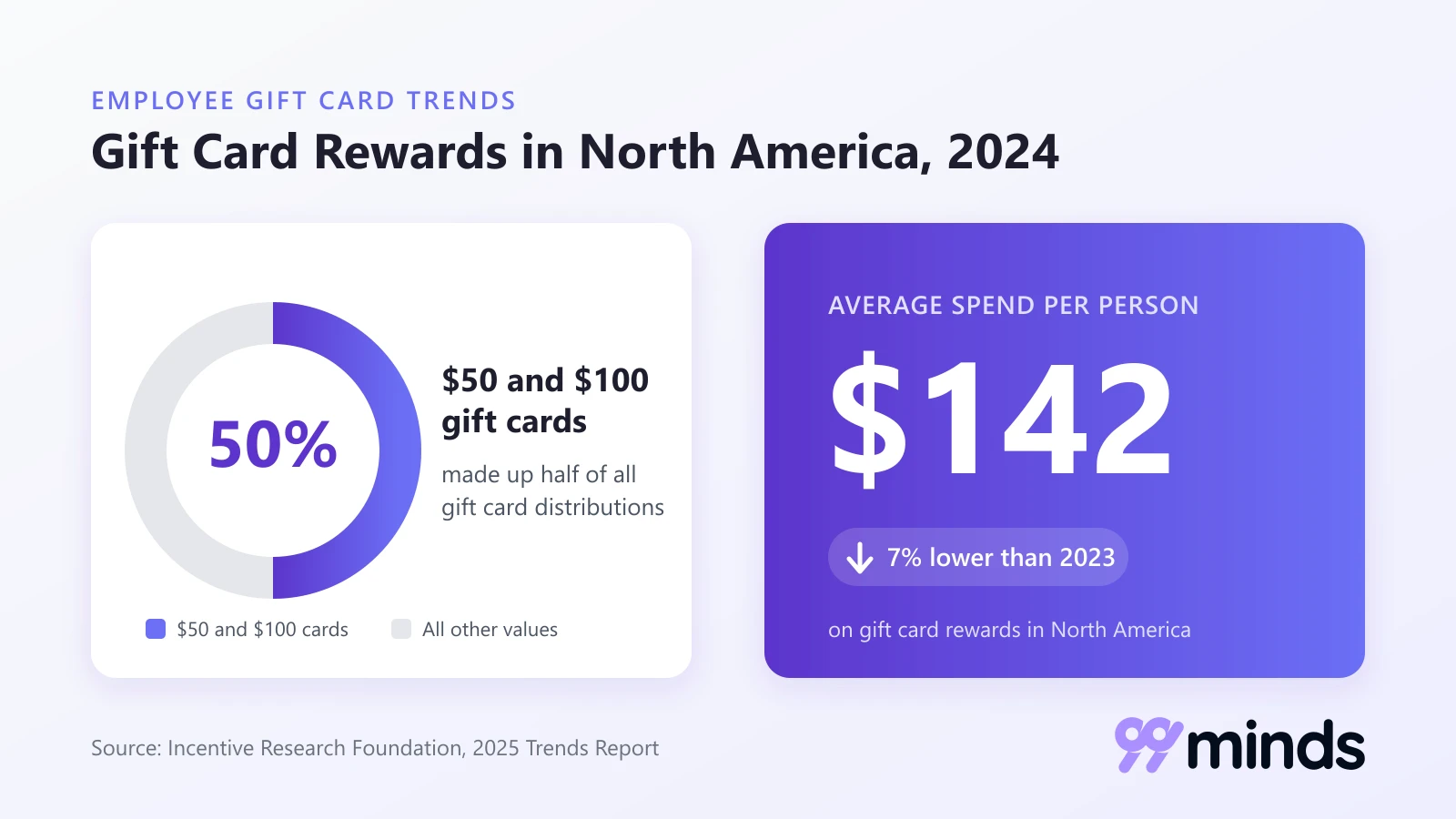
For reference, the Incentive Research Foundation’s 2025 Trends Report found that $50 and $100 gift cards made up half of all gift card distributions in North America, with average spend of $142 per person in 2024. The exact amounts should still depend on the company’s budget and policies. The important part is having a clear structure so managers aren’t deciding everything from scratch.
Example: An HR team manages birthday rewards, work anniversaries, employee referrals, and performance recognition through one centralized gift card program.
Best for: Growing companies, HR teams, recurring recognition programs, and large employee populations.
Choosing an employee gift card isn’t only about picking a popular brand. Think about the occasion, the employee, their location, the reward value, and how the gift will be delivered.
The six factors below work as a quick checklist. Run through them before every reward, or build them into a written policy so every manager chooses the same way.
A quick thank-you doesn’t need the same reward as a 10-year work anniversary. The size and type of the card should reflect how significant the moment is.
For example:
Writing these pairings down helps managers keep recognition consistent. It also saves time, because nobody has to start from scratch each time a reward is due.
Example: A company’s policy says every birthday gets a $25 restaurant or retail card and every five-year anniversary gets a $150 experience card. Managers only need to pick the brand, not the amount or the type of reward.
You don’t need to know exactly what every employee wants. When preferences vary across your workforce, a flexible or choice-based gift card reduces the guesswork.
There are three ways to build choice into a reward:
Choice matters most in large companies where HR may be sending hundreds of rewards. It also avoids an awkward mismatch, such as a coffee card for someone who doesn’t drink coffee.
A gift card is only useful if the employee can redeem it. This matters most when you have remote, hybrid, or international employees.
Before choosing a gift card, check:
A restaurant card for a chain with no locations nearby is a wasted reward. For distributed teams, online retailers, food delivery, and choice cards are usually safer than a single local business.
Digital gift cards make employee recognition much easier when your workforce is spread out. Instead of collecting shipping addresses and waiting for delivery, HR can send the reward straight to the employee’s inbox.
Digital delivery is particularly useful for:
Digital cards can also be scheduled in advance. That means a birthday or anniversary reward arrives on the right day, even if the manager is out of the office.
Don’t look only at the gift card’s face value. Fees and restrictions can reduce what the employee actually receives, or add to what the company pays.
Before purchasing in bulk, check whether the card has:
Open-loop prepaid cards are more likely to carry purchase fees than brand cards sold at face value. Build those costs into your budget so a $50 reward doesn’t quietly cost more, or deliver less, than planned.
A gift card on its own can feel transactional. A short message explains why the employee is receiving it, which is what turns a gift card into recognition.
Instead of:
“Here’s your $50 gift card.”
Try:
“Thank you for taking ownership of the product launch and helping the team get it across the finish line.”
A good message is:
The reward hasn’t changed. The context has.
A gift card is a simple reward, but a few common mistakes can make it feel careless or reduce its value. Most of them come from sending rewards quickly without checking the details.
A card for a store with no location near the employee, or one that only works in another country, is a wasted reward. It can also send the message that nobody thought about who was receiving it.
Before you send a card, check:
For remote and international teams, flexible or choice cards remove most of this risk.
Under federal rules, the money on most gift cards sold in the U.S. can’t expire within five years, and inactivity fees can’t start until a card has been unused for 12 months. Cards issued through award or promotional programs can be excluded from these rules, but they must show their expiration date and fees, according to the CFPB’s gift card regulation.
Read the terms before you buy, and look for:
Telling employees about any deadline up front helps them use the full value before it runs out.
A gift card with no message can feel like an automated transaction. The employee gets the value but not the recognition, which is the part that makes them feel their work was noticed.
One or two sentences about what the employee did is enough. Mention the specific project, behavior, or result, and send the card soon after it happened.
If one team gives $100 for a work anniversary and another gives $25, employees notice. Inconsistent rewards can feel unfair, even when every manager meant well.
To keep rewards consistent:
Consistency doesn’t remove flexibility. Managers can still choose the brand and write their own message.
Digital gift cards can land in spam folders or go unopened. If nobody checks, the employee may never know they were recognized.
Track whether each card was delivered, opened, and redeemed. Follow up with employees who haven’t used their card, and resend it if the original email never arrived.
In the U.S., gift cards given to employees are generally taxable, even small ones. Treating them as tax-free can create reporting problems later.
Involve payroll before launching a gift card program so the rewards are reported correctly. Keep a record of every card issued, including the recipient, value, and date, so payroll has what it needs.
Gift cards don’t need to be limited to birthdays and holidays. Companies can use them throughout the employee lifecycle, from a new hire’s first win to a long-service award.
The use cases below show where gift cards fit best, with a suggested approach for each.
Spot recognition rewards an employee right after they go beyond what was expected. The timing is what makes it work, so the reward should arrive the same day or soon after.
A manager might send a $25 gift card with a personal message recognizing the specific contribution. Small, frequent rewards like this can mean more to employees than one large reward at the end of the year.
Example: An employee fixes a customer issue late on a Friday. Their manager sends a $25 coffee or food delivery card that evening with a note thanking them for stepping in.
When a team completes a difficult project, a gift card for everyone involved recognizes the shared effort. It also marks the end of the project clearly.
Each employee receives a reward along with a message explaining what the team accomplished. For remote teams, food delivery cards work well because they can be paired with a virtual team lunch or dinner.
Work anniversaries are a natural occasion for employee gift cards. Reward values usually grow with tenure, so a 10-year anniversary feels different from a first-year one.
A simple structure could be:
Sales employees can receive gift cards after reaching predefined targets. This gives the company a simple reward structure tied to measurable results.
Gift cards suit sales incentives because they’re quick to deliver and easy to scale. Define the targets and reward amounts before the period starts, so everyone knows what they’re working toward.
Example: Every sales rep who closes 10 new accounts in a quarter receives a $100 flexible gift card, and the top performer receives $250.
Peer recognition lets employees nominate coworkers for recognition. Managers don’t see everything, so coworkers often notice contributions that would otherwise be missed.
Selected employees receive a gift card along with the recognition message from the person who nominated them. Keep the rules simple, such as a monthly nomination with a fixed reward amount.
Companies can also use gift cards as referral rewards when employees successfully refer candidates who meet the company’s employee referral program requirements.
Define the rules clearly so employees understand what qualifies, such as whether the reward is paid when the candidate is hired or after they complete a probation period. A small gift card for each qualified referral, plus a larger one for a successful hire, can encourage more referrals.
Sending one gift card takes a few minutes. Sending hundreds for Employee Appreciation Week or the holidays needs a repeatable process, or mistakes and delays creep in.
The five steps below keep a large send organized, from the first list to the final redemption check.
Start with one list that holds every recipient. It should include:
If different teams or tenure levels receive different values, add that to the list before sending anything. Double-check email addresses, because a typo means a reward that never arrives.
Decide whether everyone receives the same card, a choice card, or a card matched to their interests. For large and distributed teams, a choice card or a flexible card is usually the simplest option.
Keep values consistent with your reward levels. If the whole company receives the same amount, say so in the message, so no one wonders whether their reward is smaller than a coworker’s.
A bulk send doesn’t have to feel generic. Use a shared message for the occasion and add a personal line from each manager where possible.
A good bulk message includes:
Time the delivery to the occasion, such as the morning of a work anniversary or the start of an appreciation event. Scheduling ahead also prevents last-minute delays.
For a company-wide send, avoid delivering late on a Friday or during a holiday when employees are away. Sending a test card to yourself first confirms that the email looks right and the code works.
After sending, check which cards were delivered, opened, and redeemed. Cards that sit unused are a sign the reward didn’t land, or that the email never arrived.
Use the results to improve the next send:
The best employee gift card isn’t necessarily the most expensive one. It’s the one that fits the employee, the occasion, and the reason you’re giving it.
A $20 coffee card can be enough for a quick thank-you, while a travel or experience card suits a major work anniversary. For a large or distributed team, a choice or flexible card removes most of the guesswork. Whatever you choose, check that the card can be redeemed where the employee lives, read the fees and expiration terms, and add a message that says what the employee did.
The harder part is doing this consistently. Once a company is managing birthdays, work anniversaries, performance rewards, referrals, holiday gifts, and spot recognition for 100 or more employees, sending cards one at a time creates unnecessary work for HR.
99minds provides gift card management tools that businesses can use to create, distribute, and manage digital and physical gift cards from one platform. Its B2B gift card program gives a business its own branded ordering site, where companies can buy gift cards in bulk across different values for their employees or clients. Buyers can choose between eGift cards delivered by email and physical cards shipped by mail, add gift options and a personal message, and track current and past orders from their account.
Gift cards can also be created in bulk and scheduled for delivery, so a birthday or anniversary reward arrives on the right day.
The goal isn’t simply to give employees a gift card. It’s to make recognition timely, useful, and meaningful, with a process that scales as the company grows. If you’re planning an employee gift card program, you can get started with 99minds and manage every reward from one place.