We're building the future of agentic promotions. Sign up for early access!
Sign up
We're building the future of agentic promotions. Sign up for early access!
Sign up 
A sitewide discount feels like the easiest way to create urgency. It’s also one of the fastest ways to give away margin. On a $100 order with a 40% gross margin, a 15% discount cuts gross profit from $40 to $25. You’d need 1.6 times as many orders just to earn the same gross profit.
Incentive marketing gives you more options. Instead of lowering today’s price for everyone, you reward a specific action with store credit, loyalty points, cashback, a gift card, free shipping, exclusive access, or a discount.
Incentive marketing is the practice of offering customers a reward of value, such as store credit, points, cashback, gift cards, free shipping, exclusive access, or discounts, in exchange for a specific action such as a first purchase, a repeat order, a referral, or a review.
A useful incentive has four parts: the action you want, the reward you offer, the trigger or channel where the offer appears, and the guardrail that decides when the reward should be issued. For example, you might give a customer $15 in store credit after they spend $100, then let them use that credit on their next order.
Incentive advertising is narrower. It usually puts an offer in front of a prospect through a paid or owned channel to drive a first action. Incentive marketing is the broader system that covers rewards across acquisition, conversion, retention, referral, and win-back. You’ll also see it called incentivized marketing.
Turn Every Incentive Into Repeat Revenue
99minds runs store credit, loyalty points, referrals, and gift card rewards from one platform built for Shopify and BigCommerce brands.
Customer incentives generally fall into six groups. The right choice depends on the behavior you want to change and how much control you want over when the reward becomes a real cost.
Discounts, coupon codes, free shipping, cash rebates, and cashback are familiar because shoppers understand the value instantly. They’re great for urgency, removing checkout friction, and clearing stock, but a discount reduces your margin the moment it’s used. If you rely on codes, our guide to coupon marketing covers how to run them well.
Store credit, gift cards, cashback issued as store credit, and loyalty points keep the reward inside your store. The customer has to come back to use the value, and the real cost usually lands when the reward is redeemed rather than when it’s issued. That’s why online store credit has become a go-to retention tool for ecommerce brands.
Give-get offers reward both sides of a referral. A customer might receive $10 in store credit after a friend’s first qualifying order, while the friend gets a first-order reward. This ties the incentive directly to acquisition.
Early access, members-only drops, VIP tiers, exclusive events, and product previews can feel valuable without a large monetary reward. They work especially well when the goal is retention or membership growth.
Spin-to-win offers, challenges, streaks, and sweepstakes can lift engagement and list growth. Just make sure the game supports a clear business goal instead of being added because it looks fun. If you want to go deeper, here’s how gamification in loyalty programs works in practice.
Points for completing a profile, taking a preference quiz, adding a birthday, following on social, or leaving a review encourage customers to share first-party data you own. Keep the value exchange clear, and make sure review incentives follow disclosure and sentiment rules (more on that in the FAQ).
Here’s how the most common customer incentives compare side by side:
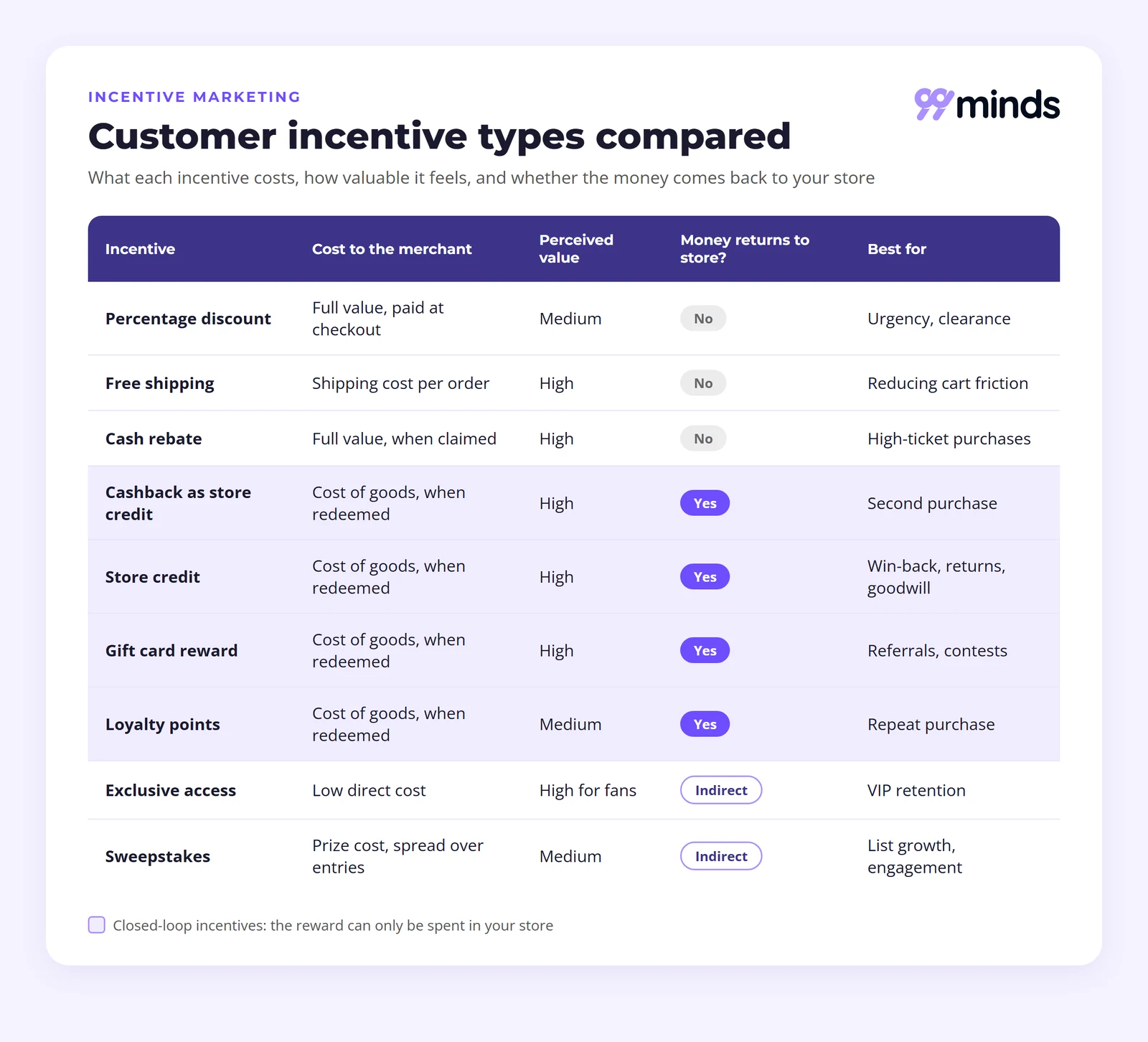
The key difference is when the cost happens. A discount reduces what you collect on today’s order, including orders from customers who would’ve bought anyway. A closed-loop reward pushes the cost out until the customer takes another action.
Take an illustrative $100 order with a 40% gross margin. Without an incentive, gross profit is $40. A 15% discount drops revenue to $85 and leaves $25 of gross profit, so you need 1.6 times the original order volume to recover the same $40.
Now compare a $15 store credit reward for the next purchase. Today’s checkout doesn’t lose $15. If the customer redeems the credit, your cost is the product cost behind it. At a 40% gross margin, $15 of redeemed value is about $9 of product cost. If 70% of credits get redeemed, the expected cost is about $6.30 per reward issued.
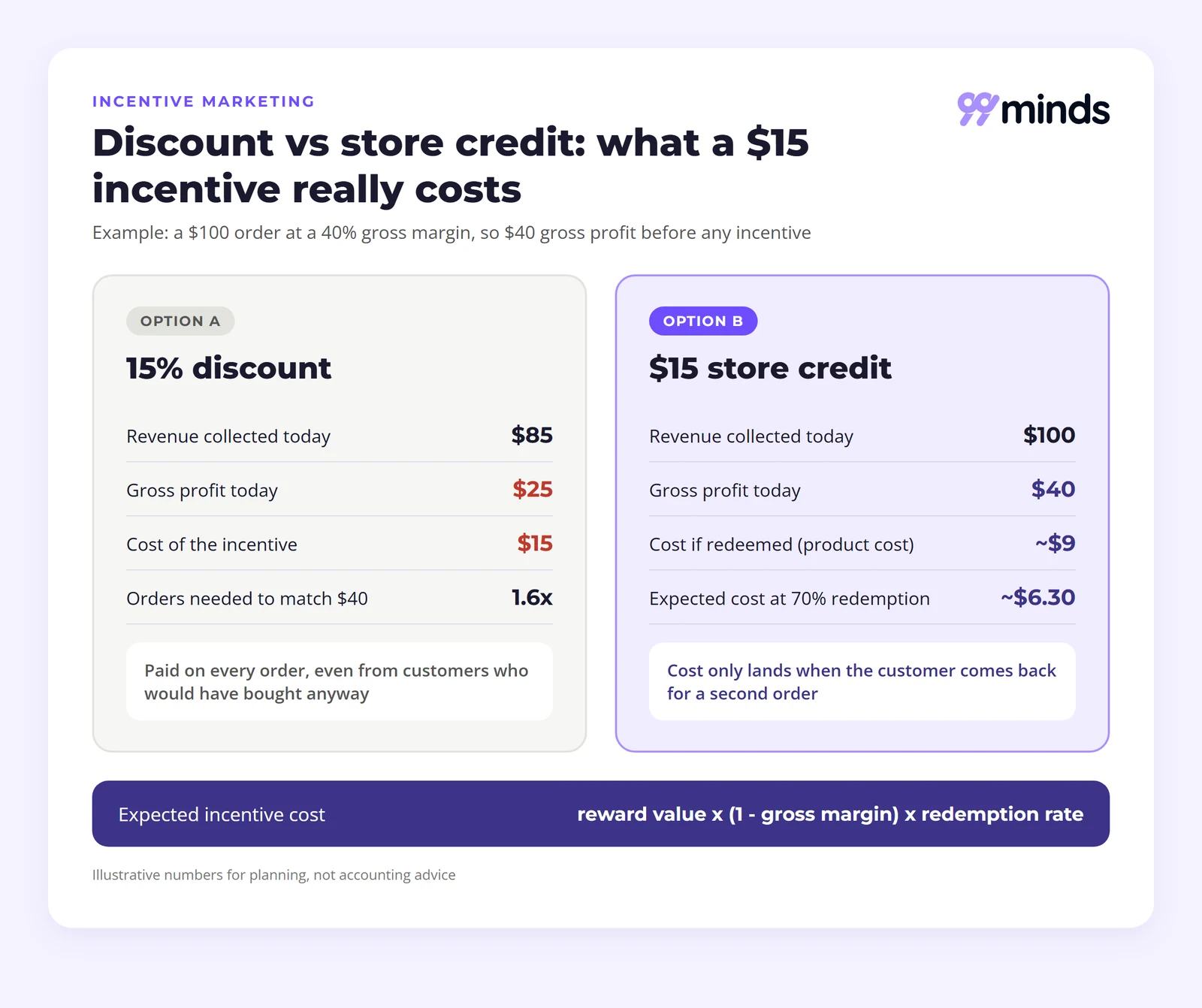
A simple planning formula is: expected incentive cost = reward value x (1 - gross margin) x redemption rate. It’s a planning model, not accounting advice. Unredeemed store credit, gift cards, and points can also create liabilities and breakage considerations, so check with your accountant on how they’re treated under revenue accounting rules.
Our own customers see the same effect. When Natori started offering refunds as gift cards instead of cash, shoppers came back to spend them, and the brand saw a 20% increase in repeat purchases.
Discounts still have a place. They’re useful for urgency, clearance, and any time an immediate price cut is the actual goal. For retention and referral, though, closed-loop rewards tie the incentive to a future purchase, which is exactly what store credit software is built to manage.
The strongest incentive marketing examples connect one clear customer action to one clear reward. Each program below also shows how a big retailer’s idea can translate into a simpler mechanic for a Shopify or BigCommerce store.
Kohl’s uses a straightforward earn-and-redeem model. During promotional earn periods, shoppers get $10 in Kohl’s Cash for every $50 spent on qualifying purchases, according to Fox Business. Kohl’s Cash is spent on a later visit, so it works as a reason to return rather than an instant discount.
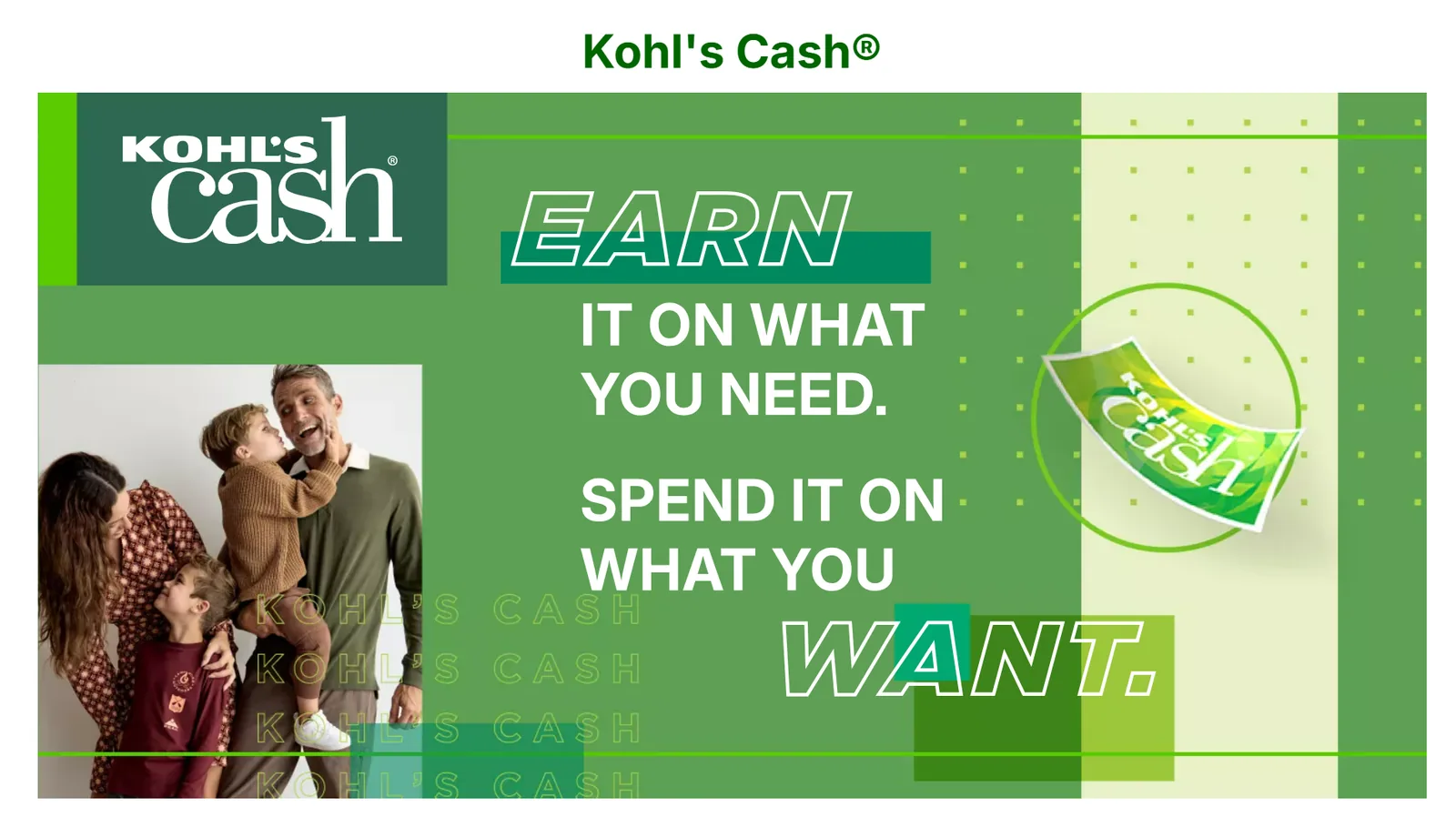
Incentive type and lifecycle stage: cashback issued as store credit, designed to drive the next purchase.
Why it works: the reward is tied to a future shopping trip, so the first purchase creates a reason to come back. A smaller store can borrow the model by issuing store credit after an order and opening redemption later, rather than discounting the original order.
Sephora’s Beauty Insider program combines points, tiers, birthday gifts, and member-only savings. Members earn one point per dollar, and 500 points convert to $10 in Beauty Insider Cash. The VIB and Rouge tiers start at $350 and $1,000 in yearly spend, according to The Points Guy.
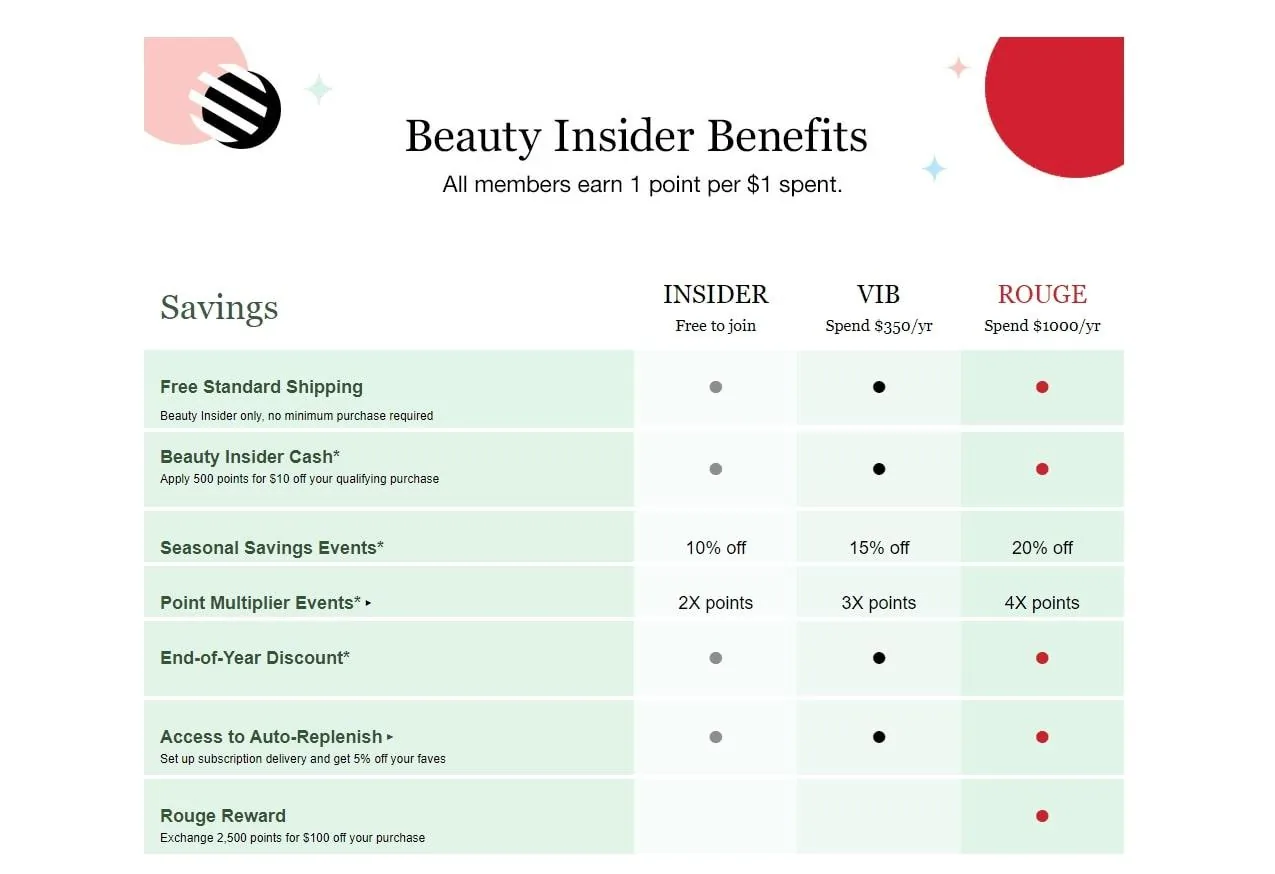
Incentive type and lifecycle stage: points plus tiers, designed to build repeat purchases and VIP retention.
Why it works: customers can see their progress toward the next status level and reward. A smaller retailer could start with points and a birthday reward, then add a tiered loyalty program once there’s enough purchase data to justify it.
Starbucks relaunched its Rewards program in March 2026 with Green, Gold, and Reserve levels. Gold takes 500 Stars in a 12-month period, and Reserve takes 2,500. Higher levels earn Stars faster and unlock extra benefits, and the program added a 60-Star redemption for $2 off.
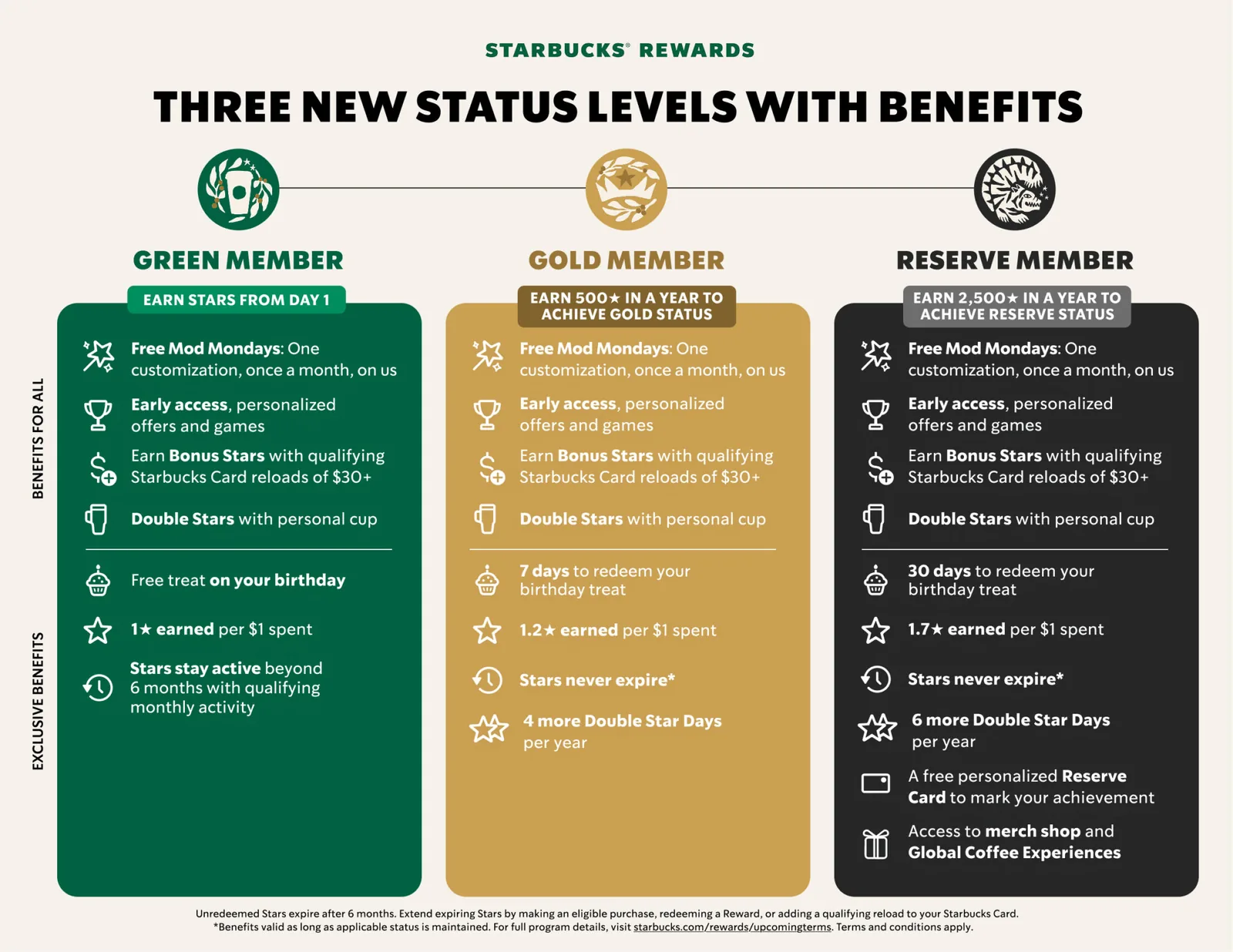
Incentive type and lifecycle stage: points plus tiers, designed to increase visit frequency and engagement.
Why it works: the first reward is easy to reach, while faster earning at higher levels gives members a reason to keep going. A smaller store can set a low first reward and run occasional double-points days instead of another sitewide discount.
Target uses access as part of its incentive system. During its Target Circle Deal Days events, free Target Circle members get member savings, while paid Target Circle 360 members get early access to selected offers. Membership itself becomes the gateway to a time-limited shopping event.
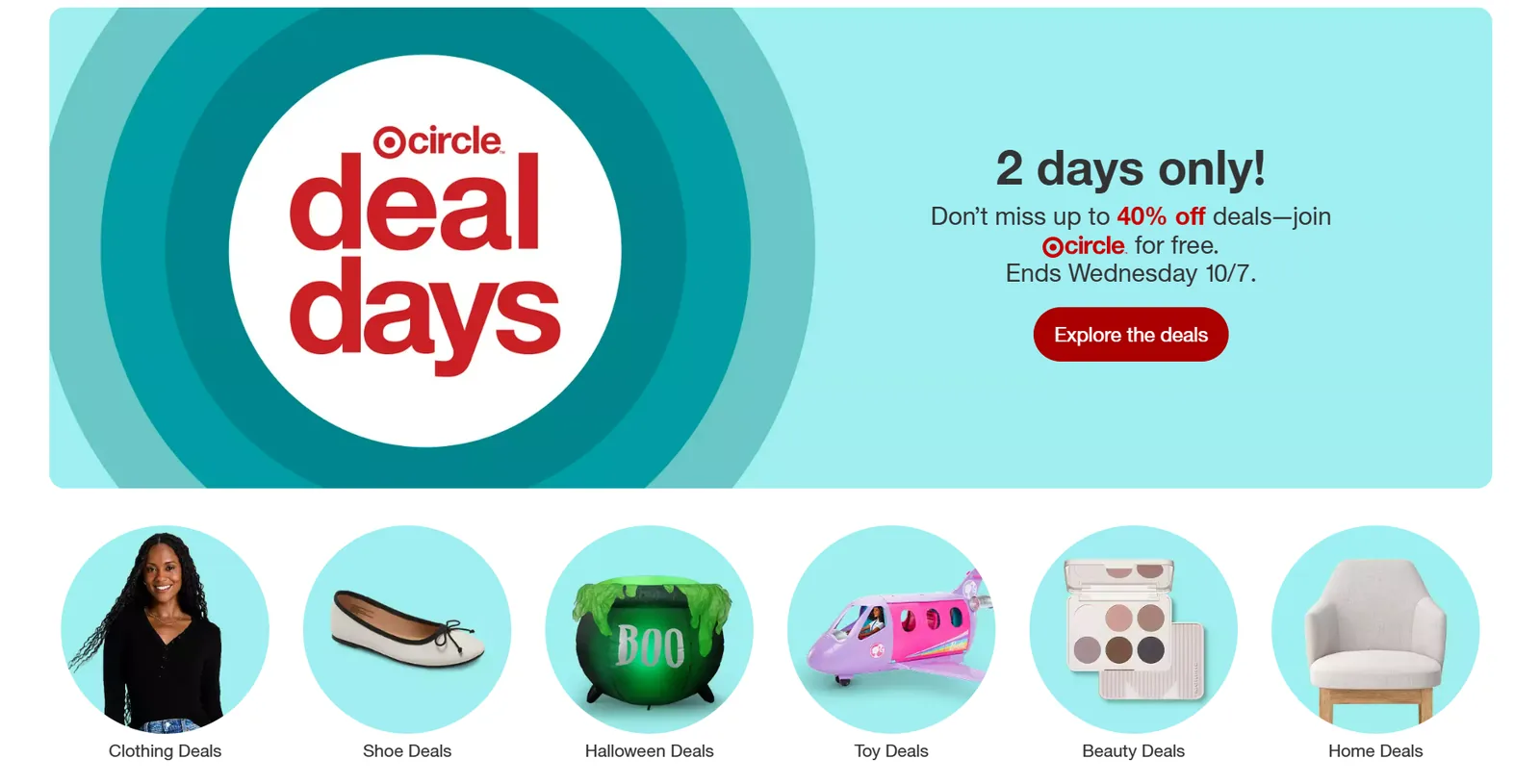
Incentive type and lifecycle stage: exclusive access, designed to drive signups and bring back lapsed shoppers.
Why it works: the reward isn’t only a lower price. It’s access to an event and the feeling of being part of the member group. A smaller store can run a members-only early access window before a seasonal sale.
Before its ecommerce launch, Harry’s ran a referral campaign where each signup got a unique link and rewards grew with every successful referral. The reward ladder included free shave cream at five referrals, a razor at 10, a shave set at 25, and a year of free blades at 50. The founders reported nearly 100,000 email signups in one week, with about 77% coming through referrals.
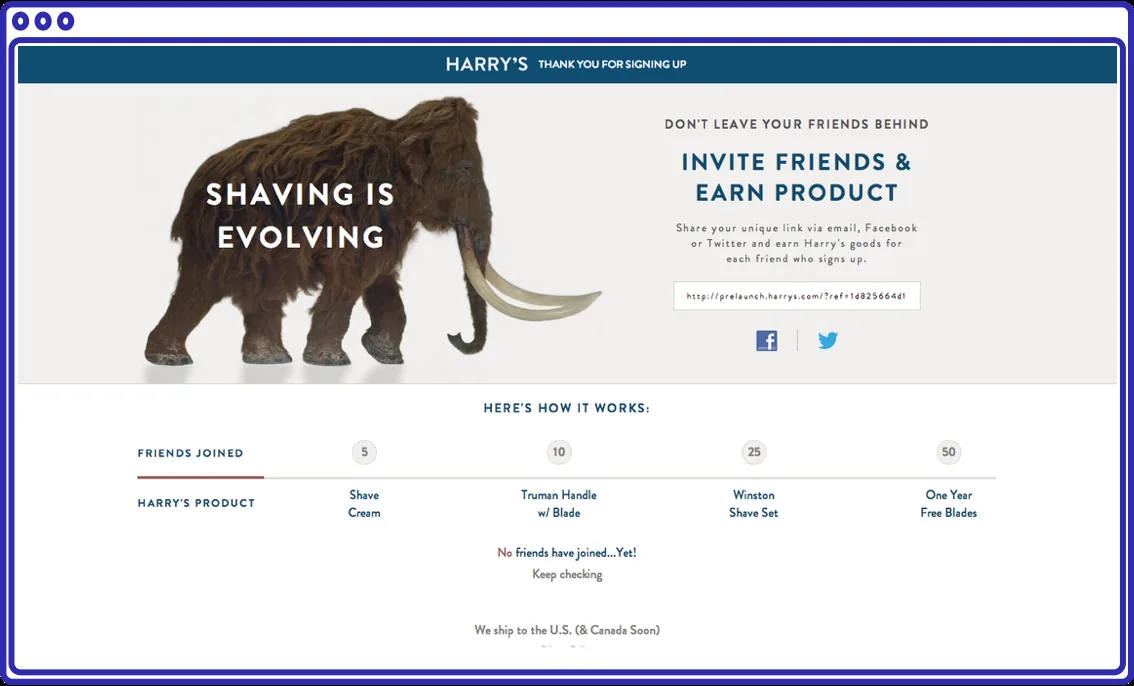
Incentive type and lifecycle stage: tiered referral rewards, designed for acquisition.
Why it works: the brand rewarded referrals with its own products, which turned every reward into product sampling. A smaller retailer can use store credit or free product and add a second reward tier for its most active referrers, the same principle behind any strong referral program.
These examples share a simple structure: one action, one reward, and one reason to keep engaging. That’s where creative incentive marketing beats simply making the discount bigger. The most effective programs change the reward or the timing, not just the percentage off.
Here’s a six-step process you can use for any incentive, from a one-off campaign to an always-on program.
Start with one measurable objective, such as acquiring first-time buyers, raising AOV, driving a second purchase, generating referrals, collecting reviews, winning back lapsed customers, or collecting first-party data. One incentive can support several outcomes, but one should be the primary KPI.
Use this table to match each goal with an incentive, a trigger, and the KPI to watch:
| Goal | Recommended incentive | Trigger | KPI |
|---|---|---|---|
| Acquire first-time buyers | Welcome credit or free shipping | Email or SMS signup | Signup-to-first-order rate |
| Raise AOV | Spend-threshold store credit or gift | Cart crosses threshold | AOV, attach rate |
| Drive second purchase | Cashback as store credit | Post-purchase | 60- or 90-day repeat rate |
| Grow referrals | Give-get store credit or gift card | Friend's qualifying order | Referred revenue, referral CAC |
| Collect reviews | Points regardless of rating | Review submitted | Review volume, review rate |
| Win back lapsed customers | Time-limited store credit | No order in X days | Reactivation rate |
| Collect first-party data | Points for profile or quiz completion | Profile updated | Profile completion rate |
Don’t budget from face value alone. Estimate how much will actually be redeemed, then factor in gross margin and redemption rate. Open-ended programs scale with redemptions, while fixed-budget campaigns cap the number of rewards issued.
Define stacking, expiry, minimum spend, eligibility, return handling, and disclosure rules before launch. If a customer can combine a reward with every other promotion on your site, the incentive can get much more expensive than you planned.
Use the places where customers already make decisions: onsite widgets, checkout, post-purchase email and SMS, and the account page. The trigger should show up close to the action it’s meant to influence.
Redemption rate alone won’t tell you whether an incentive created new revenue. Use a holdout group, a random slice of eligible customers who don’t get the offer. Then compare repeat rate, lifetime value, and cost per incremental order between the two groups, and track the payback period. Good customer loyalty analytics make this comparison much easier.
Even a well-designed incentive can get expensive if people game it or customers start expecting it. Two sets of guardrails help.
For more on how leaked and fake codes hurt merchants, see our breakdown of common coupon scams.
Customers who learn that you discount every month start waiting for the next sale. Rotate incentive types instead of leaning on the same percentage-off code. Reward useful behavior, not only purchases, and keep your always-on points or cashback program separate from occasional incentive promotions.
The goal isn’t to remove incentives. It’s to make each one conditional enough that the customer does something valuable in return.
99minds brings the closed-loop incentives from this guide into one place for Shopify, BigCommerce, and omnichannel retail stores. Here’s how the pieces map to the strategy above:
Because every reward lives in one system, it’s easier to set stacking rules, measure redemption, and see which incentives actually bring customers back.
Launch Your First Closed-Loop Incentive
99minds help you to set up gift card and loyalty program in one platform and see which incentives bring customers back.
Start with one goal, one lifecycle stage, and one reward. If the goal is retention or referral, try a closed-loop incentive before reaching for another sitewide discount. Store credit, cashback issued as store credit, a gift card, or points all keep the value in your store.
Budget from expected cost, not the reward’s headline value. Add stacking and fraud rules before launch, then measure incremental lift with a holdout group. That turns incentive marketing from a collection of promotions into a measurable growth system.
The broader principle is simple: the best incentives pay you back. A reward that brings a customer back for another purchase creates more value than a discount that only makes today’s order cheaper.
Run loyalty, referral, store credit, and gift card rewards from one platform. Book a demo with 99minds and launch your first closed-loop incentive this week.