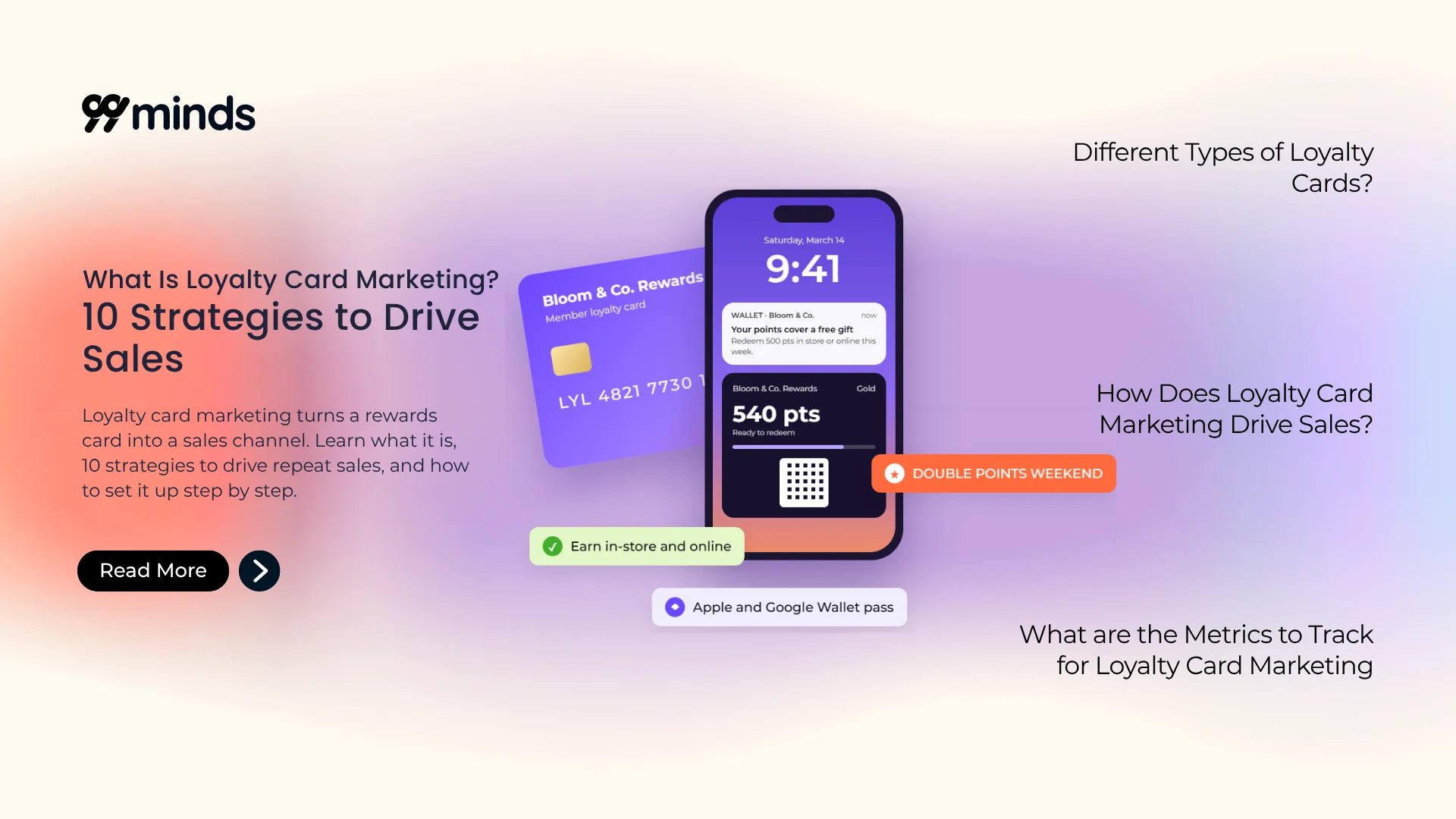
Most loyalty cards end up forgotten in a drawer or buried in a mobile wallet. Customers sign up, collect a few points, and move on. For retailers, restaurants, and ecommerce brands, that means a missed opportunity to turn a one-time purchase into a lasting customer relationship.
Loyalty card marketing changes that. Instead of treating a rewards card as a membership perk, businesses use it as a marketing channel. The goal is to encourage repeat purchases, increase order values, attract new customers, and bring back shoppers who have stopped visiting.
The opportunity is worth exploring. According to the 2025 Consumer Spend Report from Upside, 86% of surveyed consumers said rewards matter, but only half used loyalty programs consistently. The challenge is not simply getting customers to join. It is giving them reasons to use their cards again.
60-Second Summary
- Loyalty card marketing uses a physical card, app, or mobile wallet pass as a channel to drive repeat purchases, not just as a membership perk
- It drives sales through four levers: visit frequency, average order value, new customer acquisition, and win-back of inactive shoppers
- Ten proven strategies include checkout enrollment, spend thresholds, bonus-points events, unused-points reminders, wallet passes, omnichannel rewards, VIP tiers, referrals, win-back campaigns, and event-based automation
- Start with the strategy that fixes your biggest sales gap, then expand once results are measurable
- Measure success with active member rate, redemption rate, visit frequency, member average order value, and incremental revenue against a holdout group
- Calculate ROI on incremental contribution profit, not total revenue, because some members would have bought anyway
- 99minds lets you set up loyalty cards, wallet passes, reminders, email templates, and automation in seven steps
What Is Loyalty Card Marketing?
Loyalty card marketing is the practice of promoting a loyalty card and using it to encourage repeat purchases, increase spending, and reactivate inactive shoppers. It combines rewards, customer communications, and purchase data to give customers reasons to return.
A loyalty program defines the rules, such as how customers earn points, what rewards they receive, and when they can redeem them. Loyalty card marketing focuses on getting customers to join, use their cards, and take actions that benefit both the customer and the business.
For example, a restaurant might offer points for every purchase and send members a reminder when their balance can cover a free meal. An ecommerce store could reward customers who spend above a certain amount. Both use the loyalty card as a way to influence purchasing behavior.
Types of Loyalty Cards
Businesses can choose between physical cards, app-based cards, and digital loyalty cards stored in a mobile wallet. The right format depends on how customers shop, the technology available, and how the business plans to communicate with members.
| Card format | Typical cost | Data captured | Marketing opportunities |
|---|---|---|---|
| Physical card | Printing and distribution costs | Depends on the enrollment and point-of-sale system | In-store enrollment, receipts, and communications through collected contact details |
| App-based card | App development or subscription costs | Can include account activity and purchase history, depending on permissions and integrations | In-app offers, push notifications, and personalized rewards |
| Mobile wallet pass | Digital setup and platform costs | Depends on the loyalty platform and connected systems | Convenient card access, supported pass notifications, and location-triggered messages where available |
Physical cards can work well for businesses with regular in-store traffic. Apps offer more opportunities to build ongoing digital engagement, but customers must install and use them. Wallet passes provide a convenient alternative. These digital loyalty cards live in Apple Wallet or Google Wallet, so customers can access them without installing a separate loyalty app.
How Does Loyalty Card Marketing Drive Sales?
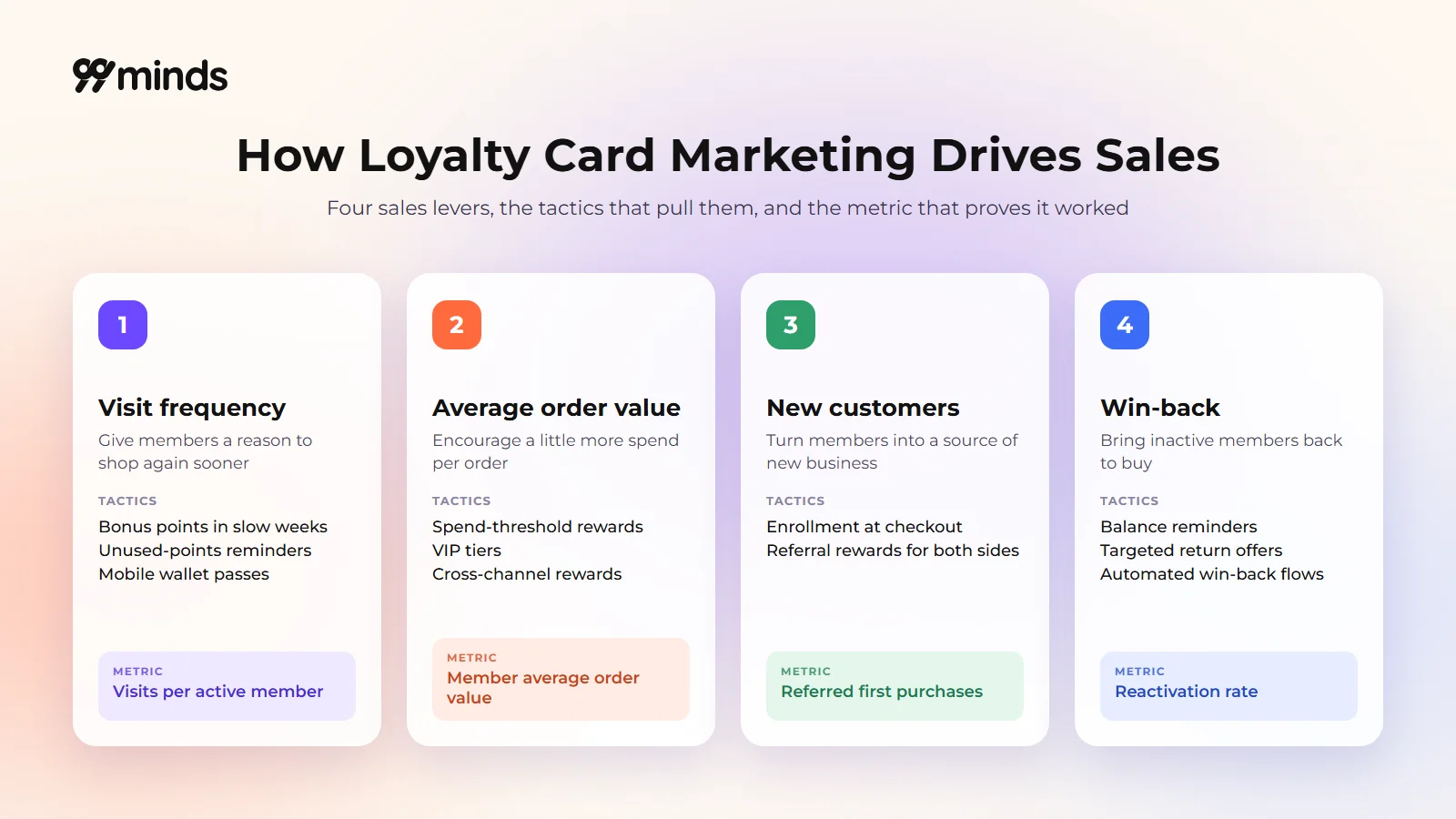
Loyalty card marketing drives sales in four ways: more frequent visits, larger orders, new customers through referrals, and win-backs of inactive shoppers. A loyalty card creates a way to recognize customers and reward specific behaviors.
Its commercial value comes from what customers do after joining, not from the number of cards issued. That distinction matters because most shoppers already carry several cards. The 2025 EY Loyalty Market Study found that 92% of US consumers surveyed are enrolled in at least one loyalty program, and almost 50% belong to more than five.
Here is how each of the four sales levers works.
1. Increase visit frequency
Give customers a reason to shop again sooner. Bonus points, purchase-based rewards, and relevant reminders can encourage another visit instead of allowing customers to forget about your business.
For example, a coffee shop could run a double-points promotion during a traditionally quiet week.
2. Increase average order value
Encourage customers to spend a little more per transaction. Spend thresholds, tiered rewards, and minimum-order incentives can motivate shoppers to add another item or choose a larger purchase.
A retailer might offer double points on orders above $75 if that threshold is slightly higher than its current average order value.
3. Acquire new customers
Turn satisfied members into a source of new business. Referral incentives and member-exclusive enrollment offers can introduce your brand to shoppers who might not otherwise consider it.
The key is to reward genuine new purchases rather than sign-ups that never become customers.
4. Win back inactive customers
Re-engage members who have stopped visiting. A reminder about an unused balance or a relevant return offer can give them a reason to shop again.
However, not every returning customer represents incremental revenue. Some would have purchased anyway. Measuring the difference requires more than comparing loyalty members with non-members.
Loyalty card benefits, like the broader benefits of a loyalty program, should therefore be evaluated against customer behavior and profitability, rather than sign-ups alone.
Best Loyalty Card Marketing Strategies to Drive Sales
The strongest loyalty card marketing strategy connects a specific customer behavior to a measurable business outcome. The following ten approaches can help retailers, restaurants, and ecommerce businesses make their programs more useful and commercially effective.
1. Enroll Customers at the Register and Online Checkout
A loyalty card cannot influence a customer who never joins the program. Make enrollment a natural part of the buying experience, whether someone shops in person or online. According to EY study, 78% of retail respondents said they offer enrollment at the point of sale in addition to online sign-ups.
Keep registration simple. Ask for the information needed to identify members and communicate with them, rather than requiring a long form before they can complete a purchase.
How to run it:
- Train checkout staff to invite customers to join in one short sentence.
- Add QR codes to receipts, shopping bags, and counter displays.
- Include a loyalty enrollment prompt on your ecommerce website or checkout.
- Consider offering a small sign-up incentive that becomes redeemable on the customer’s next purchase.
For example, a clothing store could offer new members 100 bonus points after their first purchase, with enough additional points available on the second visit to encourage a return trip.
Common pitfall: A complicated enrollment process can create queues in stores and friction online.
Metric to track: Sign-up rate per touchpoint, calculated as enrollments divided by the eligible customers reached at that touchpoint.
2. Use Spend Thresholds to Grow Basket Size
Spend thresholds reward customers for reaching a specified purchase amount. They can encourage shoppers to add another product when they are close to unlocking a reward.
The important part is choosing a threshold that makes commercial sense. If your average order value is $68, a double-points offer at $75 may encourage customers to add a relatively inexpensive item. A $150 threshold may be too far away for most shoppers.
How to run it:
- Review your current average order value before choosing a threshold.
- Offer bonus points or another reward above that amount.
- Show customers how much more they need to spend to qualify.
- Calculate product margins to ensure the incentive remains profitable.
For example, an online beauty retailer could offer double points on orders of $75 or more and show eligible customers how close they are to the target.
Common pitfall: Setting the threshold too high can discourage customers rather than motivate them.
Metric to track: Member average order value before and during the promotion, compared with an appropriate control group.
3. Run Bonus Points Events During Slow Weeks
Bonus-points campaigns give customers extra rewards for shopping within a defined period. They work best when they encourage customers to purchase during quieter periods rather than simply rewarding sales that would have happened anyway.
How to run it:
- Identify weeks or days with consistently lower transaction volumes.
- Run a short promotion, such as double points over a weekend.
- Announce the offer through email and other channels your members already use.
- Compare performance with similar periods without the promotion.
For example, a specialty retailer could offer triple points on selected products during a historically slow week in January.
Common pitfall: Running bonus events during peak periods can increase reward costs without generating many additional purchases.
Metric to track: Incremental transactions during the promotion compared with a comparable baseline or control group.
4. Remind Members About Unused Points
Customers may accumulate points without understanding what they can redeem. A balance reminder makes the reward more tangible and gives members a reason to return.
Rather than sending a generic message, explain the balance and what it can actually buy. A customer who knows they have enough points for a free drink has a clearer reason to visit than someone who receives a vague reminder about their membership.
How to run it:
- Trigger reminders after a defined period without a purchase.
- Set a minimum balance so you contact members with something meaningful to redeem.
- Explain which reward their current balance can unlock.
- Include a relevant next step, such as visiting a store or browsing eligible products.
For example, a restaurant could remind a member that their points are enough for a complimentary side dish on their next visit.
Common pitfall: Repeatedly reminding customers about balances too small to redeem can make the program feel frustrating.
Metric to track: Redemption rate following the reminder.
5. Put the Loyalty Card in a Mobile Wallet
A mobile wallet pass makes a digital loyalty card easier to access when a customer is ready to shop. Instead of searching for a physical card or opening a separate app, members can find their passes in Apple Wallet or Google Wallet.
Depending on the wallet platform and loyalty system, passes may also support notifications or location-triggered messages, which turns a stored card into a mobile wallet marketing channel. These capabilities can help businesses reach customers in relevant contexts, although availability and delivery options vary by implementation.
How to run it:
- Offer the option to add the card to a mobile wallet during enrollment.
- Keep the card easy to identify and use at checkout.
- Make sure the displayed card information stays accurate.
- Use supported notifications sparingly and make each message useful.
For example, a retailer could use geofencing to send a location-triggered notification that reminds an eligible member about their loyalty card when they are near a participating store.
Common pitfall: Excessive or irrelevant notifications can annoy customers and lead them to remove the pass.
Metric to track: Active member rate among wallet-pass users compared with other enrolled members.
6. Reward Customers Who Shop In-Store and Online
An omnichannel loyalty card lets customers earn and redeem rewards across participating physical stores and ecommerce channels. It creates a more consistent experience for customers who move between online browsing and in-store shopping.
A customer should not have to manage separate reward balances or learn different program rules just because they switch channels.
How to run it:
- Use a consistent member identifier across supported channels.
- Make sure purchases and redemptions are recorded correctly.
- Introduce online shopping incentives to store-first customers, and vice versa.
- Explain clearly where members can earn and redeem rewards.
For example, a home goods retailer could give store regulars a one-time points bonus on their first online order, encouraging them to try another purchasing channel.
Common pitfall: Separate systems that fail to recognize the same member can create inconsistent balances and undermine trust.
Metric to track: Percentage of active members who purchase both online and in-store.
7. Add VIP Tiers to Encourage Higher Spending
VIP tiers recognize customers as their spending or engagement increases. Each level provides a reason to keep shopping, especially when the next tier offers a meaningful improvement in benefits.
You do not need a complicated tiered loyalty program. Three tiers are often enough to begin testing whether status-based rewards influence purchasing behavior.
How to run it:
- Create a small number of clearly differentiated tiers.
- Set eligibility thresholds using actual customer spending data.
- Offer benefits that customers value, such as exclusive rewards or early access.
- Show lower-tier members what they could unlock by reaching the next level.
For example, a specialty retailer could offer standard, silver, and gold memberships, with higher tiers unlocking better rewards or exclusive shopping events.
Common pitfall: If the next tier feels impossible to reach, customers may stop trying.
Metric to track: Spend per member by tier, alongside the proportion of members who move up a tier.
8. Turn Satisfied Members Into Referrers
Referral marketing encourages existing customers to introduce your business to friends or family. When connected to a loyalty strategy, it can reward members for bringing in new customers while giving referred shoppers a reason to make their first purchase.
The reward should benefit both sides where the economics allow it. This makes the offer more appealing to the person referring a friend and the person receiving the invitation.
How to run it:
- Provide each eligible member with a unique referral code or link.
- Reward qualifying referrals after the required action, such as a completed first purchase.
- Consider offering an incentive to both the referrer and the new customer.
- Invite satisfied customers to refer friends after a successful purchase or reward redemption.
For example, a skincare brand could offer an existing member bonus points after a friend’s first qualifying order and give the friend a welcome discount.
Common pitfall: Rewarding sign-ups without requiring meaningful activity can attract low-quality referrals or abuse.
Metric to track: Number of referred customers who complete a qualifying first purchase.
9. Win Back Members Who Have Stopped Visiting
A win-back campaign targets customers whose purchase activity has slowed or stopped, an early warning sign of customer churn. The goal is to give them a relevant reason to return without training them to wait for discounts.
Start by defining inactivity according to your normal purchase cycle. A customer who buys groceries weekly may need attention after a short gap. Someone who buys furniture may be perfectly active despite not purchasing for months.
How to run it:
- Identify members whose time since their last purchase exceeds a reasonable threshold.
- Start with a useful reminder, such as their available points or member benefits.
- Follow up with a targeted incentive if they remain inactive.
- Set an end date for time-limited offers and stop the sequence after a qualifying purchase.
For example, an apparel retailer could remind an inactive member about their unused points, then offer a modest incentive if they have not returned after another defined period.
Common pitfall: Sending the same win-back sequence to every member ignores differences in buying frequency and customer value.
Metric to track: Reactivation rate, measured as the share of targeted inactive members who make a qualifying purchase within the defined period.
10. Automate Campaigns Around Customer Events
Automation helps businesses send relevant communications when a customer takes a particular action or meets a defined condition. Instead of manually building every campaign, marketers can establish rules that respond to enrollment, purchases, reward activity, birthdays, or inactivity.
The objective is not to automate every possible interaction. It is to make useful communications timely and consistent. Email is a sensible place to start. In the EY study, 59% of consumers named it their preferred way to receive loyalty communications, compared with 18% for text messages and 13% for app notifications.
How to run it:
- Start with a welcome message after enrollment.
- Send a confirmation when points are earned or redeemed.
- Build birthday or anniversary campaigns where appropriate.
- Create a separate win-back workflow for inactive members.
- Review campaign results before adding more triggers.
For example, a retailer could send a welcome email explaining how to earn points, followed by a separate message after the member completes their first qualifying purchase.
Common pitfall: Launching too many automated messages at once makes it difficult to identify which campaigns are useful and can overwhelm customers.
Metric to track: Incremental revenue generated by automated campaigns, measured against a suitable baseline or control group.
Prioritizing Your Loyalty Card Marketing Strategies
You do not need to launch all ten strategies at once. Start with the approaches that address your biggest sales problem, then expand once you can measure their impact.
| Strategy | Primary sales lever | Metric to track |
|---|---|---|
| Enroll customers at checkout | Acquisition and future visits | Sign-up rate |
| Use spend thresholds | Average order value | Member average order value |
| Run bonus-points events | Visit frequency | Incremental transactions |
| Remind members about unused points | Visit frequency | Redemption rate |
| Add cards to mobile wallets | Visit frequency | Active member rate |
| Reward cross-channel shopping | Visits and basket size | Cross-channel purchase rate |
| Introduce VIP tiers | Basket size and retention | Spend per member by tier |
| Encourage referrals | Acquisition | Referred customer purchases |
| Win back inactive members | Win-back | Reactivation rate |
| Automate customer-event campaigns | All four levers | Incremental campaign revenue |
How Do You Set Up Loyalty Card Marketing With 99minds?
Once you have chosen your strategies, the next step is turning them into campaigns you can manage consistently. 99minds brings loyalty card configuration, member communications, wallet passes, and automation into one loyalty platform.
Here is how to get started.
Step 1: Configure Your Loyalty Card
Go to More > Loyalty, then open Set up > Configure. Set the card’s currency, minimum balance, card length, prefix, and character set. You can choose a card length between eight and 20 characters, add an optional separator, and enable a scannable barcode.
Choose these settings carefully. The currency becomes locked once cards have been issued, so confirm your configuration before launching the program.
Step 2: Enable Mobile Wallet Passes
Open Settings > Wallet Pass and enable Apple Wallet and Google Wallet under Loyalty passes.
Wallet passes make it easier for customers to access their cards when shopping. Explain the benefit during enrollment so members know they can use the digital version rather than carrying a physical card.
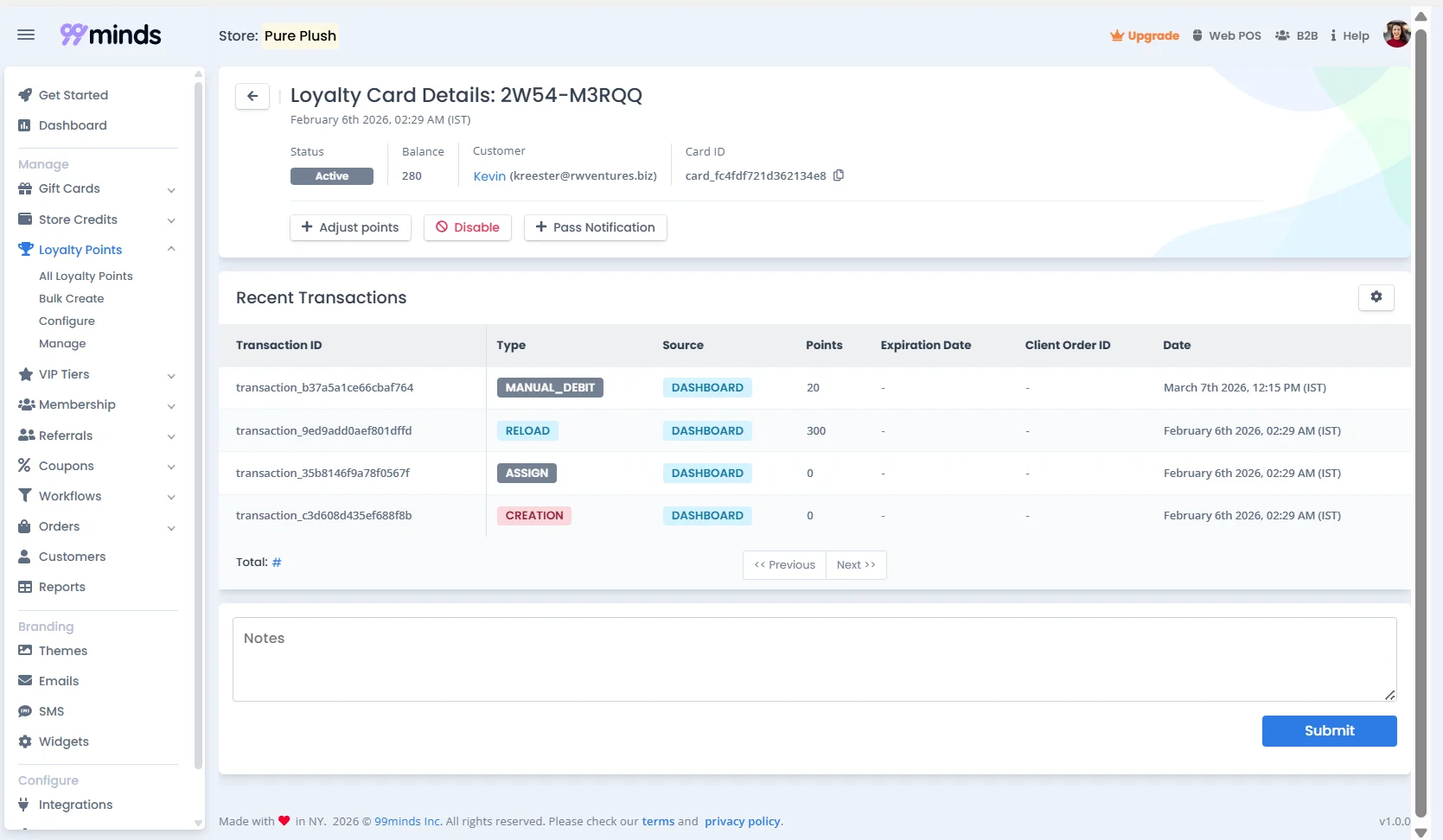
Step 3: Issue Loyalty Cards
You can issue cards automatically when customers enroll or use the available bulk issuance options.
Automatic issuance reduces manual work and helps customers start participating immediately. For bulk issuance, choose the appropriate option for the type of loyalty cards you need to create.
Step 4: Activate Loyalty Email Templates
Go to Set up > Emails. Enable and customize the available loyalty email templates using their supported variables.
Start with essential communications, such as enrollment confirmation and points activity. Keep each message focused on what the customer needs to know and the action they can take next.
Step 5: Configure Usage Reminders
Under Settings > Reminders, configure the number of reminders, the interval between them, and the minimum balance required.
Usage reminders can help customers notice an unused balance. Choose a threshold that makes the message useful rather than contacting members who have too few points to redeem.
Step 6: Publish the Loyalty Widget and Page
Go to Set up > Widgets to publish the loyalty widget and hosted loyalty page.
The loyalty widget and hosted loyalty page help visitors discover the program and understand its benefits. Promote them on your website so customers can join without searching for a separate registration page.
Step 7: Automate Rewards and Communications
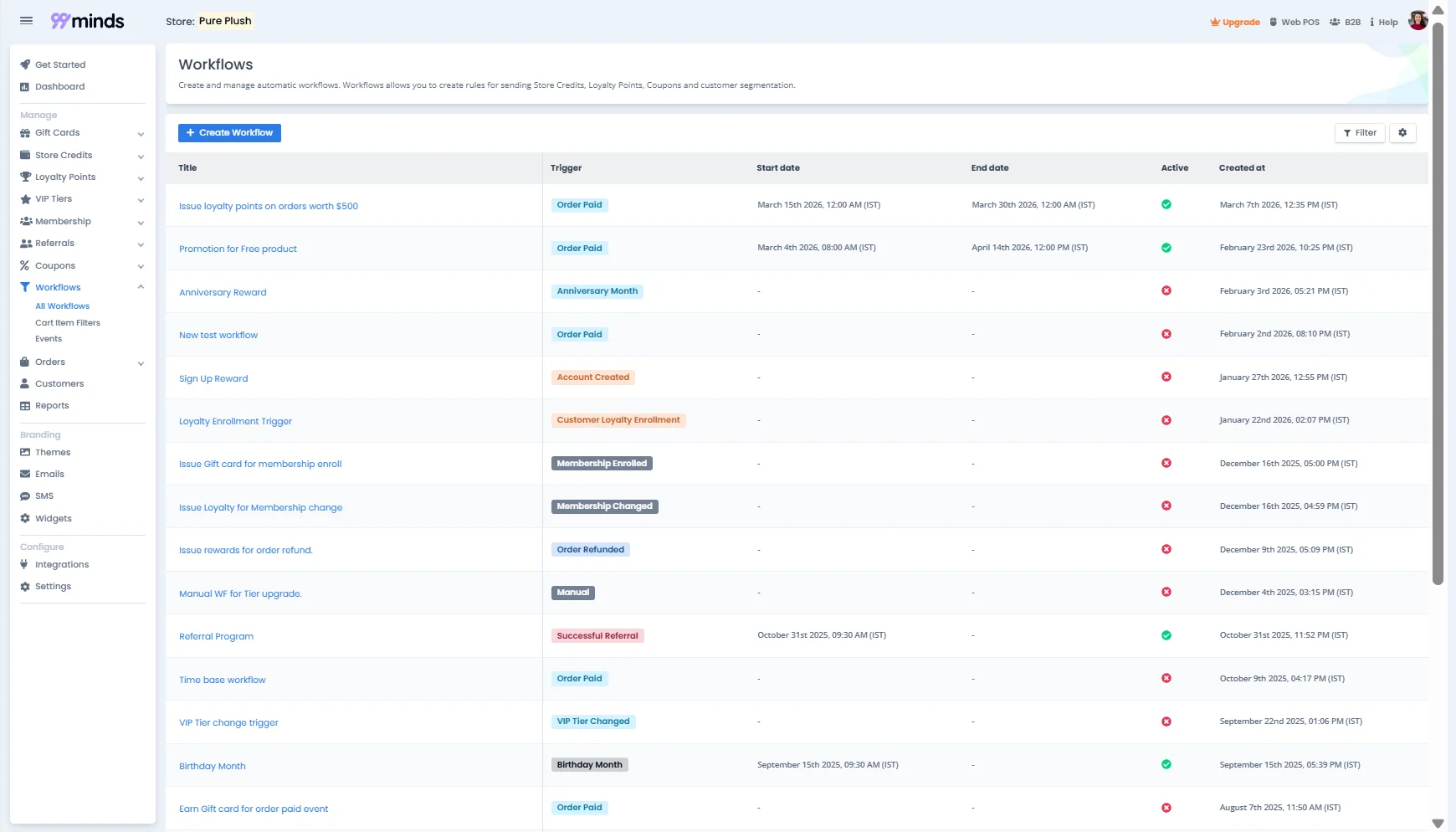
Open More > Automation to create workflows triggered by supported store events. You can also describe a workflow to Loop AI in plain English.
For example, you might create an automation that sends a birthday gift card to eligible customers or responds to a qualifying loyalty event.
Begin with one or two workflows, test them, and review their results before expanding.
Connecting 99minds Features to Your Marketing Strategy
Each setup step supports a different part of your loyalty card marketing plan:
- Enrollment: Use card numbers, optional barcodes, the loyalty widget, and the hosted loyalty page to make joining easier.
- Spend thresholds and bonus events: Build and test eligible automation workflows based on supported store events and cart conditions.
- Unused points and win-back: Use available reminders and balance-change communications to encourage customers to return.
- Mobile wallets: Enable Apple Wallet and Google Wallet passes. Use supported per-card notifications and location-triggered alerts where appropriate.
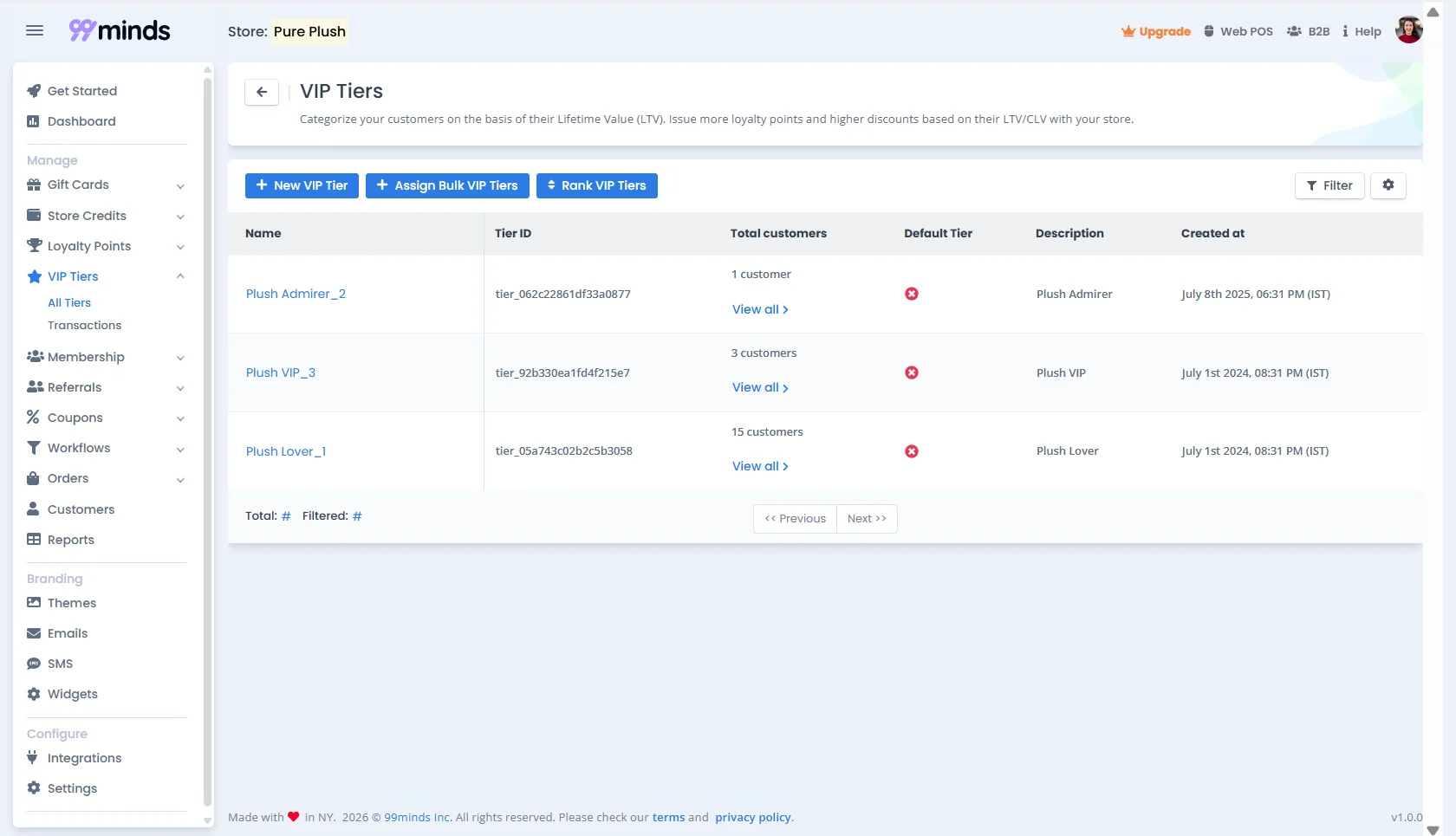
- VIP tiers: Configure tier structures and supported reward workflows to recognize valuable customers.
- Automation: Use event-triggered communications and Loop workflows to reduce manual campaign management.
Keep product claims aligned with the capabilities available in your account. In particular, do not assume that every wallet notification can be sent as a bulk campaign or that every loyalty event has a ready-made automation template.
How Do You Measure Whether Loyalty Card Marketing Is Driving Sales?
Measure loyalty card marketing with active member rate, redemption rate, visit frequency, member average order value, and incremental revenue from a holdout test. A loyalty program can accumulate members and transactions without generating much additional revenue. To understand its impact, measure customer behavior, reward costs, and the sales that would not otherwise have occurred.
Loyalty Marketing Metrics to Track
| Metric | How to calculate it | What it tells you |
|---|---|---|
| Active member rate | Active members during a defined period divided by total enrolled members | Whether members are participating |
| Redemption rate | Eligible rewards or points redeemed divided by eligible rewards or points issued | Whether customers find the rewards useful |
| Visit frequency | Total qualifying visits divided by active members | How often members return |
| Member average order value | Member sales divided by member orders | How much members spend per transaction |
| Incremental revenue | Revenue attributable to the campaign compared with the estimated counterfactual | Whether the campaign generated additional sales |
Define each metric consistently before comparing results. For example, specify what counts as an active member and whether a redemption rate is based on points, rewards, or eligible members.
Measuring Incremental Sales With a Holdout Group
Compare campaign participants with a suitable control group rather than assuming all purchases from loyalty members are additional revenue.
Where practical, randomly hold out a portion of eligible customers from a campaign. Compare the treatment group with the holdout group over the same period, using comparable customer groups and accounting for differences in purchase behavior.
Suppose you send a bonus-points offer to 1,000 eligible customers and hold out another 1,000 similar customers. The campaign group generates $12,000 in revenue during the measurement period, while the holdout group generates $10,000.
Assuming the groups are comparable and the difference can reasonably be attributed to the campaign, the estimated incremental revenue is $2,000.
Reporting the $2,000 difference is more useful than reporting the entire $12,000 as campaign-generated revenue. Some customers would have purchased without the offer.
Calculating Loyalty Campaign ROI
Use the following formula:
ROI = (Incremental contribution profit - Campaign cost) / Campaign cost × 100
Consider an illustrative campaign with these results:
| Item | Amount |
|---|---|
| Incremental revenue | $2,000 |
| Contribution margin | 40% |
| Incremental contribution profit | $800 |
| Campaign and reward costs | $300 |
| Net contribution after campaign costs | $500 |
| ROI on campaign costs | 166.7% |
In this example, the campaign generates $800 in incremental contribution profit before campaign costs. After subtracting $300 in campaign costs, it contributes $500, producing an ROI of approximately 166.7%.
These are illustrative numbers, not 99minds customer results. The calculation assumes the 40% contribution margin reflects the relevant incremental costs and that the $300 includes the campaign’s applicable costs.
Loyalty Reporting in 99minds
99minds provides Loyalty Card, Loyalty Card Transaction, and VIP Tier Transaction reports, along with automation event logs and reports.
Use the available data to examine card activity, transactions, tier performance, and workflow events. Combine those records with your sales and cost data when calculating incremental revenue and campaign ROI.
Do not treat transaction reporting as proof of causation. Your measurement method still needs to establish whether a campaign changed customer behavior.
What Mistakes Stop Loyalty Cards From Driving Sales?
Even a well-designed loyalty program can underperform when its rewards, communications, or measurement are poorly managed.
Watch out for these common mistakes.
- Rewards are too difficult to reach. If customers cannot see a realistic path to earning something useful, they have little reason to keep participating.
- Every purchase receives a discount. Discounts can reduce margins without generating incremental sales. Use incentives where they are likely to influence behavior.
- Marketing stops after enrollment. A card that customers never use needs better onboarding, reminders, and ongoing promotion.
- Messages arrive too frequently. Repeated, irrelevant communications can cause customers to ignore your messages or disengage from the program.
- SMS is sent without the required consent. US marketing text messages must comply with applicable Telephone Consumer Protection Act requirements. Obtain the appropriate consent, honor opt-out requests, and review the rules that apply to your messaging practices. The Federal Communications Commission’s guide to robocall and text rules notes that commercial texts sent with an autodialer require the recipient’s written consent.
- Points-expiry rules ignore state requirements. Rules governing expiration and other loyalty program terms can vary by state, and state gift card laws do not always apply to points. In a December 2025 ruling, a federal court found that Chipotle’s rewards points were not gift cards under New York or California law. That ended claims that its 180-day points expiration policy broke those states’ gift card rules. Review applicable requirements before introducing expiration policies.
- Results are measured using revenue alone. A campaign can increase sales while losing money after discounts, rewards, and other costs. Measure contribution profit and incrementality as well.
- Automation is launched without testing. Incorrect triggers, duplicate messages, and poorly defined eligibility rules can damage the customer experience. Test workflows before enabling them for the entire membership base.
Marketing communications also need to comply with applicable email requirements. The Federal Trade Commission’s CAN-SPAM compliance guide explains requirements such as accurate sender information, non-deceptive subject lines, and working opt-out mechanisms.
The goal is to make the loyalty card useful to customers while keeping the program financially sustainable.
Kickstart Your 2026 With 99minds Loyalty Card Marketing
Loyalty card marketing works best when every campaign has a clear purpose. A bonus-points event should encourage additional visits. A spend threshold should increase basket size. A referral offer should bring in new customers. A win-back campaign should reactivate shoppers who have stopped buying.
Start by identifying the biggest gap in your current customer journey. If few shoppers join, improve enrollment. If members accumulate points without redeeming them, make the rewards easier to understand. If customers stop returning, test a targeted win-back campaign.
Then measure the results against a reasonable baseline or control group. Track the costs of rewards and communications alongside the revenue they generate, and expand the tactics that demonstrate incremental value.
With the right strategy and supporting technology, a loyalty card becomes more than a record of membership. It becomes a practical way to recognize customers, influence purchasing behavior, and build more profitable relationships.
Ready to connect loyalty cards, customer communications, and automated rewards? Explore the 99minds loyalty platform and book a demo to see how it can support your retention strategy.
Frequently Asked Questions on Loyalty Card Marketing
What Is a Loyalty Card?
A loyalty card is a physical or digital card that identifies a customer as a member of a business's rewards program. Customers can use it to earn points, collect stamps, access member benefits, or redeem rewards. Physical cards, app-based cards, and mobile wallet passes all serve this purpose, although their features and marketing capabilities differ.How Do Loyalty Cards Work?
Customers enroll in a loyalty program and receive a card linked to their membership. When they make an eligible purchase, the business identifies the member through a card number, barcode, app, or connected account. The system records the transaction and applies the relevant rewards rules. Customers can then accumulate points, unlock benefits, and redeem eligible rewards on future purchases.Why Do Companies Use Loyalty Cards?
Companies use loyalty cards to encourage repeat purchases, recognize regular customers, and understand purchasing behavior. When combined with relevant offers and customer communications, cards can support more frequent visits, larger orders, customer acquisition, and win-back campaigns. The commercial benefit depends on how customers respond and whether the additional revenue outweighs reward and marketing costs.How Effective Are Loyalty Cards at Increasing Sales?
Loyalty cards can help increase sales, but their effectiveness depends on the program's design, reward value, customer experience, and marketing activity. Enrollment alone does not guarantee repeat purchases. Businesses should track redemption, visit frequency, average order value, and campaign costs. A holdout group can help establish whether a campaign generates additional purchases rather than rewarding customers who would have bought anyway.What Are the Advantages and Disadvantages of Loyalty Cards?
Loyalty cards can encourage repeat visits, give customers access to rewards, and help businesses identify purchasing patterns. Digital cards may also simplify enrollment and access across channels. However, programs have costs, including rewards, technology, and marketing. Poorly designed incentives can reduce margins or reward purchases that would have occurred anyway. Clear rules, useful rewards, and ongoing measurement help manage these trade-offs.What's the Point of Loyalty Cards for Customers?
Loyalty cards give customers a way to earn benefits from purchases they make. Depending on the program, these benefits may include discounts, redeemable points, free products, exclusive offers, or VIP perks. A useful program makes the value clear and the rewards attainable. Customers are more likely to engage when the benefits fit their shopping habits and the rules are easy to understand.What Are Some Loyalty Card Marketing Ideas for Small Businesses?
A loyalty program for small business can start with a few straightforward tactics. Offer a reward for repeat visits or run a bonus-points promotion during a slow period. You can also remind members when they have enough points to redeem a reward, or provide an incentive for a qualifying referral. Digital cards can also reduce dependence on physical card printing. Choose one idea, measure its results, and expand only when it produces worthwhile returns.Boost Customer Engagement with 99minds. The Ultimate Gift Card & Loyalty Solution!
Sign up for free